
News
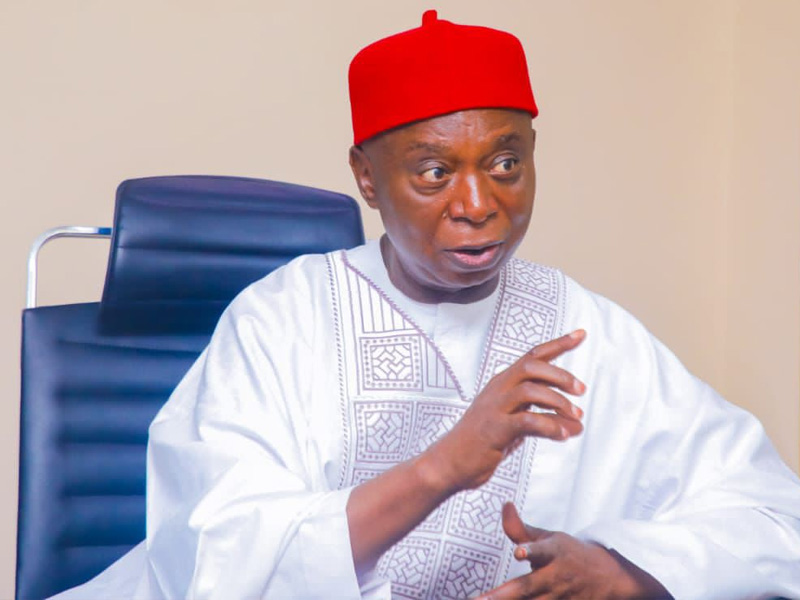
Ned Nwoko in the Eyes of Delta North, Delta State, and Nigeria

The Three Lenses Of Leadership:
By Austine Ihonor
To understand Nigeria’s complex political landscape, one must look at figures who refuse to fit into conventional boxes.
In contemporary governance, few personalities command as much intense debate, fierce loyalty, and widespread intrigue as Senator Prince Ned Munir Nwoko.
Representing Delta North Senatorial District in the 10th National Assembly, Nwoko occupies a unique space in the public consciousness.
He is viewed through three distinct lenses, each revealing a different facet of a man who is simultaneously a grassroots benefactor, a regional political disruptor, and a national legislative strategist.
At home in Delta North (the Anioma nation), Ned Nwoko’s presence is felt deeply at the foundational level of daily life.
To the local populace, he is often seen as a visionary philanthropist who has systematically rewritten the rules of community development.
Long before his entry into the 10th Senate, Nwoko’s footprint was visible in historic investments like the establishment of Sports University, Idumuje-Ugboko—the first of its kind in Sub-Saharan Africa.
This institution was not just an architectural marvel; it was a promise of global opportunities for local youths. Coupled with massive educational scholarship schemes targeted at orphans and vulnerable children, his local legacy is anchored on human capital development.
Within the hallowed chambers of the Senate, Delta North sees him as a highly effective defender of their collective mandate. Sponsoring over 33 bills and 22 motions in a relatively short span, his legislative scorecard is a source of pride for constituents who feel their voice has never been louder in Abuja.
However, leadership of this magnitude inevitably draws scrutiny.
To a segment of the local political class—particularly those entrenched in traditional power blocks—Nwoko is sometimes viewed as a fiercely independent elite whose global exposure makes him less conformist to old-school patronage politics. Yet, for the average Anioma citizen, he remains a transformative leader who has elevated Delta North’s political capital to unprecedented heights.
Zooming out to the state level, the perception of Ned Nwoko shifts from a community builder to that of a formidable political heavyweight and institutional challenger.
Within Delta State’s intricate power dynamics, Nwoko is viewed as an independent-minded actor capable of altering the regional status quo.
His political trajectory—marked by high-stakes electoral battles and principled stances—has occasionally placed him at variance with the state’s traditional political establishment. Where career politicians seek safe compromises, Nwoko often demands systemic accountability.
His critique of administrative governance structures and his push for equitable resource distribution have made him a polarizing figure among the state’s ruling elite, but an inspirational one to progressives who crave a departure from “politics as usual.”
Furthermore, his advocacy for the creation of Anioma State has placed him at the center of Delta’s geopolitical conversation.
While some state actors view the agitation with caution, fearing it could fracture the economic and political cohesion of Delta State, a vast majority respect his audacity.
By placing the Anioma self-determination identity firmly on the national table, Nwoko has forced Delta State to confront questions of equity, rotational power, and zoning in ways no leader has done in recent decades.
The National Reformer and Intellectual EliteOn the grand stage of the Federal Republic of Nigeria, Senator Ned Nwoko is viewed through a much broader, highly sophisticated lens.
He is recognized nationally as an elite international lawyer, a cerebral lawmaker, and a relentless advocate for structural state reforms.
Long before his senatorial tenure, Nigeria owed a debt of gratitude to Nwoko’s legal brilliance.
His historic role in monitoring and recovering billions of dollars in Paris Club refunds for Nigeria’s states and local governments cemented his reputation as a patriot who stood up against international financial exploitation.
In the 10th Senate, this national outlook has only intensified.
As the Chairman of the Senate Committee on Reparations and Repatriation, Nwoko has taken his legal advocacy to the global stage, demanding justice for historical wrongs against Africa.
Domestically, his legislative interventions cut across critical sectors: from sponsoring bills aimed at reforming the Nigeria Immigration Service to curb dangerous illegal migration, to advocating for the legalisation of civilian firearm ownership for self-defense amid national security challenges.
Even his push for Anioma State is viewed nationally not just as a regional agitation, but as a brilliant geopolitical masterstroke.
By proposing that Anioma become the sixth state of the South-East geopolitical zone, Nwoko offered a constitutional solution to correct the historical imbalance of representation that has fueled decades of marginalization complaints in the region.
Ultimately, Ned Nwoko cannot be defined by a single narrative.
In the eyes of Delta North, he is the compassionate champion pulling communities into a brighter future.
In the eyes of Delta State, he is the bold disruptor challenging old political orders and rewriting regional identities.
In the eyes of Nigeria, he is a statesman, an intellectual powerhouse, and a visionary legislator reshaping national policy.
Through the lens of objective analysis, one truth remains undeniable: Senator Prince Ned Nwoko has ensured that wherever the story of modern Nigerian democracy is told, his name will be written in bold letters.



By Philippine Duru
philippineobetoduru@gmail.com
08034905774
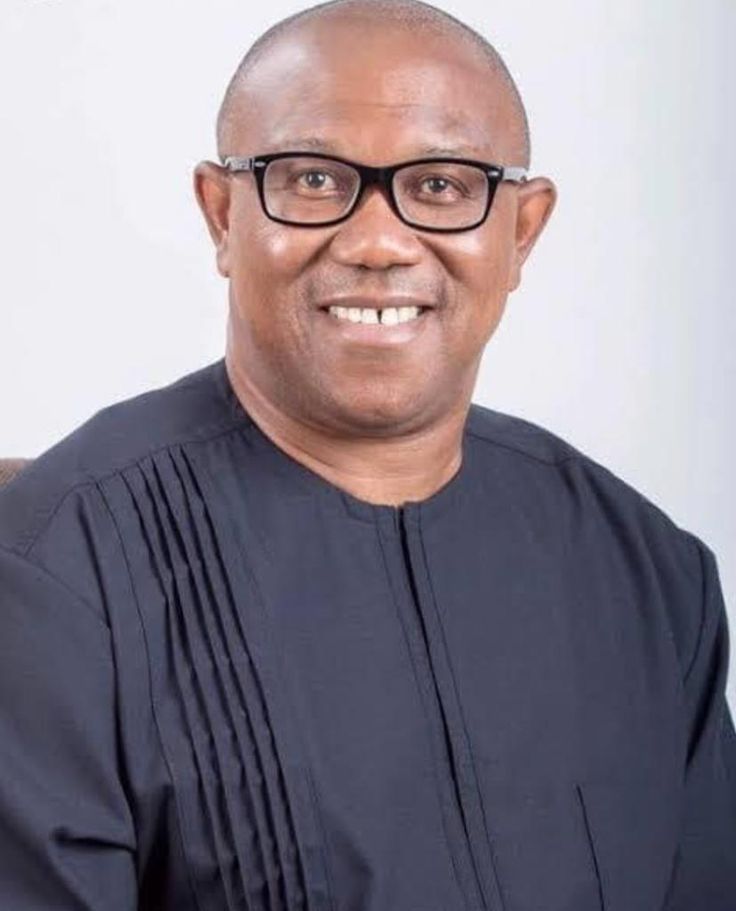
Former Anambra State Governor and Labour Party presidential candidate, Peter Obi, has alleged that suspected hired thugs obstructed his visit to Yelwata community in Benue State, where more than 270 people were reportedly killed in a deadly attack.
Obi made the allegation in a statement following his arrival in Benue on Tuesday, September 8, 2026, saying he had travelled to the state on a humanitarian mission to commiserate with families affected by the killings.
According to him, he arrived in Benue at about 9:00 a.m. but his convoy was prevented from proceeding to the affected community by individuals chanting, “Peter Obi, go back.”
Obi described the incident as distressing, stressing that his visit was not politically motivated but intended to mourn with the bereaved, listen to affected families and offer solidarity following the tragedy.
He said the obstruction was particularly troubling at a time when Nigerians should be united in grief and focused on preventing further loss of lives.
The former governor recalled that he had consistently promoted political civility, citing his attendance the previous day at the opening of the national campaign office of opposition presidential candidate and Oyo State Governor, Seyi Makinde, in Abuja.
He said his presence at the event was meant to demonstrate that political differences should not prevent mutual respect and civility.
Obi also recalled that while serving as governor of Anambra State, he personally welcomed visiting opposition members during election campaigns, provided their activities remained within the law.
He condemned what he described as efforts to deepen political divisions, insisting that Nigerians should be able to live, travel and farm without fear.
“At a time when our nation should be united in grief and resolute in preventing further bloodshed, we must reject any action capable of deepening our divisions,” Obi said.
He maintained that the primary responsibility of government was to protect human life, arguing that political considerations should never take precedence over the safety and security of citizens.
Although he could not reach Yelwata as planned, Obi said his thoughts and prayers remained with the victims, their families and the entire community.
He pledged to continue advocating for the protection of Nigerian lives, concluding with his familiar declaration: “A New Nigeria is POssible.”


NACTAL’s president-elect pledges inclusive leadership, stronger anti-trafficking action

Osita Osememe gets 95.65% votes, emerges NACTAL president

Peter Obi alleges thugs blocked visit to Yelwata massacre victims in Benue
-

 News9 years ago
These ’90s fashion trends are making a comeback in 2017
-
Business9 years ago
The 9 worst mistakes you can ever make at work
-
Entertainment9 years ago
The final 6 ‘Game of Thrones’ episodes might feel like a full season
-
 News6 months ago
SERAP to Akpabio: Disclose officials involved in misappropriation of ₦200t from NNPC
-
 News5 months ago
Disquiet over whereabouts of ₦2.9 billion in key federal agencies
-
News9 years ago
According to Dior Couture, this taboo fashion accessory is back
-
Sports9 years ago
Phillies’ Aaron Altherr makes mind-boggling barehanded play
-
Entertainment9 years ago
The old and New Edition cast comes together to perform