News
Disquiet over whereabouts of ₦2.9 billion in key federal agencies
President Bola Tinubu has been urged to direct the Minister of Communications, Innovation and Digital Economy, Bosun Tijani, as well as the management of the Nigerian Communications Satellite Ltd (NIGCOMSAT) and the Nigerian Nuclear Regulatory Authority (NNRA), to account for and explain the whereabouts of an alleged ₦2.9 billion in missing or diverted public funds.
The Socio-Economic Rights and Accountability Project (SERAP) who made the call also called on the Attorney General of the Federation and Minister of Justice, Lateef Fagbemi (SAN), and relevant anti-corruption agencies to investigate the alleged diversion of funds, including those documented in previous Auditor-General reports.
In a letter dated April 11, 2026, and signed by SERAP deputy director Kolawole Oluwadare, the organisation said: “These allegations, involving critical public institutions, represent a grave violation of the public trust and a fundamental breach of Nigeria’s anti-corruption laws and international obligations.”
The group further urged the Federal Government to direct NIGCOMSAT to disclose the shareholders and beneficial owners of a company that allegedly received ₦465 million in “unauthorised investment” from the agency.
SERAP said, “Anyone suspected to be responsible should face prosecution as appropriate, if there is sufficient admissible evidence, and any missing or diverted public funds should be fully recovered and remitted to the treasury.”
The organisation gave the government seven days to comply, warning that it may initiate legal action if its demands are not met.
It also stated that accountability in both agencies is critical, given their strategic roles, saying: “Accountability in NIGCOMSAT and NNRA is critical given their strategic roles in Nigeria’s digital economy and national safety systems. Mismanagement in these agencies not only wastes scarce public resources but also threatens national development, technological progress, and public safety.”
SERAP added: “Ensuring accountability is therefore essential to protecting both Nigeria’s present and its future.”
It warned that failure to address the allegations would continue to erode public trust, stating: “These allegations, if left unaddressed, will continue to undermine public confidence in government institutions, weaken Nigeria’s anti-corruption framework, and deprive citizens of resources needed for development.”
The allegations were drawn from the Auditor-General’s report published on September 9, 2025, which examined financial activities in NIGCOMSAT and NNRA and raised concerns over possible mismanagement of public funds.
According to the report, NIGCOMSAT failed to account for over ₦465 million used for an “unauthorised investment” in Gicell Wireless Ltd, made without approvals from the Minister of Science and Technology and the Accountant-General of the Federation. It also noted that “there was also no evidence that a competent Investment Analyst performed investment appraisal,” while the investment agreement raised concerns over valuation and exchange rate assumptions.
The Auditor-General further stated that “NIGCOMSAT made ineligible, irregular and wrong payments of over ₦3 million to staff,” and that “the payment was made without due process and any documents on what the payments were meant for.”
It also flagged an irregular rent payment of over ₦4.3 million, noting that although a refund was requested, “there was no evidence that the consultant refunded the money.”
It added that NIGCOMSAT “failed to remit over ₦507 million of its internally generated revenue to the Consolidated Revenue Fund,” while also failing to account for over ₦6 million for undelivered store items.
The report further stated that “there was also no evidence of how the transferred funds were spent or utilised,” referring to an irregular ₦84.78 million transfer from a Remita account to a special project account.
On NNRA, the report alleged that ₦4.35 million was spent on training without evidence that it took place, while ₦16.7 million was paid for ICT equipment without approval.
It also stated that ₦33.4 million was spent on items that were never supplied, and that “there were no documents to support” several payments for operational activities.
The Auditor-General further noted that NNRA “failed to retire over ₦6.5 million of cash advances granted to staff,” and that ₦2.05 million paid for foreign training had no evidence of participation.
It also stated that ₦1.95 million collected through Remita was not recorded in the agency’s cashbook, leading to concerns of revenue understatement.
SERAP said the findings point to “a systemic pattern of financial mismanagement, opacity, and corruption within an agency entrusted with advancing Nigeria’s digital and communications infrastructure,” adding that NNRA’s lapses also raise serious concerns about compliance with safety and financial regulations
News
Peter Obi promises power sector reforms
By Philippine Duru
philippineobetoduru@gmail.com
08034905774
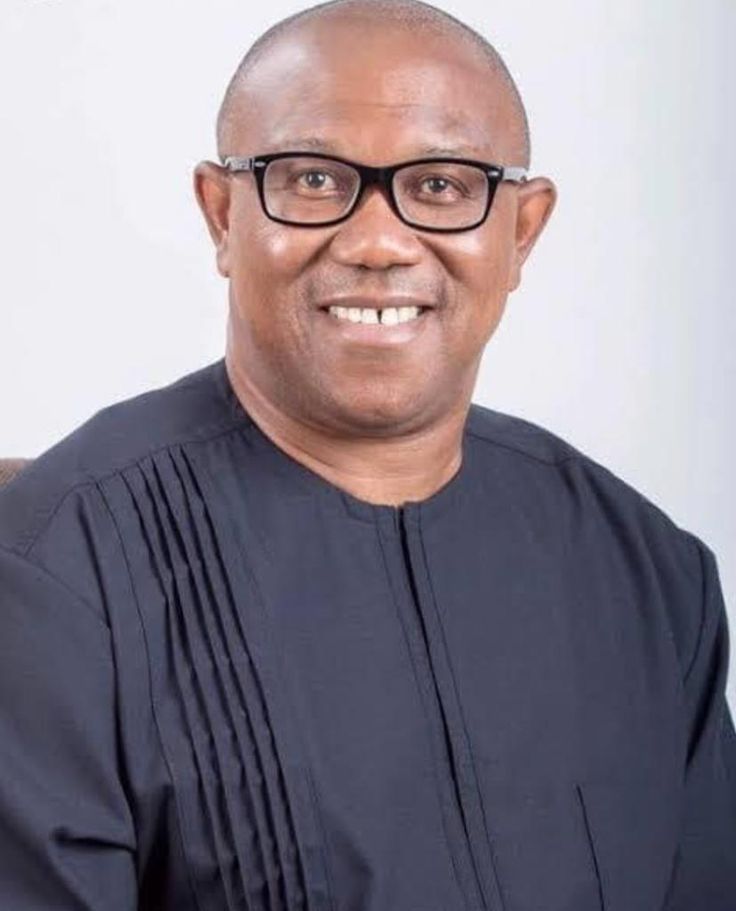
Nigeria Democratic Congress (NDC) presidential candidate and former Anambra State Governor, Peter Obi, has said it would be impossible to provide uninterrupted 24-hour electricity across Nigeria within a single four-year presidential term, describing such promises as unrealistic given the country’s deep-rooted infrastructure challenges.
Obi made the remarks during an appearance on Channels Television’s Sunday Politics on Sunday, July 26, where he outlined his plans for transforming Nigeria’s power sector ahead of the 2027 general election.
According to him, constructing the infrastructure needed to deliver stable electricity nationwide requires years of investment in power generation, transmission and distribution networks, making it impractical to guarantee 24-hour electricity within a four-year administration.
He explained that building a new power plant alone could take about four years, while expanding and modernising the national transmission network would require additional time. For that reason, he said he would rather make achievable commitments than offer promises he believes cannot be fulfilled.
Despite his assessment, Obi pledged that his administration would significantly improve electricity supply by ensuring Nigeria could generate, transmit and distribute at least 10,000 megawatts of electricity within four years.
He said this target would be achieved through embedded power projects and by encouraging decentralized electricity generation, citing the Geometric Power project in Aba as a model that could be replicated in major industrial centres across the country, including Kano’s Bompai and Sharada industrial clusters.
Obi also called for urgent financial reforms in the electricity industry, arguing that the Federal Government must settle outstanding debts owed to electricity generation companies (GenCos) to restore investor confidence and improve liquidity across the sector.
He maintained that a financially viable electricity market would attract greater private investment, leading to improved power generation and better service delivery over time.
The former governor reiterated his commitment to transparency in government, saying leaders should be honest with citizens about what is realistically achievable rather than making campaign promises that cannot be delivered.
Nigeria’s electricity sector has continued to face persistent challenges, including inadequate generation capacity, weak transmission infrastructure, liquidity constraints, gas supply issues and distribution bottlenecks. The country still generates far below the level required to meet the needs of its population and economy, leaving millions of households and businesses dependent on diesel and petrol generators.
Obi’s comments have sparked debate among political observers and energy stakeholders, with some praising his candid assessment of the country’s electricity challenges while others insist that stronger political will and accelerated reforms could deliver faster improvements.
His remarks come as political parties begin to articulate their policy agendas ahead of the 2027 elections, with reliable electricity expected to remain one of the defining issues for voters and a critical factor in Nigeria’s economic growth and industrial development.
News
Court inspects Meth Lab in Southwest state
By Philippine Duru
philippineobetoduru@gmail.com
08034905774
The Federal High Court has conducted an on-site inspection of an alleged clandestine methamphetamine laboratory in Ogun State, marking a significant milestone in the trial of 10 defendants accused of operating a multi-billion-naira international drug manufacturing syndicate.
Justice Musa Kakaki led the inspection of the sprawling facility located in a remote forest in Mowe, Ijebu East Local Government Area of Ogun State, where the National Drug Law Enforcement Agency (NDLEA) alleged that the accused established and operated an industrial-scale methamphetamine laboratory capable of producing large quantities of the illicit drug for export to international markets.
The 10 defendants, comprising three Mexican nationals and seven Nigerians, are facing an 11-count charge bordering on conspiracy, the establishment and operation of a clandestine laboratory, production of methamphetamine, unlawful possession of precursor chemicals, and financing a drug trafficking organisation. All the defendants have pleaded not guilty to the charges.
During the inspection, the prosecution’s first witness and NDLEA laboratory expert, Ajilema Anebi, guided the judge, prosecution team and defence counsel through various sections of the facility. He identified industrial processing equipment, chemical reactors, storage units and precursor substances allegedly used in the manufacture of methamphetamine.
Anebi told the court that the laboratory possessed the capacity to produce substantial quantities of methamphetamine intended for international distribution, describing it as evidence of the growing activities of transnational drug trafficking organisations operating within Nigeria.
According to the prosecution, the laboratory was used to manufacture about 2,419.48 kilograms of methamphetamine, with an estimated street value of more than ₦480 billion. Prosecutors further alleged that members of the syndicate transported large volumes of precursor chemicals, including toluene, hydrochloric acid, acetone and other substances, from Lagos to the forest hideout where the drugs were produced.
However, defence counsel challenged aspects of the prosecution’s case during the inspection, arguing that although the court had been shown production equipment and chemical substances, the prosecution had yet to establish a direct link between the recovered materials and the finished methamphetamine allegedly produced by the defendants.
Following the inspection, Justice Kakaki adjourned the matter until July 24 to continue hearing arguments on the admissibility of exhibits and to rule on an application by the NDLEA seeking the court’s approval to destroy the alleged methamphetamine laboratory on grounds of safety and security.
The case originated from a major NDLEA operation conducted in May, during which operatives dismantled what the agency described as the largest clandestine methamphetamine laboratory ever uncovered in Nigeria. The operation led to the arrest of the three Mexican nationals, who were allegedly recruited to supervise the manufacturing process, alongside seven Nigerian collaborators accused of handling logistics and local operations.
The anti-narcotics agency also recovered more than 2.4 tonnes of methamphetamine and large quantities of precursor chemicals with an estimated street value exceeding ₦480 billion, describing the seizure as one of the country’s biggest drug busts.
Commenting on the operation, NDLEA Chairman and Chief Executive Officer, Brig.-Gen. Mohamed Buba Marwa (retd.), described the discovery as a major breakthrough in Nigeria’s fight against organised transnational crime. He warned that international drug cartels were increasingly establishing sophisticated manufacturing facilities in remote forest locations across the country in an attempt to evade law enforcement agencies.
- The outcome of the trial is expected to have far-reaching implications for Nigeria’s anti-drug enforcement efforts, as authorities intensify measures to dismantle transnational drug trafficking networks and prevent the country from becoming a hub for the manufacture and export of illicit narcotics.
News
Ex PDP gov, others appointed by Tinubu
By Philippine Duru
philippineobetoduru@gmail.com
08034905774
President Bola Ahmed Tinubu has approved the appointment of former Governor of Ekiti State, Ayo Fayose, as Chairman of the Governing Board of the Rural Electrification Agency (REA), as part of a fresh round of appointments involving 26 individuals to the boards of key federal agencies and institutions.
The appointments, announced by the Presidency, are aimed at strengthening governance, improving service delivery and advancing the administration’s economic reform agenda across strategic sectors.
Fayose, who served two terms as Governor of Ekiti State, will now lead the board of the Rural Electrification Agency, the federal agency responsible for expanding access to electricity in underserved and off-grid communities across Nigeria. His appointment is expected to bring renewed political leadership and oversight to the agency as the government intensifies efforts to improve electricity access in rural areas.
The REA has been at the forefront of implementing rural electrification projects through renewable energy initiatives, mini-grids, solar home systems and public-private partnerships designed to bridge Nigeria’s electricity access gap. The agency also plays a critical role in supporting the Federal Government’s energy transition agenda by promoting clean and sustainable power solutions.
The latest appointments cover several federal agencies, with the newly appointed chairpersons and board members expected to provide policy direction, strengthen institutional governance and support the effective implementation of government programmes.
According to the Presidency, the appointments reflect the administration’s commitment to placing experienced individuals in strategic positions to drive reforms and improve the performance of public institutions.
Political observers say Fayose’s appointment is one of the most notable in the latest batch of board appointments, given his long political career and influence within the country’s political landscape.
A prominent member of the Peoples Democratic Party (PDP), Fayose governed Ekiti State from 2003 to 2006 and again from 2014 to 2018. Throughout his political career, he became known for his outspoken views on national issues and his active participation in Nigeria’s political discourse.
His appointment has generated mixed reactions across political circles, with supporters describing it as recognition of his administrative experience, while critics have questioned the choice given his opposition political background. Others see the move as a demonstration of President Tinubu’s willingness to appoint experienced Nigerians irrespective of political affiliation.
Stakeholders in the power sector have expressed optimism that the new board will support the REA’s efforts to accelerate rural electrification projects, improve access to electricity for millions of Nigerians and deepen private sector participation in off-grid energy development.
Nigeria continues to face significant electricity access challenges, with millions of households and businesses, particularly in rural communities, lacking reliable power supply. Expanding rural electrification remains a key pillar of the Federal Government’s strategy to stimulate economic growth, improve education and healthcare services, create jobs and reduce energy poverty.
The newly appointed board members are expected to assume their responsibilities in accordance with the relevant provisions governing their respective agencies, working closely with management teams to ensure effective implementation of government policies and programmes.
The appointments come as the Federal Government continues to reposition critical institutions to support its Renewed Hope Agenda, with a focus on infrastructure development, energy security, economic diversification and improved public service delivery.
-
News9 years agoThese ’90s fashion trends are making a comeback in 2017
-
Business9 years agoThe 9 worst mistakes you can ever make at work
-
Entertainment9 years agoThe final 6 ‘Game of Thrones’ episodes might feel like a full season
-
News4 months agoSERAP to Akpabio: Disclose officials involved in misappropriation of ₦200t from NNPC
-
News9 years agoAccording to Dior Couture, this taboo fashion accessory is back
-
Sports9 years agoPhillies’ Aaron Altherr makes mind-boggling barehanded play
-
Entertainment9 years agoThe old and New Edition cast comes together to perform
-
Entertainment9 years agoMod turns ‘Counter-Strike’ into a ‘Tekken’ clone with fighting chickens