
News
Ghana calls US’s bluff

Ghana has called the bluff of the Donald Trump led US government as it ended talks for a multi-year aid deal with the United States after Washington demanded access to citizens’ personal data.
A source close to the west African nation’s government, formerly known as Gold Coast disclosed this to AFP.
The United States has been striking new health aid deals across Africa after the administration of US President Donald Trump dismantled the long-standing USAID agency and curtailed the role of NGOs.
It was unclear what the proposed Ghana funding deal specifically covered, or what the personal data relates to.
“The deal is dead,” the source said this week, noting that Ghana’s negotiating team included health officials, suggesting it may have been partly tied to health.
The US team became “hostile” and piled on “pressure” after Ghana pushed back on the demand for personal data, the source told AFP.
A spokesman for Ghana’s health ministry did not immediately respond to AFP’s request for comment.
The deal would have provided Ghana $109 million in funding for five years, according to the source who spoke to AFP on condition of anonymity, without confirming the specific areas of focus of the proposal.
A spokesperson told AFP in an emailed statement that the US State Department “does not disclose the details of ongoing bilateral negotiations” and suggested the funding would have supported “fighting HIV/AIDS, malaria, tuberculosis and other infectious diseases”.
The funding offered to the west African nation was far less than the $2.5 billion and $2.1 billion offered to Kenya and Nigeria respectively.
At least 32 such deals worth about $20.6 billion under the America First Global Health Strategy had been signed as of Monday, according to the US State Department.
More than a dozen African countries have signed on, including Nigeria, Kenya, Rwanda, Uganda, Lesotho and Eswatini.
Zimbabwe rejected a similar proposal in February, saying the terms threatened its autonomy. Zambia followed suit in March.
Kenya’s deal — the first of such bilateral agreements — was suspended by a court a week after it was signed in December over concerns about sharing personal data.
Relations between Accra and Washington had been cordial in recent months.
They received a boost after Ghana signed a deal in September to receive West Africans deported from the United States, with Washington reversing its visa restrictions — put in place in June — on Ghanaians.
Washington also rolled back the 15-percent tariff imposed on Ghana’s cocoa and agricultural exports in November.
Ghana, the world’s second-largest cocoa producer, relies heavily on export revenues to stabilise its currency and finance public spending.
The US disbursed some $219.4 million and $138.5 million to Ghana in 2024 and 2025 respectively to fund agriculture, health and other projects, according to ForeignAssistance.gov.
“We continue to look for ways to strengthen the bilateral partnership between our two countries,” the US State Department said.










PRESS STATEMENT
The All Progressives Congress (APC) has announced the rescheduling of its Governorship Primary Elections in Bauchi State and Kwara State to Friday, May 22, 2026.
In the same vein, the party has approved a new date for the State House of Assembly Primary Elections in Maradun I and Maradun II constituencies of Zamfara State, which will now hold on Sunday, May 24, 2026.
The decision was ratified by the National Working Committee (NWC) after consultations with critical stakeholders as part of efforts to guarantee a transparent, peaceful, orderly, and credible primary election process.
The party reiterated its commitment to upholding internal democracy and ensuring the successful conduct of all primary elections ahead of the forthcoming polls.
Signed:
Felix Morka
National Publicity Secretary
All Progressives Congress (APC)
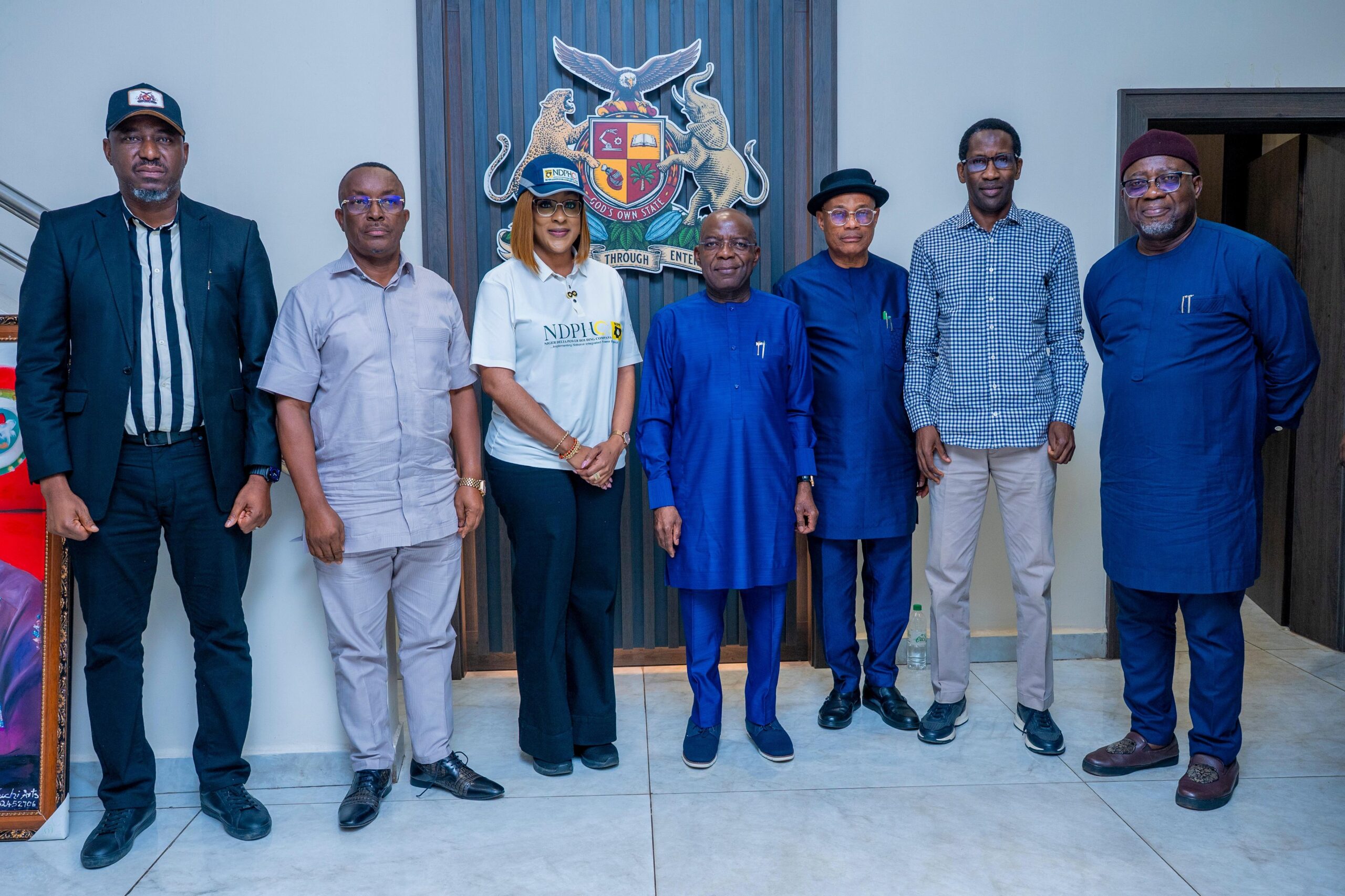
The Governor of Abia State has reaffirmed his administration’s commitment to achieving energy independence and expanding access to reliable electricity across the state following a high-level meeting with the leadership of the Niger Delta Power Holding Company (NDPHC).
The governor disclosed this after receiving the Managing Director and Chief Executive Officer of NDPHC, Jennifer Adighije, alongside members of her management team during a courtesy visit to his office.
During the meeting, the governor praised the successful revival of the Alaoji Power Plant in Aba, describing the development as a major breakthrough in ongoing efforts to guarantee stable and uninterrupted electricity supply in the state.
According to him, the restoration of operations at the plant represents a critical milestone in strengthening power generation and supporting industrial growth, particularly within the Aba economic corridor.
He revealed that the Alaoji Power Plant currently dispatches approximately 375 megawatts of electricity to the national grid, while expansion plans are already underway to increase output capacity to nearly 800 megawatts, with long-term projections targeting up to 1,100 megawatts.
The governor noted that electricity remains central to his administration’s broader economic transformation agenda, stressing that sustainable power supply is essential for industrialization, job creation, healthcare delivery, education, and overall social development.
He explained that since assuming office, his government has implemented strategic reforms aimed at repositioning the power sector within the state. These reforms include the ring-fencing of the Aba industrial cluster to ensure more efficient electricity management and the ongoing process to acquire the Umuahia electricity axis of the Enugu Electricity Distribution Company (EEDC).
According to the governor, the measures are designed to place electricity generation, regulation, and distribution substantially under the control of the state government, thereby enabling faster decision-making and improved service delivery.
He expressed optimism that deeper collaboration between Abia State and NDPHC would make it possible to wheel electricity directly from the Alaoji facility to the remaining eight local government areas outside the Aba corridor.
The planned expansion, he said, would ensure that homes, schools, hospitals, and industries across the state gain access to reliable and affordable power supply.
The governor further emphasized that improved electricity infrastructure would significantly boost economic productivity, attract investors, strengthen small and medium-scale enterprises, and enhance the quality of life for residents.
Reaffirming his administration’s vision, he declared that Abia State is prepared to lead Nigeria’s push toward subnational energy independence through strategic partnerships, infrastructure investments, and sector reforms.
He added that the state government remains committed to building a power ecosystem capable of driving industrial production, supporting innovation, and sustaining long-term prosperity for the people of Abia.


NGX sustains bullish momentum as All-Share index nears 250,000 points

Dangote refinery draws massive investor interest ahead of IPO

Nigeria government seeks to deepen economic diversification and reduce oil dependency
-

 News9 years ago
These ’90s fashion trends are making a comeback in 2017
-
Entertainment9 years ago
The final 6 ‘Game of Thrones’ episodes might feel like a full season
-
News9 years ago
According to Dior Couture, this taboo fashion accessory is back
-
Business9 years ago
The 9 worst mistakes you can ever make at work
-
Sports9 years ago
Phillies’ Aaron Altherr makes mind-boggling barehanded play
-
Entertainment9 years ago
The old and New Edition cast comes together to perform
-
Business9 years ago
Uber and Lyft are finally available in all of New York State
-
Entertainment9 years ago
Mod turns ‘Counter-Strike’ into a ‘Tekken’ clone with fighting chickens