
World News
Tragedy as defence minister dies in terror attacks

This is heart wrenching. Sadio Camara, Mali’s defence minister has been killed.
He was murdered after an attack on his house.
The family disclosed this on Sunday.
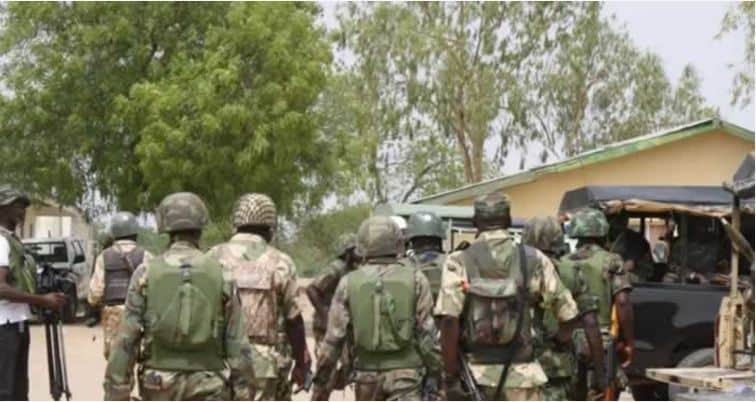
The army is fighting a second day of battles with jihadist fighters and separatist rebels near the capital Bamako and other cities, putting the Sahel nation’s ruling junta under severe pressure.
Camara, his second wife and two of his grandchildren died after a car bomb attack on his home in the junta stronghold of Kati, outside Bamako, his family and an official said.
Saturday’s shock attacks, synchronised by Tuareg rebels of the Azawad Liberation Front (FLA) coalition and the jihadist Group for the Support of Islam and Muslims (JNIM), targeted several areas in the vast arid country.
Fighting resumed Sunday in several areas, including Kati, Kidal, Gao and Severe.
Tuareg rebels meanwhile announced an agreement allowing Russian forces backing Mali’s army to withdraw from the northern city of Kidal, which they claimed was “totally” under their control.
See also Terrorists planning to attack places of worship, recreational centres during Eid-el-Kabir, DSS raises alarm
“An accord has been reached permitting the (Malian) army and its (Russian) Africa Corps allies to leave the camp 2, where they were holed up since yesterday,” a Tuareg official told AFP.
“We saw a military convoy leave, but don’t know the details of what’s happening … Fighters from armed movements have now taken over the streets,” a resident added.
Kidal, a Tuareg stronghold, was retaken in November 2023 by the Malian army backed by Russia’s Wagner paramilitary group, ending more than a decade of control by rebels.
The FLA also claims to have taken positions in the northern Gao region.
“The aim of the attackers was not to seize and control cities, but to carry out coordinated actions in order to at least capture Kidal, which is a rather powerful symbol,” a security source told AFP on Sunday.
Mali has been ravaged for more than a decade by conflict and jihadist violence but Saturday’s attacks were the worst since 2020, when the junta seized power.
See also Insecurity: Yul Edochie slams Adefarasin, says ‘Plan B’ not the solution
They took place on the fringes of the Malian capital Bamako and in several towns and cities across the sprawling Sahel nation.
The fighting left 16 civilians and soldiers wounded and caused “limited material damage,” the government said in a statement on Saturday evening.
It added that “the situation is totally under control in all the localities” that were attacked.
In the capital, access to military facilities has been blocked by barriers and tyres on the roads, an AFP journalist said.
In the outlying district of Senou, where the airport is located and which witnessed heavy fighting on Saturday, the atmosphere was jittery.
“I still hear the blasts ringing in my ears. It’s traumatising,” a resident said.
Kati was calm after “the jihadists left the area, but we are living in fear,” a resident told AFP on Sunday.
Meanwhile, United Nations chief Antonio Guterres condemned “acts of violence” in Mali.
“The Secretary‑General is deeply concerned by reports of attacks in several locations across Mali,” his spokesman said in a statement.
“The Secretary-General calls for coordinated international support to address the evolving threat of violent extremism and terrorism in the Sahel and to meet urgent humanitarian needs,” spokesman Stephane Dujarric added.
The European Union on Sunday condemned the “terrorist attacks” in Mali.
Russia’s Africa Corps, an organisation under direct control of the Russian defence ministry, has taken over from the mercenary Wagner group in helping Malian forces fight jihadists.
Mali has resources including gold and other valuable minerals.
Mali’s rulers, like their military counterparts in neighbouring Niger and Burkina Faso, have severed ties with former colonial ruler France and several Western countries, moving closer to Russia.
By Philippine Duru
philippineobetoduru@gmail.com
08034905774.
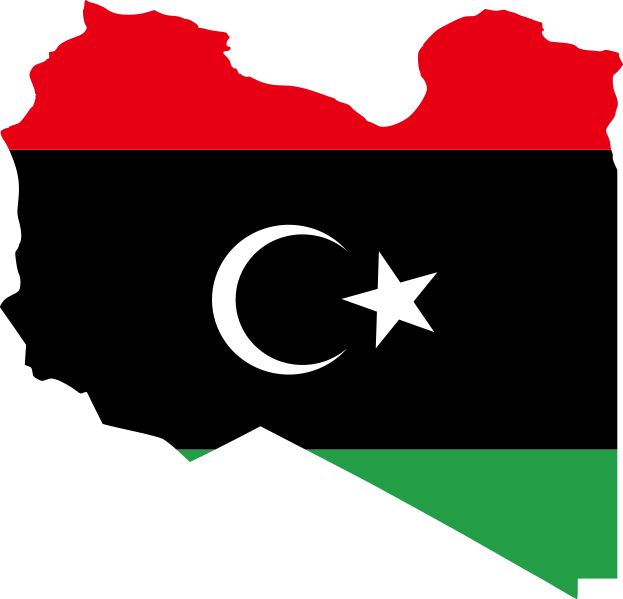
Libyan authorities have intercepted 87 migrants in separate maritime operations, while a boat carrying more than 15 people sank off Tunisia, leaving at least three people dead and several others missing.
The incidents were disclosed by Jihed, a PhD researcher in bioprotection of plants, in a series of posts.
According to Jihed, forces of the General Administration for Coastal Security, affiliated with the eastern Libyan General Command, intercepted two boats north of Sirte on Friday, August 21.
The operations, which took place at about 7 a.m. and 10 a.m., resulted in the interception of 52 people of different nationalities.
In another operation off Ras al-Tin, the coastal security forces intercepted a boat carrying 35 people, including 33 Sudanese nationals and two Egyptians.
The migrants were reportedly forced back to Tobruk.
Jihed said the latest operations brought the total number of migrants intercepted to 87, describing the situation as a recurring cycle of interception, forced return to Libya and detention.
Meanwhile, a separate maritime tragedy was reported late Thursday near Jdaria in Ben Guerdane, Tunisia, after a boat carrying more than 15 people sank while attempting to reach Italy.
Local fishermen from Ben Guerdane, Zarzis and Djerba reportedly rushed to the scene and rescued two young Tunisian men who were said to be in critical condition.
Three bodies were also recovered, while several others remained missing, including a pregnant woman.
Jihed called for intensified search and rescue operations, stressing that every minute was crucial in efforts to locate those still missing.
The latest incidents highlight the continuing dangers faced by migrants attempting to cross the Mediterranean in search of safety and better opportunities in Europe.
By Philippine Duru
philippineobetoduru@gmail.com
08034905774
The European Union has pledged to strengthen its support for Morocco in managing its borders following the recent migration crisis in which tens of thousands of migrants crossed into the Spanish enclave of Ceuta, raising significant concerns over border security and migration management across Europe.
European Commission President Ursula von der Leyen outlined the EU’s position in a letter to Spanish Prime Minister Pedro Sánchez, emphasizing that Morocco remains a key strategic partner in addressing irregular migration into Europe. She stated that the bloc is prepared to expand financial, technical, and operational assistance to Rabat to reinforce border surveillance and enhance migration management capabilities.
The offer follows an unprecedented influx of migrants into Ceuta from Morocco, which placed considerable pressure on Spanish authorities and prompted emergency consultations among EU member states. The incident represents the first major test of the European Union’s recently implemented Migration and Asylum Pact, designed to improve coordination among member states while strengthening the protection of the bloc’s external borders.
Von der Leyen stressed that safeguarding Europe’s external borders requires close cooperation with neighbouring countries, particularly Morocco, which serves as a critical transit point for migrants seeking entry into Europe.
She noted that enhanced cooperation would include strengthened border monitoring, increased intelligence sharing, improved efforts to dismantle migrant-smuggling networks, and additional support to prevent irregular crossings before migrants reach European territory.
The European Commission President also commended Morocco’s longstanding cooperation with the EU on migration matters, describing the country as an indispensable partner in promoting regional stability.
Meanwhile, EU interior ministers have held emergency consultations to consider stricter measures against human trafficking networks, accelerated return procedures for migrants without valid protection claims, and increased investment in external border management. Ministers also called for closer coordination with countries of origin and transit to reduce irregular migration flows.
The migration surge has prompted political debate across Europe, with some governments advocating for tighter border controls and stronger enforcement of migration rules, while humanitarian organisations have urged EU leaders to ensure that security measures remain consistent with migrants’ rights and access to asylum procedures.
Analysts suggest that the EU’s latest commitment reflects Brussels’ growing reliance on partnerships with neighbouring countries such as Morocco to manage migration before it reaches European borders. This approach is expected to feature prominently in future discussions on the bloc’s migration strategy as European leaders seek long-term solutions to irregular migration and cross-border security challenges.

By Philippine Duru
philippineobetoduru@gmail.com
08034905774
Global crude oil prices rose by more than one per cent on Monday as escalating geopolitical tensions in the Middle East heightened fears of potential disruptions to global energy supplies, prompting traders to increase risk premiums in the market.
Brent crude, the international benchmark for oil prices, climbed to approximately $89.22 per barrel, while the U.S. benchmark, West Texas Intermediate (WTI), advanced to around $83.23 per barrel, extending gains recorded in recent trading sessions.
The latest rally reflects growing concerns among investors over the possibility that heightened instability in the Middle East—one of the world’s most important oil-producing regions—could affect production, transportation, or exports of crude oil.
Market analysts said geopolitical developments have once again become the dominant driver of oil prices, overshadowing broader concerns about global economic growth and oil demand. Any threat to oil infrastructure or shipping routes in the region typically triggers price increases as traders factor in the risk of supply shortages.
The Middle East accounts for a significant share of global crude oil production and exports. Key maritime routes such as the Strait of Hormuz remain critical to international energy trade, with millions of barrels of crude oil and petroleum products passing through the waterway daily. Any disruption along these routes could tighten global supplies and push prices even higher.
Analysts noted that the increase in crude prices was also supported by expectations of tighter global supply, particularly as major oil-producing countries continue to manage production levels under existing output agreements.
Beyond geopolitical concerns, investors are closely monitoring inventory data, demand forecasts from major economies, and monetary policy decisions by central banks, all of which continue to influence market sentiment.
Higher crude oil prices could have far-reaching implications for the global economy, particularly by increasing transportation, manufacturing, and energy costs. Rising energy prices also pose a challenge for central banks battling inflation, as higher fuel costs often feed into broader consumer prices.
For Nigeria, Africa’s largest crude oil producer, sustained higher oil prices could boost government revenues, strengthen foreign exchange earnings, and improve fiscal performance, provided crude production remains stable and export volumes increase. Increased oil receipts could also support external reserves and provide additional fiscal space for government spending.
However, economists caution that higher international crude prices may also translate into increased costs for refined petroleum products, potentially putting pressure on domestic fuel prices in countries that rely heavily on imports of refined products.
Energy market participants will continue to monitor developments in the Middle East for signs of further escalation or diplomatic efforts that could ease tensions. They will also be watching upcoming reports from major energy agencies and production updates from leading oil-producing nations for fresh direction on the outlook for global oil markets.
With geopolitical uncertainty persisting, analysts expect crude prices to remain volatile in the near term as traders react to new developments affecting global supply and demand fundamentals.


NACTAL’s president-elect pledges inclusive leadership, stronger anti-trafficking action

Osita Osememe gets 95.65% votes, emerges NACTAL president

Peter Obi alleges thugs blocked visit to Yelwata massacre victims in Benue
-

 News9 years ago
These ’90s fashion trends are making a comeback in 2017
-
Business9 years ago
The 9 worst mistakes you can ever make at work
-
Entertainment9 years ago
The final 6 ‘Game of Thrones’ episodes might feel like a full season
-
 News6 months ago
SERAP to Akpabio: Disclose officials involved in misappropriation of ₦200t from NNPC
-
 News5 months ago
Disquiet over whereabouts of ₦2.9 billion in key federal agencies
-
News9 years ago
According to Dior Couture, this taboo fashion accessory is back
-
Sports9 years ago
Phillies’ Aaron Altherr makes mind-boggling barehanded play
-
Entertainment9 years ago
The old and New Edition cast comes together to perform