Connect with us

Politics

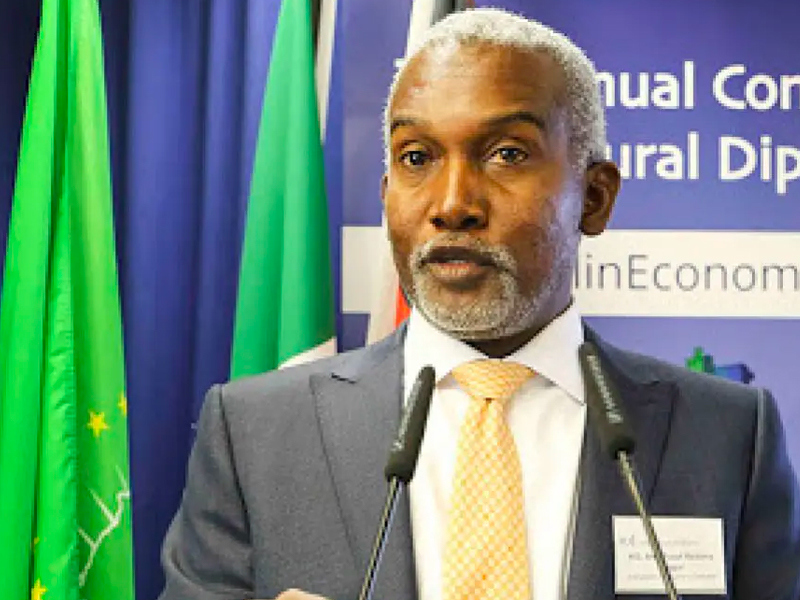
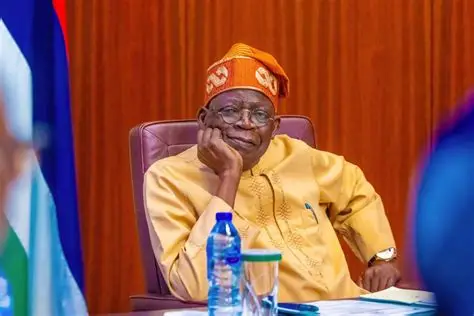
Yusuf Maitama Tuggar: The man the cap fits

Published

on

Adebayo Adeoye
In every defining political season, the real question is not simply who can lead, but who fits the moment. In Bauchi State’s unfolding story, many believe Yusuf Maitama Tuggar is that fit — the man the cap sits on with ease and authority.
Leadership, like a cap, is symbolic and weighty. It demands balance, composure and a certain natural bearing. Not every head can carry it without strain. Tuggar, honed by years of public service and diplomatic finesse, wears it with quiet confidence. His demeanor is calm, his rhetoric measured, his vision deliberate.
On the global stage, he cultivated the art of negotiation, consensus-building and strategic engagement. He understands policy not as theory but as a living instrument for development. That rare fusion of international exposure and local awareness positions him uniquely in a state eager for growth and renewed direction.
Yet beyond résumé and reputation lies temperament. Tuggar’s strength is not in political theatrics but in thoughtful engagement. In an era where volume often substitutes for value, he represents depth over display, strategy over slogans.
Bauchi stands at a crossroads — rich in agricultural promise, blessed with youthful energy and hungry for investment-driven transformation. What it requires is steady, purposeful leadership. Tuggar’s outlook aligns with those aspirations, offering a vision rooted in structure, sustainability and inclusive progress.
Continue Reading
Click to comment

Leave a Reply

Your email address will not be published. Required fields are marked *

Politics

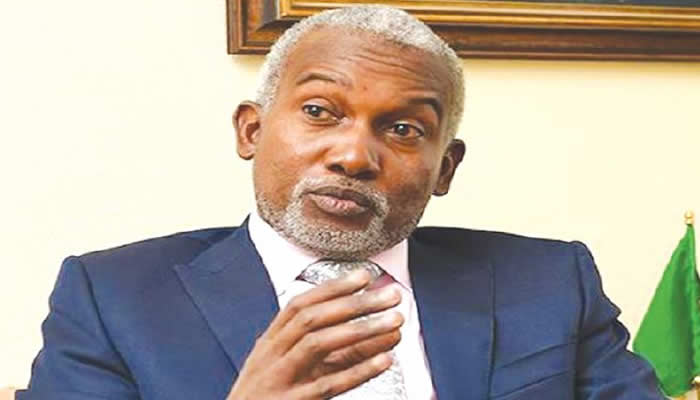
Amb. Yusuff Maitama Tuggar: A leader committed to positive change

Published

on

By Adebayo Adeoye
No doubt many have lost hope in the nation’s democratic process, but the beauty of democracy can always be restored when the people begin to enjoy the much-needed dividends of good and credible governance. This reality has brought many to the conclusion that the electorate must consciously choose leaders who understand governance and know their onions.
The realities of various protests and public criticism have opened the eyes of many to the urgent need for a new set of individuals who are ready and committed to facilitating positive change. There is a growing demand for a generation of sound minds with the courage to pull the bull by the horns and do the needful to move communities to a place where hope is not only rekindled but dreams are turned into reality.
It is for these reasons that many people increasingly point to Ambassador Yusuf Maitama Tuggar, an experienced diplomat of high repute and a brilliant mind, as a symbol of hope for a new Bauchi State. This growing public yearning is fueled by his passion for using public service as a viable tool for societal re-engineering, rather than any personal declaration or ambition on his part.
As part of his grassroots advocacy and passion for community building and development, Tuggar, in June last year, expressed sympathy for affected traders and condemned the demolition exercise. He pledged support for their recovery and rebuilding efforts. The demolitions, which affected shops along Kano Road and other parts of the Bauchi metropolis, left thousands of small business owners in despair.
Understanding how pivotal education has become to the wholesome development of human nature, Amb Yusuf Maitama Tuggar the Minister of Foreign Affairs this January has granted a scholarship to 40 indigent students to study at the Aminu Sale College of Education in Azare, Bauchi State. No doubt upon the completion of their studies they will contribute immensely to the educational advancement of the zone.
In Nigeria, public leadership has long carried an unwritten expectation: that national prominence should never sever local responsibility. Community foundations linked to political figures often serve as informal bridges between state institutions and grassroots needs. Through the Ambassador Yusuf Maitama Tuggar in Bauchi State appears to reflect this tradition modest in publicity, yet steady in local impact.
Its most visible contribution lies in humanitarian welfare. Periodic distribution of food items, grains, and basic relief materials has provided short-term stability to vulnerable households, particularly in rural communities where inflation, climate pressures, and employment gaps remain acute. Through his intervention on the 15th of December 2024, the ECOWAS Emergency Flood Response supported 850 households across Katagum, Jama’are, Zaki, Gamawa, and Giade local government areas, with a total of 1,000 households benefiting from the initiative. Last he made a personal donation of 20 Million Naira to the same zone to cushion the effects of flooding.
This, among many other actions, has showcased his milk of kindness and deep concern for the welfare of the people.
The current Minister of Foreign Affairs has consistently demonstrated belief in policies and initiatives that have direct impact on the welfare of the people. Many believe that much can be achieved in Bauchi State through proper governance, adequate leadership and effective representation, values he has continued to exemplify in public service. His track record suggests that he would bring governance closer to the grassroots if ever called upon to serve at that level.
Beyond his current role as Minister of Foreign Affairs, Tuggar’s career is marked by deep-rooted political heritage, extensive private sector experience in the energy sector, and recent high-level diplomatic achievements.
Indeed, the growing calls for a bright mind like him to lead Bauchi State reflect the people’s desire to move away from recycling mediocrity towards purposeful leadership with clear vision and plans for governance.
Continue Reading

Politics

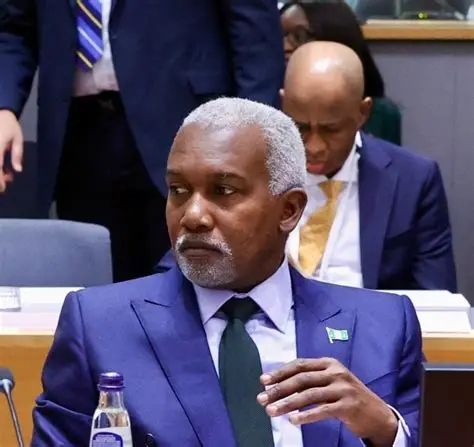
Beyond Protocol: The Tuggar Effect on Nigeria’s Global Standing

Published

on

Adebayo Adeoye
Less than three years after stepping into office as Nigeria’s Minister of Foreign Affairs, Yusuf Maitama Tuggar has steadily carved a distinct imprint on the nation’s diplomatic landscape. In a world increasingly defined by shifting alliances, economic realignments and delicate geopolitical balances, he has proven himself, beyond rhetoric, to be a round peg in a round hole.
From the very beginning, Ambassador Tuggar approached the ministry not merely as an administrative responsibility, but as a strategic command centre for Nigeria’s global engagement. With an intellect sharpened by experience and a temperament grounded in composure, he has brought clarity and coherence to Nigeria’s foreign policy direction. His style is not loud, yet it resonates. It is measured, yet firm. It is thoughtful, yet decisive.
In multilateral corridors and bilateral negotiations alike, Tuggar has showcased the fine balance between diplomacy and national interest. He speaks with precision, listens with intent, and negotiates with foresight. Under his watch, Nigeria’s voice has not only been heard — it has been respected. From strengthening regional partnerships within Africa to redefining economic diplomacy as a core pillar of engagement, he has demonstrated that foreign policy is not an abstract exercise; it is a tool for national development.
Continue Reading

Politics

Former APC leader, Tinubu wash dirty linens publicly

Published

on

A former frontline member of the ruling All Progressives Congress (APC)  Rauf Aregbesola and his former erstwhile boss, President Bola Tinubu are currently locked in what observers have described as mother of all battles.

Aregbesola, the current National secretary of the African Democratic Congress (ADC), fired the first slvo when he described President Bola Tinubu’s renewed hope agenda as a “scam”.

Aregbesola spoke on Tuesday at the party’s national convention in Abuja, where he said the promises made by the Tinubu government had yet to materialise nearly three years into its tenure.

The former Osun state governor accused the Tinubu administration of deepening Nigeria’s socio-economic challenges.

“Four years ago, this government promised Nigerians renewed hope. Now, three years into its tenure, it is still promising renewed hope. When exactly will this hope come into fruition? The answer is simple: it is a scam,” Aregbesola said.

“If allowed, this regime will continue to chant renewed hope till eternity. We have a duty to stop these scammers from retaining power.”

He cited worsening poverty and education indicators as evidence of governance failure.

Aregbesola claimed that the number of out-of-school children has risen from 18.3 million to 20 million, while about 130 million Nigerians are now classified as multidimensionally poor.

He also criticised the federal government’s handling of insecurity, particularly its response to attacks by bandits and terrorists across the country.

“This has been the worst time in terms of security in the nation, with banditry and terrorism spreading across the country,” he said.

” But, also worried is the lack of empathy by the president after the 2025 Yelwata massacre in Benue state. The president, on a condolence trip, did not visit the affected community; rather, he held court at the government house in Benue state.”

The former governor further argued that Nigeria risks being governed by what he termed “the least qualified”, warning against what he described as a drift towards kakistocracy.

“We cannot allow kakistocracy in Nigeria,” he said, adding that the administration should be held accountable to its own commitments, particularly on power supply.

“The government once said it should not be voted for if it fails to provide electricity. An honest president would step down rather than seek re-election under such circumstances,” he added.

On party matters, Aregbesola defended the leadership of David Mark as chairman of the ADC, insisting that due process was followed and that the Independent National Electoral Commission (INEC) had been duly notified.

“Nobody has the locus standi to challenge the leadership of David Mark. Our last NEC meeting was observed by INEC officials, and the report was formally submitted and acknowledged by the commission,” he said.

Aregbesola also accused INEC of partisanship and alleged that the ruling All Progressives Congress (APC) is unsettled by the growing strength of the ADC.

“The ADC is now the largest opposition platform with major political actors. It is clear that the APC is jittery,” he added.

”We call on the international community to take note of INEC’s biased actions.”

Tinubu, through his Special Adviser on Information and Strategy, Bayo Onanuga, on Tuesday fired back at Aregbesola.

Responding in a post on X, Onanuga described Aregbesola’s comments as misleading and accused him of failing to reflect on his record in public office.

“My attention has been drawn to Rauf Aregbesola’s attack on the Tinubu administration at today’s illegal elective convention of the ADC — a party of desperados and power mongers who, to date, have not articulated any credible plan for Nigeria,” he said.

“At the event, Aregbesola reportedly called on his former boss, mentor, and benefactor to resign, parroting the opposition’s warped narratives about the economy and orchestrated reports of terrorist attacks in some parts of the country.”

Onanuga alleged that Aregbesola’s tenure as governor of Osun state was marked by hardship and salary challenges.

“His eight years as governor of Osun State were characterised by unmitigated hardship for the people,” he said.

“Under his half-baked socialist policies, civil servants went unpaid for months, and those who were paid received only a fraction of their salaries.

“It is to Aregbesola’s infamy that Osun became known as a state receiving negative federal allocation and paying just 20 to 30 per cent of normal salaries.

“It was worse for pensioners in Aregbesola’s Osun State. Many pensioners who relied on their meagre monthly payments died because they were not paid at all.”

He added that Aregbesola’s tenure as minister of interior witnessed multiple jailbreaks and security lapses.

“As Minister of Interior under President Muhammadu Buhari, his tenure witnessed the highest number of jailbreaks in Nigeria’s history — including the infamous Kuje Prison escape in Abuja,” he said.

“During his four years, obtaining a Nigerian passport became a nightmarish process, and there were 15 major attacks on correctional facilities in Jos, Abolongo, Imo, Kabba, and Okitipupa, resulting in over 4,000 inmates escaping to join criminal elements.”

Onanuga said the Renewed Hope agenda is yielding results and dismissed Aregbesola’s claims.

“No, Rauf, the Renewed Hope Agenda is not a scam. The real scammers are the politicians gathered inside the SPV called ADC,” he added.

 

Continue Reading

Trending

Copyright © 2017 Zox News Theme. Theme by MVP Themes, powered by WordPress.