
World News
Italy moves against Trump

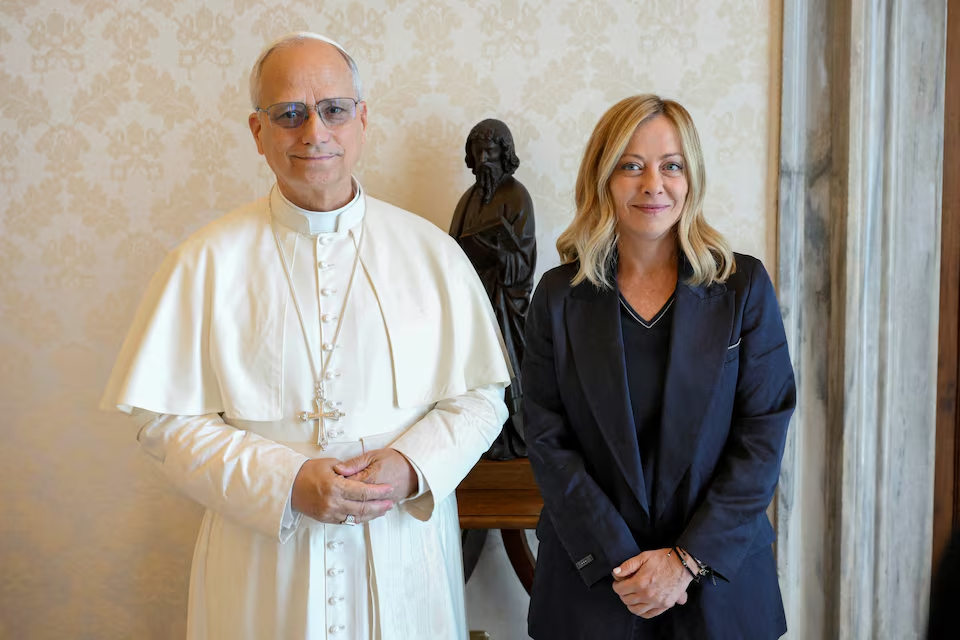
Italy has moved against US President Donald Trump following his verbal attack on Pope Leo XIV.
A report by Reuters said Italy’s Prime Minister Giorgia Meloni offered support to Pope Leo on Tuesday, after the pontiff was sharply criticised by Trump.
“I express my solidarity with Pope Leo, frankly I would not feel very comfortable in a society where religious leaders do what political leaders say,” Meloni said.
The Italian leader, who is seen as close to Trump, was speaking to reporters in Verona, on the sidelines of a conference on the wine industry.







By Philippine Duru
philippineobetoduru@gmail.com
08034905774
Global crude oil prices rose by more than one per cent on Monday as escalating geopolitical tensions in the Middle East heightened fears of potential disruptions to global energy supplies, prompting traders to increase risk premiums in the market.
Brent crude, the international benchmark for oil prices, climbed to approximately $89.22 per barrel, while the U.S. benchmark, West Texas Intermediate (WTI), advanced to around $83.23 per barrel, extending gains recorded in recent trading sessions.
The latest rally reflects growing concerns among investors over the possibility that heightened instability in the Middle East—one of the world’s most important oil-producing regions—could affect production, transportation, or exports of crude oil.
Market analysts said geopolitical developments have once again become the dominant driver of oil prices, overshadowing broader concerns about global economic growth and oil demand. Any threat to oil infrastructure or shipping routes in the region typically triggers price increases as traders factor in the risk of supply shortages.
The Middle East accounts for a significant share of global crude oil production and exports. Key maritime routes such as the Strait of Hormuz remain critical to international energy trade, with millions of barrels of crude oil and petroleum products passing through the waterway daily. Any disruption along these routes could tighten global supplies and push prices even higher.
Analysts noted that the increase in crude prices was also supported by expectations of tighter global supply, particularly as major oil-producing countries continue to manage production levels under existing output agreements.
Beyond geopolitical concerns, investors are closely monitoring inventory data, demand forecasts from major economies, and monetary policy decisions by central banks, all of which continue to influence market sentiment.
Higher crude oil prices could have far-reaching implications for the global economy, particularly by increasing transportation, manufacturing, and energy costs. Rising energy prices also pose a challenge for central banks battling inflation, as higher fuel costs often feed into broader consumer prices.
For Nigeria, Africa’s largest crude oil producer, sustained higher oil prices could boost government revenues, strengthen foreign exchange earnings, and improve fiscal performance, provided crude production remains stable and export volumes increase. Increased oil receipts could also support external reserves and provide additional fiscal space for government spending.
However, economists caution that higher international crude prices may also translate into increased costs for refined petroleum products, potentially putting pressure on domestic fuel prices in countries that rely heavily on imports of refined products.
Energy market participants will continue to monitor developments in the Middle East for signs of further escalation or diplomatic efforts that could ease tensions. They will also be watching upcoming reports from major energy agencies and production updates from leading oil-producing nations for fresh direction on the outlook for global oil markets.
With geopolitical uncertainty persisting, analysts expect crude prices to remain volatile in the near term as traders react to new developments affecting global supply and demand fundamentals.

Torrential rainfall has triggered widespread flooding across several West African countries, including Nigeria, Ghana, Togo and Côte d’Ivoire, leaving dozens dead, destroying property and disrupting economic activities as authorities warn residents to remain vigilant.
In Ghana, at least 13 people were killed after heavy rainfall caused severe flooding in the capital, Accra, according to the BBC. The government has urged residents to remain indoors or relocate to higher ground as emergency responders continue rescue operations.
The BBC reported that Accra’s flooding has been worsened by inadequate drainage infrastructure, blocked gutters and the construction of illegal buildings on waterways.
Ghanaian President John Mahama described the 140 millimetres of rainfall recorded during the storm as the highest experienced in the country in several years.
“That aspect of the problem is beyond our control because it is driven by changing climatic conditions,” Mahama wrote on X.
Videos circulating on social media showed residents stranded on rooftops and fences while floodwaters submerged neighbourhoods. Several affected communities also experienced power outages.
In neighbouring Togo, continuous heavy rainfall has flooded parts of the capital, Lomé, affecting homes and businesses across several communities.
Côte d’Ivoire has also been hit hard by the downpour, with at least 12 people reported dead and five others injured in the commercial capital, Abidjan, following days of relentless rainfall.
Nigeria has also experienced severe flooding after days of heavy rain, with social media videos showing streets transformed into rivers, vehicles trapped in floodwaters and residents wading through waist-deep water to salvage belongings.
In Lagos, many motorists were stranded for hours as major roads became impassable following intense rainfall. Similar flooding was reported in parts of Oyo, Ogun and Osun states, disrupting transportation and commercial activities.
Some Lagos residents said they were unable to reopen their businesses because floodwaters had yet to recede.
A resident identified simply as James said his family spent the night lifting household items to prevent damage.
“We barely slept last night. My home was flooded, and we had to raise our mattress so it wouldn’t soak up water,” he said.
Experts say Lagos remains particularly vulnerable to flooding due to rapid urbanisation, indiscriminate construction and extensive land reclamation that have reduced wetlands and natural floodplains capable of absorbing excess rainwater.
The latest flooding has renewed concerns over Nigeria’s recurring flood crisis despite repeated warnings from weather and hydrological agencies.
Earlier this year, the Nigerian Meteorological Agency (NiMet), in its 2026 Seasonal Climate Prediction, forecast above-normal rainfall, prolonged rainy seasons and heightened flood risks across many parts of the country.
The agency warned that flash floods were likely in several southern states, including Lagos, Ogun, Oyo, Delta and Cross River.
Similarly, the Nigeria Hydrological Services Agency (NIHSA), in its 2026 Annual Flood Outlook, identified 33 states and the Federal Capital Territory as being at risk of flooding during the rainy season.
The agency said more than 14,000 communities across 266 local government areas fall within high-risk flood zones, with the peak flooding period expected between July and September. Lagos, Ogun, Oyo, Osun, Abia, Cross River and Delta were listed among the states most vulnerable to severe flooding.
Climate experts have linked the increasing frequency and intensity of flooding across Africa to climate change, warning that the continent remains one of the regions most vulnerable to extreme weather despite contributing the least to global greenhouse gas emissions.
They have called for increased investment in climate adaptation, improved drainage infrastructure, stronger early warning systems and greater international financial support to help African countries build resilience against climate-related disasters.
The call comes after negotiators at the recent United Nations climate talks in Bonn failed to agree on a new global adaptation finance framework ahead of the COP31 summit, with African countries seeking stronger financial commitments while developed nations pushed for further discussions on reporting mechanisms.
As West Africa grapples with devastating floods, Europe is simultaneously battling an intense heatwave, with temperatures exceeding 40 degrees Celsius in several countries, underscoring the growing global impac
t of extreme weather linked to climate change.
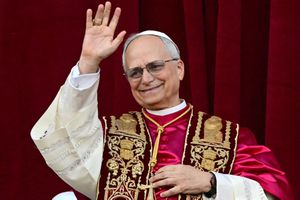
His Holiness, Pope Leo XIV, has appointed the Archbishop of Lagos, Most Rev. Dr. Alfred Adewale Martins, as a member of the Vatican’s Dicastery for Evangelization, effective June 30, 2026.
The appointment, announced by the Archdiocese of Lagos, recognises Archbishop Martins’ 27 years of episcopal ministry and his contributions to the Catholic Church in sub-Saharan Africa. With the appointment, he becomes the first Nigerian bishop to serve as a member of the Dicastery.
The Dicastery for Evangelization, restructured under Pope Francis through the 2022 Apostolic Constitution Praedicate Evangelium and with its mandate renewed under Pope Leo XIV, is responsible for promoting evangelization in historically Christian societies and supporting the growth of mission Churches, particularly in the Global South.
Born on June 1, 1959, in Abeokuta, Archbishop Martins was ordained a priest on September 18, 1983, by Anthony Cardinal Okogie at Holy Cross Cathedral in Lagos. He earned a First Class degree in Theology from the Pontifical Urban University in Rome and later obtained postgraduate degrees in Philosophy from the University of Ibadan and the University of St Andrews. He also commenced doctoral studies at the University of Edinburgh before his episcopal appointment.
In 1997, Pope John Paul II appointed him the first Bishop of the Diocese of Abeokuta. During his 14-year tenure, the diocese expanded significantly, growing from eight incardinated priests to more than 60. He was later appointed Archbishop of Lagos by Pope Benedict XVI on May 25, 2012.
Since assuming leadership of the Metropolitan Archdiocese of Lagos, Archbishop Martins has ordained 84 priests, expanded the Archdiocese from seven to 20 deaneries, and dedicated more than 50 churches and parishes. He currently oversees an estimated 3.5 million Catholics within the Archdiocese, which serves a population of about 20 million people across approximately 3,577 square kilometres.
The Archdiocese comprises more than 230 parishes, over 200 outstations, 100 Mass centres, and 20 deaneries. It is served by about 600 priests, including diocesan, Fidei Donum, and religious priests, alongside hundreds of religious brothers and sisters. The Archdiocese also manages more than 100 healthcare institutions, around 80 schools, and numerous charitable and pastoral centres.
During his tenure, Augustine University, Ilara-Epe, became the first Catholic-owned university in Lagos State to attain full degree-awarding status. He also established the St. John Mary Vianney Home for Priests and the Archdiocesan Pastoral Centre to strengthen priestly formation and pastoral work.
At the national level, Archbishop Martins previously served as Secretary General of the Catholic Bishops’ Conference of Nigeria from 2008 to 2012 and currently serves as its Vice President. He is also Co-Chairman of the Nigerian Anglican–Roman Catholic Commission and Chairman of the Governing Council of the Catholic Institute of West Africa.
According to the Archdiocese, Archbishop Martins will continue to serve as Archbishop of Lagos while participating in the assemblies, consultations and decision-making processes of the Dicastery in Rome as required.
The announcement was signed by the Secretary to the Archbishop of Lagos, Rev. Fr. Paul Ari
ole, on June 30, 2026.


O’tega Ogra ADVAN elected president

NPA begins $1bn port modernisation to boost trade
Nigeria’s foreign exchange market records historic turnover
-

 News9 years ago
These ’90s fashion trends are making a comeback in 2017
-
Business9 years ago
The 9 worst mistakes you can ever make at work
-
Entertainment9 years ago
The final 6 ‘Game of Thrones’ episodes might feel like a full season
-
 News4 months ago
SERAP to Akpabio: Disclose officials involved in misappropriation of ₦200t from NNPC
-
News9 years ago
According to Dior Couture, this taboo fashion accessory is back
-
 News4 months ago
Disquiet over whereabouts of ₦2.9 billion in key federal agencies
-
Sports9 years ago
Phillies’ Aaron Altherr makes mind-boggling barehanded play
-
Entertainment9 years ago
The old and New Edition cast comes together to perform