Connect with us

News

World Bank makes fresh forecast about Nigeria economy

Published

on

By Philippine Duru

philippineobetoduru@gmail.com

08034905774

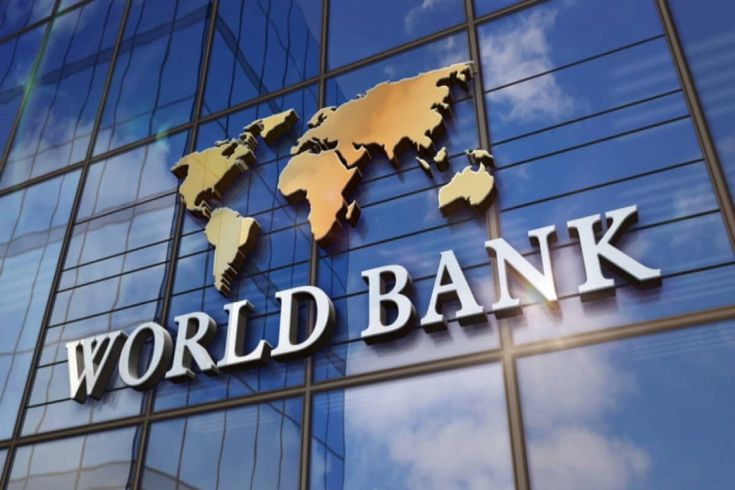
Nigeria’s economy is projected to record stronger growth in 2026 and 2027, with the World Bank and other global financial institutions forecasting expansion of about 4.4 per cent, a development analysts say could mark the country’s fastest pace of growth in more than a decade.

The positive outlook comes amid ongoing economic reforms by the administration of President Bola Ahmed Tinubu, including the removal of fuel subsidies, foreign exchange market liberalisation, tax reforms and efforts aimed at boosting investor confidence.


According to recent projections by the World Bank, Nigeria is expected to sustain stronger economic momentum over the next two years as macroeconomic adjustments begin to yield results. Economists noted that improved fiscal management, increased domestic revenue mobilisation and a gradual recovery in oil production are expected to support the anticipated growth trajectory.


The projections place Nigeria among the fastest-growing major economies in Africa, with optimism that the country may witness its most robust economic expansion since the rebasing-driven growth era of the early 2010s.


Financial analysts said recent reforms in the foreign exchange market have started improving transparency and narrowing the gap between official and parallel market exchange rates. This, they argued, could encourage greater foreign direct investment inflows and improve access to foreign capital.


In addition, stronger performance is expected from sectors outside crude oil, particularly agriculture, telecommunications, financial services, manufacturing and the digital economy. Industry experts believe the continued rise of technology-driven businesses and fintech companies could further strengthen Nigeria’s non-oil exports and employment generation.


The country’s banking sector has also remained relatively resilient despite inflationary pressures, while recent recapitalisation plans announced by the Central Bank of Nigeria are expected to improve the sector’s capacity to support long-term economic growth and infrastructure financing.


However, economists warned that significant risks still threaten the optimistic outlook. Persistent inflation, high food prices, insecurity in food-producing regions, global oil price volatility and external economic shocks remain major concerns that could weaken projected gains.


Analysts also cautioned that while reforms have received commendation from international financial institutions, many Nigerians continue to face rising living costs and declining purchasing power. They stressed that the success of the reforms would largely depend on the government’s ability to cushion social impacts and ensure inclusive growth.


Energy experts further warned that any major disruption in global oil markets or a sharp decline in crude prices could affect government revenues and foreign exchange earnings, given Nigeria’s continued dependence on oil exports.


Despite the risks, market observers maintained that the improving projections signal renewed confidence in Africa’s largest economy. They added that if reforms are sustained and structural bottlenecks addressed, Nigeria could enter a period of more stable and diversified economic expansion over the next few years.
Continue Reading
Click to comment

Leave a Reply

Your email address will not be published. Required fields are marked *

News

Nigeria to understudy Benin industrialisation model

Published

on


Vice President Kashim Shettima has led a high-level Nigerian delegation, comprising six state governors, on a study visit to the Glo-Djigbé Industrial Zone in the Republic of Benin as part of the Federal Government’s efforts to accelerate industrialisation, boost manufacturing, and attract greater investment into Nigeria.


The delegation visited the industrial hub to understake a firsthand assessment of its development model, operational framework, and investment ecosystem, with the aim of identifying strategies that can be adapted to support Nigeria’s industrial and economic transformation agenda.


The visit forms part of the Federal Government’s broader drive to strengthen the country’s manufacturing base, promote value addition in agriculture, expand exports, and create sustainable employment opportunities through industrial development.


During the tour, the Nigerian delegation was briefed on the establishment, governance structure, infrastructure, and investment incentives that have enabled the Glo-Djigbé Industrial Zone to attract local and international investors in sectors such as agro-processing, textiles, pharmaceuticals, logistics, and light manufacturing.


Officials explained how the industrial zone has leveraged modern infrastructure, investor-friendly policies, efficient logistics, and public-private partnerships to stimulate industrial production and export-oriented manufacturing.


Speaking during the visit, Vice President Shettima said Nigeria remains committed to creating an enabling environment for industrial growth and investment, noting that learning from successful models within the region would help shape policies capable of unlocking the country’s vast economic potential.


He stressed the importance of collaboration among federal and state governments in driving industrial development, adding that subnational governments have a critical role to play in providing infrastructure, improving the ease of doing business, and attracting private sector investment.


The governors accompanying the Vice President also expressed optimism that lessons from the Benin industrial zone could be replicated in Nigeria to establish more competitive industrial parks and special economic zones capable of supporting manufacturing and agricultural processing.


Industry stakeholders said the study tour underscores Nigeria’s determination to diversify its economy away from crude oil dependence by strengthening value-added production, expanding agro-industrial activities, and increasing non-oil exports.


Analysts noted that well-planned industrial zones can serve as catalysts for economic growth by attracting investment, promoting technology transfer, supporting small and medium-sized enterprises, and generating large-scale employment.


They added that improved industrial infrastructure would enhance Nigeria’s competitiveness under the African Continental Free Trade Area (AfCFTA), enabling domestic manufacturers to access larger regional markets.


Experts also emphasized that adopting global and regional best practices in industrial zone management could improve operational efficiency, encourage export-oriented manufacturing, and strengthen supply chains across key sectors of the economy.


The visit is expected to foster closer economic cooperation between Nigeria and the Republic of Benin while providing valuable insights into policies and institutional frameworks that have contributed to the success of the Glo-Djigbé Industrial Zone.


As Nigeria continues to pursue its industrialisation agenda, stakeholders believe the lessons from the Benin Republic model could help shape future investments in industrial parks, agro-processing hubs, and manufacturing clusters, ultimately boosting economic diversification, job creation, and sustainable growth.

Continue Reading

News

Peter Obi promises power sector reforms

Published

on

By Philippine Duru

philippineobetoduru@gmail.com

08034905774


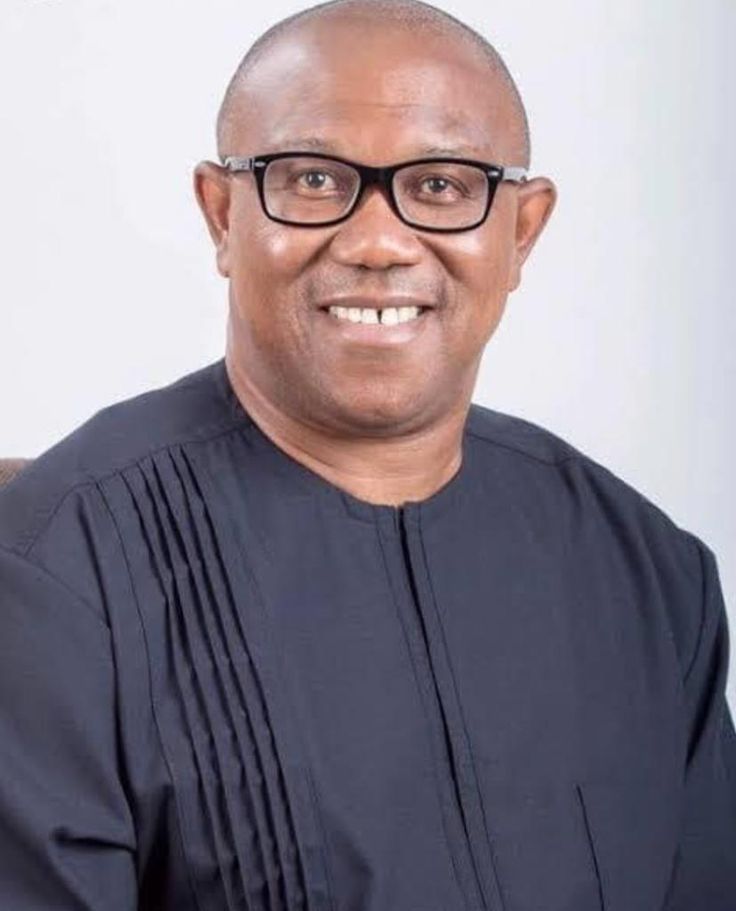
Nigeria Democratic Congress (NDC) presidential candidate and former Anambra State Governor, Peter Obi, has said it would be impossible to provide uninterrupted 24-hour electricity across Nigeria within a single four-year presidential term, describing such promises as unrealistic given the country’s deep-rooted infrastructure challenges.


Obi made the remarks during an appearance on Channels Television’s Sunday Politics on Sunday, July 26, where he outlined his plans for transforming Nigeria’s power sector ahead of the 2027 general election.


According to him, constructing the infrastructure needed to deliver stable electricity nationwide requires years of investment in power generation, transmission and distribution networks, making it impractical to guarantee 24-hour electricity within a four-year administration.


He explained that building a new power plant alone could take about four years, while expanding and modernising the national transmission network would require additional time. For that reason, he said he would rather make achievable commitments than offer promises he believes cannot be fulfilled.


Despite his assessment, Obi pledged that his administration would significantly improve electricity supply by ensuring Nigeria could generate, transmit and distribute at least 10,000 megawatts of electricity within four years.


He said this target would be achieved through embedded power projects and by encouraging decentralized electricity generation, citing the Geometric Power project in Aba as a model that could be replicated in major industrial centres across the country, including Kano’s Bompai and Sharada industrial clusters.


Obi also called for urgent financial reforms in the electricity industry, arguing that the Federal Government must settle outstanding debts owed to electricity generation companies (GenCos) to restore investor confidence and improve liquidity across the sector.


He maintained that a financially viable electricity market would attract greater private investment, leading to improved power generation and better service delivery over time.


The former governor reiterated his commitment to transparency in government, saying leaders should be honest with citizens about what is realistically achievable rather than making campaign promises that cannot be delivered.


Nigeria’s electricity sector has continued to face persistent challenges, including inadequate generation capacity, weak transmission infrastructure, liquidity constraints, gas supply issues and distribution bottlenecks. The country still generates far below the level required to meet the needs of its population and economy, leaving millions of households and businesses dependent on diesel and petrol generators.


Obi’s comments have sparked debate among political observers and energy stakeholders, with some praising his candid assessment of the country’s electricity challenges while others insist that stronger political will and accelerated reforms could deliver faster improvements.


His remarks come as political parties begin to articulate their policy agendas ahead of the 2027 elections, with reliable electricity expected to remain one of the defining issues for voters and a critical factor in Nigeria’s economic growth and industrial development.

Continue Reading

News

Court inspects Meth Lab in Southwest state

Published

on

By Philippine Duru

philippineobetoduru@gmail.com

08034905774


The Federal High Court has conducted an on-site inspection of an alleged clandestine methamphetamine laboratory in Ogun State, marking a significant milestone in the trial of 10 defendants accused of operating a multi-billion-naira international drug manufacturing syndicate.

Justice Musa Kakaki led the inspection of the sprawling facility located in a remote forest in Mowe, Ijebu East Local Government Area of Ogun State, where the National Drug Law Enforcement Agency (NDLEA) alleged that the accused established and operated an industrial-scale methamphetamine laboratory capable of producing large quantities of the illicit drug for export to international markets.

The 10 defendants, comprising three Mexican nationals and seven Nigerians, are facing an 11-count charge bordering on conspiracy, the establishment and operation of a clandestine laboratory, production of methamphetamine, unlawful possession of precursor chemicals, and financing a drug trafficking organisation. All the defendants have pleaded not guilty to the charges.

During the inspection, the prosecution’s first witness and NDLEA laboratory expert, Ajilema Anebi, guided the judge, prosecution team and defence counsel through various sections of the facility. He identified industrial processing equipment, chemical reactors, storage units and precursor substances allegedly used in the manufacture of methamphetamine.

Anebi told the court that the laboratory possessed the capacity to produce substantial quantities of methamphetamine intended for international distribution, describing it as evidence of the growing activities of transnational drug trafficking organisations operating within Nigeria.

According to the prosecution, the laboratory was used to manufacture about 2,419.48 kilograms of methamphetamine, with an estimated street value of more than ₦480 billion. Prosecutors further alleged that members of the syndicate transported large volumes of precursor chemicals, including toluene, hydrochloric acid, acetone and other substances, from Lagos to the forest hideout where the drugs were produced.

However, defence counsel challenged aspects of the prosecution’s case during the inspection, arguing that although the court had been shown production equipment and chemical substances, the prosecution had yet to establish a direct link between the recovered materials and the finished methamphetamine allegedly produced by the defendants.

Following the inspection, Justice Kakaki adjourned the matter until July 24 to continue hearing arguments on the admissibility of exhibits and to rule on an application by the NDLEA seeking the court’s approval to destroy the alleged methamphetamine laboratory on grounds of safety and security.

The case originated from a major NDLEA operation conducted in May, during which operatives dismantled what the agency described as the largest clandestine methamphetamine laboratory ever uncovered in Nigeria. The operation led to the arrest of the three Mexican nationals, who were allegedly recruited to supervise the manufacturing process, alongside seven Nigerian collaborators accused of handling logistics and local operations.

The anti-narcotics agency also recovered more than 2.4 tonnes of methamphetamine and large quantities of precursor chemicals with an estimated street value exceeding ₦480 billion, describing the seizure as one of the country’s biggest drug busts.

Commenting on the operation, NDLEA Chairman and Chief Executive Officer, Brig.-Gen. Mohamed Buba Marwa (retd.), described the discovery as a major breakthrough in Nigeria’s fight against organised transnational crime. He warned that international drug cartels were increasingly establishing sophisticated manufacturing facilities in remote forest locations across the country in an attempt to evade law enforcement agencies.

  1. The outcome of the trial is expected to have far-reaching implications for Nigeria’s anti-drug enforcement efforts, as authorities intensify measures to dismantle transnational drug trafficking networks and prevent the country from becoming a hub for the manufacture and export of illicit narcotics.
Continue Reading

Trending

Copyright © 2017 Zox News Theme. Theme by MVP Themes, powered by WordPress.