News
Why Boko Haram started killing Christians
Lai Mohammed, Nigeria’s former Minister of Information and Culture, has hinted on why Boko Haram insurgents started killing Christians in the country.
He gave the hint while dismissing claims of a targeted genocide against Christians in Nigeria, saying insurgent groups have killed more Muslims than Christians. Mohammed spoke in the United Kingdom yesterday, while fielding questions from students of Abbey College, Cambridge. The session was organised to give students from diverse backgrounds an opportunity to engage on developments in Nigeria, particularly governance and youth participation in politics.
Responding to a question on religious persecution, especially against Christians, the former minister said narratives of a “Christian genocide” in Nigeria were inaccurate. “There should be more understanding on the part of the developed world. Now, people say that there is religious persecution in Nigeria and that there is genocide against Christians. It’s not true. It is fake news,” he said. Mohammed argued that Nigeria’s security challenges were complex and not driven by a deliberate campaign to eliminate any religious group.“Nigeria as a country has challenges that will not be resolved by genocide against any religion,” he added.
He said Boko Haram initially emerged as a movement targeting Muslims who embraced Western education, noting that early victims were largely Muslims.“At the beginning, the victims of Boko Haram were largely Muslims, not Christians. Boko Haram started as a revolt by extreme Muslims against conventional Muslims like me. “Look at the meaning of Boko Haram — ‘haram’ means forbidden or illicit, ‘boko’ means Western education. So for Boko Haram, I, Lai Mohammed,having gone to school, am an enemy.
“They realised that Muslims killing one another doesn’t gain traction. When Muslims start killing Christians, it causes uproar. That is the honest truth,” he said. The former minister also dismissed claims that banditry in Nigeria was driven by religion, describing it instead as a criminal enterprise affecting people of the same ethnic and religious backgrounds.
He insisted that records showed Muslims account for the largest number of victims of insurgent attacks in Nigeria. He said: “The bandits are Muslims, they are Hausa-Fulanis. Their victims are Muslims, they are Hausa-Fulanis. So how can you now talk about religion? It has nothing to do with religion. “We have a spirit of religious tolerance in Nigeria and I challenge anyone to say it is not true.
People can hide under anything to commit crime but one, it is not a policy. Number two, the average Nigerian is not bothered about your religion or ethnicity. “In Nigeria, the average Muslim and Christian only disagree over money. They won’t disagree over theology. They are more concerned about the economy and ways of life. That is why you have many Christians marrying Muslims and vice versa. “So, this narrative about Christian genocide is not true and we must vigorously use public communication to challenge it.”
News
CITAB faults UBEC’s new inclusive education standards
The Centre for Infrastructural and Technological Advancement for the Blind (CITAB) has criticized the newly launched National Special and Inclusive Basic Education Minimum Standards, Implementation Guidelines, and Functional Difficulty Early Identification Tool introduced by the Universal Basic Education Commission (UBEC), describing the initiative as another set of policy documents that fail to address the persistent exclusion of children with disabilities from schools across Nigeria.
The criticism was contained in a press statement issued on Wednesday in Lagos and signed by the Executive Chairman of CITAB, Comrade Jolomi George Fenemigho.
According to the organisation, although UBEC has presented the new standards as a significant step toward inclusive education, a framework based on voluntary compliance and weak supervision cannot guarantee meaningful access to education for children with disabilities.
CITAB argued that without legally binding obligations, independent inspections, and penalties for non-compliance, the standards risk becoming “a public relations achievement in Abuja” while children with disabilities continue to face discrimination in schools nationwide.
Fenemigho said Nigeria’s challenge is not the absence of policy documents but the lack of enforcement, accountability, and political commitment.
“Nigeria has never suffered from a scarcity of beautifully written policy documents. What we suffer from is an absolute lack of enforcement, accountability, and political will. Setting voluntary guidelines in Abuja while schools across Nigeria lock out disabled children is unacceptable. We need legally binding standards across both public and private sectors, backed by relentless annual inspections and severe penalties,” he said.
The organisation identified several shortcomings in the new framework, including the absence of a single enforceable national accessibility standard for schools, delays in accessing special education funds due to State Universal Basic Education Boards (SUBEBs) failing to provide counterpart funding, and the lack of guaranteed provision of Braille materials, tactile learning aids, screen readers, mobility canes, and other assistive technologies despite the introduction of early identification tools for teachers.
CITAB also expressed concern over what it described as an internal monitoring structure, where UBEC supervises SUBEBs, which in turn oversee local education authorities. It warned that such an arrangement could conceal non-compliance rather than expose it.
The organisation called for Organisations of Persons with Disabilities (OPDs) to be formally integrated into the monitoring process to independently assess schools’ compliance with inclusive education standards.
Fenemigho further argued that the guidelines fail to define what genuine inclusion should look like in classrooms, insisting that children with disabilities should learn alongside their peers in accessible environments with trained teachers, inclusive learning materials, and accessible infrastructure such as ramps, toilets, and transport facilities.
“Identifying a visually impaired child without supplying Braille, audio, and digital tools merely logs their disability; it does not educate them. Equipping teachers with checklists while classrooms remain physically inaccessible and teachers are untrained is not inclusion; it is bureaucracy. Until accessibility guidelines carry the force of law, with immediate suspension awaiting any school that fails our children, these standards will remain paper promises,” he added.
The organisation urged the Federal Ministry of Education, UBEC, and State Ministries of Education to adopt a mandatory national accessibility standard for all public and private basic schools and to conduct annual inspections jointly with disability organisations.
It also called for sanctions, including the suspension of operating licences for schools that fail accessibility and inclusion requirements until necessary improvements are made.
Among its other recommendations, CITAB urged state governments to ring-fence funding for disability inclusion, ensure access to matching education funds, integrate disability inclusion and assistive technology into teacher education programmes, and publish annual disability-disaggregated data on enrolment, retention, and learning outcomes.
Fenemigho concluded by stressing that disability-led organisations, including CITAB, should play a central role in monitoring inclusive education across the country.
He said the principle of “Nothing About Us Without Us” should be implemented as a binding national standard rather than treated as a slogan.
News
KACRAN hails Gov. Buni’s ₦28.53bn agricultural empowerment programme
The Kulen Allah Cattle Rearers Association of Nigeria (KACRAN) has commended Yobe State Governor, Hon. (Dr.) Mai Mala Buni, CON, for his sustained investment in agriculture, describing the newly approved ₦28.531 billion 2026 Agricultural Empowerment Programme as a major step toward strengthening food security and stimulating economic growth in the state.

In a statement issued by its National President, Hon. Khalil Mohd Bello, the association praised Governor Buni for making agriculture a priority since assuming office on May 29, 2019.
According to KACRAN, one of the governor’s first major initiatives was the convening of an Agricultural Summit, followed by the inauguration of a high-powered committee of experts led by Professor Abba Gambo to develop strategies for transforming the agricultural sector.
The association said the committee’s recommendations laid the foundation for policies that have positioned Yobe among Nigeria’s leading food-producing states.
KACRAN further noted that the Buni administration has consistently allocated substantial resources to the Yobe State Ministry of Agriculture and Natural Resources, enabling the procurement of tractors, fertilizers, solar-powered irrigation pumps and other farming inputs, which were distributed to farmers either free of charge or at subsidized rates.
The association also commended the appointment of Hon. Ali Mustapha Goniri as Commissioner for Agriculture and Natural Resources, describing it as a strategic decision that has strengthened the implementation of the administration’s agricultural policies.
According to the statement, Goniri has demonstrated commitment, accessibility and dedication to ensuring that government interventions reach farmers and livestock rearers across the state.
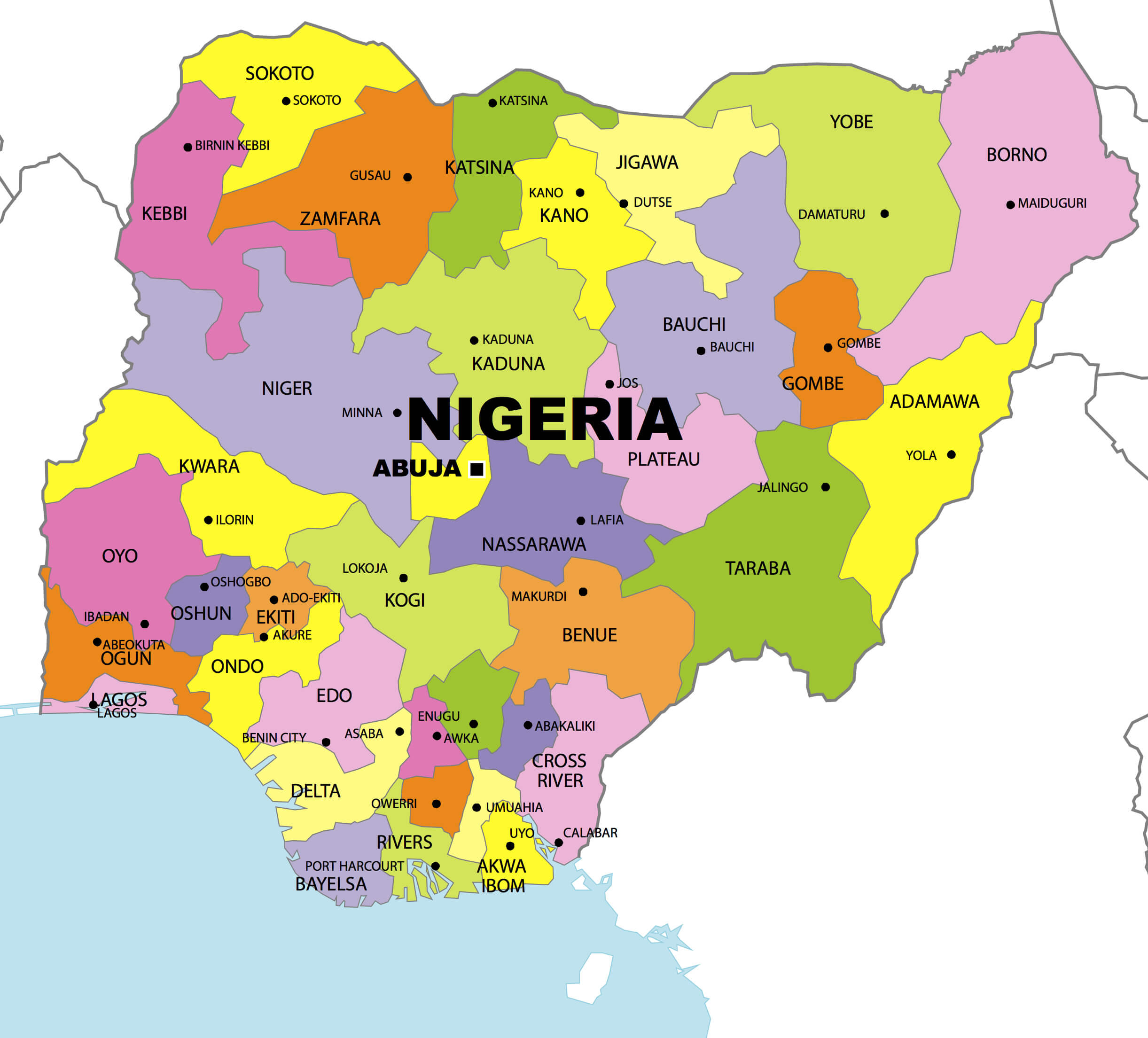
KACRAN observed that with more than 70 percent of Yobe’s population dependent on agriculture, the state has continued to serve as a major supplier of food to other parts of Nigeria and neighbouring Niger Republic.
It particularly applauded Governor Buni’s decision to reduce tractor hiring fees from ₦100,000 to ₦50,000 per day, saying the measure has made mechanized farming more affordable for smallholder farmers.
The association urged farmers in the state to take advantage of the government’s interventions by increasing food production and ensuring agricultural produce remains affordable for consumers.
“KACRAN, as one of the direct beneficiaries of these policies, urges all Yobe farmers to reciprocate this gesture by working hard to increase production and selling food at affordable rates. This is how Governor Buni’s vision of food security and economic prosperity will touch every household,” the statement said.
The association also called on the Federal Government, state governments and local government councils across the country to replicate Yobe’s model of investing heavily in agriculture through subsidized farm inputs and affordable mechanization to enhance national food security and boost economic growth.
KACRAN concluded by describing Governor Buni’s leadership as evidence that purposeful governance and strategic planning can deliver meaningful development to citizens, while wishing the administration continued success.
News
Nigeria to understudy Benin industrialisation model
Vice President Kashim Shettima has led a high-level Nigerian delegation, comprising six state governors, on a study visit to the Glo-Djigbé Industrial Zone in the Republic of Benin as part of the Federal Government’s efforts to accelerate industrialisation, boost manufacturing, and attract greater investment into Nigeria.
The delegation visited the industrial hub to understake a firsthand assessment of its development model, operational framework, and investment ecosystem, with the aim of identifying strategies that can be adapted to support Nigeria’s industrial and economic transformation agenda.
The visit forms part of the Federal Government’s broader drive to strengthen the country’s manufacturing base, promote value addition in agriculture, expand exports, and create sustainable employment opportunities through industrial development.
During the tour, the Nigerian delegation was briefed on the establishment, governance structure, infrastructure, and investment incentives that have enabled the Glo-Djigbé Industrial Zone to attract local and international investors in sectors such as agro-processing, textiles, pharmaceuticals, logistics, and light manufacturing.
Officials explained how the industrial zone has leveraged modern infrastructure, investor-friendly policies, efficient logistics, and public-private partnerships to stimulate industrial production and export-oriented manufacturing.
Speaking during the visit, Vice President Shettima said Nigeria remains committed to creating an enabling environment for industrial growth and investment, noting that learning from successful models within the region would help shape policies capable of unlocking the country’s vast economic potential.
He stressed the importance of collaboration among federal and state governments in driving industrial development, adding that subnational governments have a critical role to play in providing infrastructure, improving the ease of doing business, and attracting private sector investment.
The governors accompanying the Vice President also expressed optimism that lessons from the Benin industrial zone could be replicated in Nigeria to establish more competitive industrial parks and special economic zones capable of supporting manufacturing and agricultural processing.
Industry stakeholders said the study tour underscores Nigeria’s determination to diversify its economy away from crude oil dependence by strengthening value-added production, expanding agro-industrial activities, and increasing non-oil exports.
Analysts noted that well-planned industrial zones can serve as catalysts for economic growth by attracting investment, promoting technology transfer, supporting small and medium-sized enterprises, and generating large-scale employment.
They added that improved industrial infrastructure would enhance Nigeria’s competitiveness under the African Continental Free Trade Area (AfCFTA), enabling domestic manufacturers to access larger regional markets.
Experts also emphasized that adopting global and regional best practices in industrial zone management could improve operational efficiency, encourage export-oriented manufacturing, and strengthen supply chains across key sectors of the economy.
The visit is expected to foster closer economic cooperation between Nigeria and the Republic of Benin while providing valuable insights into policies and institutional frameworks that have contributed to the success of the Glo-Djigbé Industrial Zone.
As Nigeria continues to pursue its industrialisation agenda, stakeholders believe the lessons from the Benin Republic model could help shape future investments in industrial parks, agro-processing hubs, and manufacturing clusters, ultimately boosting economic diversification, job creation, and sustainable growth.
-
News9 years agoThese ’90s fashion trends are making a comeback in 2017
-
Business9 years agoThe 9 worst mistakes you can ever make at work
-
Entertainment9 years agoThe final 6 ‘Game of Thrones’ episodes might feel like a full season
-
News4 months agoSERAP to Akpabio: Disclose officials involved in misappropriation of ₦200t from NNPC
-

News9 years agoAccording to Dior Couture, this taboo fashion accessory is back
-
News4 months agoDisquiet over whereabouts of ₦2.9 billion in key federal agencies
-
Sports9 years agoPhillies’ Aaron Altherr makes mind-boggling barehanded play
-
Entertainment9 years agoThe old and New Edition cast comes together to perform