
Business
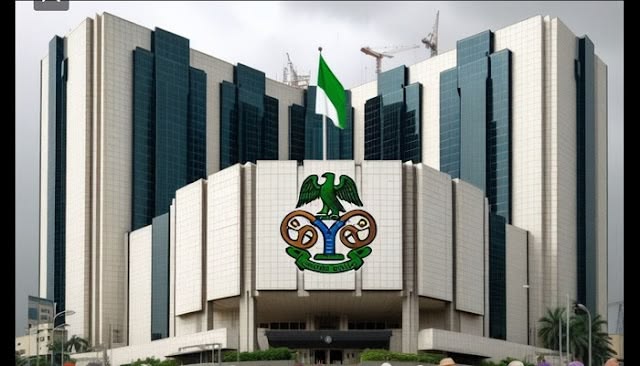
Union Bank reassure customers after court quashes CBN board appointment.


Justice Chukwujekwu Aneke ruled that the CBN’s action was ultra vires, quashing all decisions taken by the CBN-appointed board and ordering the immediate restoration of Union Bank’s former leadership. The court also barred the CBN and its agents from taking any further steps, including those related to the bank’s planned recapitalisation.
In response, Union Bank issued a statement reassuring customers that operations remain fully functional and funds are completely safe. “Throughout this period, your accounts and funds have remained completely safe,” the bank said, noting that all branches and digital channels continue to provide services at the usual high standard.
The bank highlighted its 108-year history of serving individuals, businesses, and communities across Nigeria, emphasising that its legacy is built on enduring relationships and trust. “We do not take that trust lightly,” the statement added, encouraging customers to continue banking with full confidence.
The January 2024 intervention by the CBN had appointed Yetunde Oni as managing director/chief executive officer and Mannir Ubali Ringim as executive director, in a move aimed at overseeing strategic changes including recapitalization. Analysts say the court ruling underscores the limits of regulatory authority and the importance of corporate governance in Nigeria’s banking sector.
Union Bank’s quick communication reflects a broader trend in the Nigerian financial sector of proactively reassuring clients during periods of legal or regulatory uncertainty, a step analysts say is key to maintaining confidence in the banking system.
Customers were advised to contact their dedicated relationship management teams for any inquiries or assistance. The bank’s message underlines that despite governance disputes, its operations and services remain uninterrupted.





By Philippine Duru
philippineobetoduru@gmail.com
08034905774
Industry stakeholders have said the Central Bank of Nigeria’s (CBN) data localisation directive is creating significant opportunities for indigenous technology companies, accelerating investments in local data infrastructure, and strengthening the country’s digital economy.
The stakeholders noted that the policy, which requires banks, payment service providers, fintech firms, and other regulated financial institutions to store and process critical financial data within Nigeria, is expected to deepen local value creation, improve data security, and reduce dependence on foreign hosting services.
According to industry experts, the directive is driving increased demand for Nigerian-owned data centres, cloud computing services, cybersecurity solutions, software development, and other digital infrastructure provided by local technology firms.
Speaking on the development, technology analysts said the policy aligns with Nigeria’s broader ambition to build a resilient digital economy while ensuring that sensitive financial information remains under the country’s legal and regulatory jurisdiction.
They explained that data localisation would encourage financial institutions to migrate their operations to domestic cloud platforms and data centres, creating new business opportunities for indigenous technology companies and stimulating further investment in digital infrastructure.
The experts also noted that local hosting of financial data would enhance regulatory oversight, enable faster compliance monitoring by the CBN, and improve the country’s capacity to respond to cybersecurity threats and operational risks.
Industry operators believe the directive could trigger fresh investments in Tier III and Tier IV data centres across Nigeria as demand for secure and reliable hosting facilities continues to grow.
They added that indigenous cloud service providers, managed IT service companies, cybersecurity firms, and software developers are expected to benefit from increased patronage as financial institutions adjust to the new regulatory requirements.
Beyond the technology sector, stakeholders argued that the directive would have wider economic benefits through job creation, skills development, and increased local content participation in Nigeria’s fast-growing digital services industry.
They said expansion in domestic data infrastructure would generate employment for software engineers, network specialists, cybersecurity professionals, cloud architects, systems administrators, and other highly skilled technology workers.
The policy is also expected to reduce capital flight by retaining spending on data hosting and cloud services within Nigeria instead of relying heavily on foreign service providers.
According to analysts, greater investment in local digital infrastructure could improve internet resilience, reduce latency for financial transactions, and enhance service reliability for banks and fintech companies serving millions of customers nationwide.
Stakeholders, however, stressed that the success of the initiative would depend on sustained investment in electricity supply, broadband connectivity, data centre infrastructure, and cybersecurity capacity.
They urged both the public and private sectors to collaborate in expanding digital infrastructure capable of supporting the anticipated increase in demand for local data storage and cloud computing services.
Industry leaders also called for incentives to encourage indigenous technology firms to scale their operations, including access to affordable financing, tax incentives, and supportive regulatory policies that promote innovation.
Observers noted that as Nigeria’s financial services industry becomes increasingly digital, the localisation of critical financial data represents an important step toward enhancing digital sovereignty, protecting consumer information, and building confidence in the country’s financial ecosystem.
With Nigeria’s fintech industry continuing to attract investment and digital payment adoption rising rapidly, stakeholders believe the CBN’s data localisation directive could become a catalyst for the emergence of stronger indigenous technology champions while reinforcing the nation’s position as one of Africa’s leading digital economies.
By Philippine Duru
philippineobetoduru@gmail.com
08034905774
The Federal Government has intensified efforts to unlock Nigeria’s estimated three billion tonnes of iron ore reserves as part of a broader strategy to revive the nation’s steel industry, reduce dependence on imported steel products, and accelerate industrialization, economic diversification and job creation.
The initiative forms part of the government’s drive to harness the country’s abundant solid mineral resources and position the mining sector as a major contributor to economic growth, foreign exchange earnings and manufacturing development.
Officials said the renewed focus on iron ore development is aimed at creating a sustainable value chain that will support domestic steel production, reduce import bills and provide raw materials for key sectors of the economy, including construction, automobile manufacturing, infrastructure, engineering and defence.
According to the Federal Government, unlocking the country’s vast iron ore deposits will also encourage greater private sector investment in mining, mineral processing and steel manufacturing while strengthening Nigeria’s position as a leading industrial hub in Africa.
The government noted that Nigeria possesses significant iron ore deposits spread across several states, particularly in Kogi, Kaduna, Niger and other parts of the country, but much of the resource remains underdeveloped despite decades of exploration.
Industry experts have long argued that fully exploiting these reserves could transform Nigeria’s industrial landscape by supporting the revival of dormant steel plants, encouraging the establishment of new processing facilities and reducing the country’s reliance on imported steel products.
As part of the renewed push, the Federal Government said it is working to attract both local and foreign investors through policy reforms, improved licensing processes and incentives designed to encourage exploration, mining and downstream processing.
The government also pledged to improve supporting infrastructure, including roads, rail networks and power supply, to lower production costs and enhance the competitiveness of Nigeria’s steel industry.
Analysts say the development of a robust steel industry is critical to achieving the country’s long-term industrialization goals, noting that steel remains a strategic input for manufacturing, housing, transportation, energy and other sectors.
They added that increasing domestic steel production could significantly reduce foreign exchange spent on imports while creating thousands of direct and indirect jobs across mining, logistics, fabrication and engineering industries.
The renewed efforts are also expected to strengthen linkages between the mining and manufacturing sectors, stimulate the growth of small and medium-sized enterprises and promote value addition instead of exporting raw minerals.
Stakeholders have, however, emphasized the need for consistent government policies, transparent regulation and sustained investment in infrastructure to ensure the success of the initiative. They also called for stronger collaboration between the Federal Government, state governments, investors and host communities to guarantee responsible mining practices and environmental sustainability.
The move aligns with the Federal Government’s broader economic diversification agenda, which seeks to reduce dependence on crude oil revenues by unlocking the vast potential of the solid minerals sector.
If successfully implemented, the iron ore development programme is expected to revive Nigeria’s steel industry, boost manufacturing capacity, enhance export competitiveness and contribute significantly to economic growth, while creating employment opportunities and strengthening the country’s industrial base for long-term sustainable development.
By Philippine Duru
philippineobetoduru@gmail.com
08034905774
Nigeria’s maximum lending rate declined to 33.16 percent in June 2026, offering a measure of relief to businesses and consumers seeking access to bank credit amid the country’s high-interest-rate environment.
The latest figures indicate a moderation in borrowing costs after months of elevated lending rates, reflecting the gradual adjustment by commercial banks following the Central Bank of Nigeria’s (CBN) decision to retain the Monetary Policy Rate (MPR) at 26.5 percent.
The decline is expected to provide some breathing space for manufacturers, small and medium-sized enterprises (SMEs), corporate borrowers and households that have struggled with the rising cost of financing over the past year.
Although the reduction is relatively modest, economists say it signals that monetary conditions may be beginning to stabilize after an aggressive tightening cycle aimed at curbing inflation and supporting exchange rate stability.
Banks have continued to review their lending portfolios in response to the CBN’s policy stance, with many gradually adjusting interest rates in line with changing market conditions, liquidity levels and funding costs.
The CBN has maintained a tight monetary policy over the past two years as part of broader efforts to contain inflation, stabilize the naira and attract investment into the Nigerian economy. While the strategy has helped strengthen macroeconomic stability, it has also pushed borrowing costs to multi-year highs, making access to affordable credit increasingly difficult for businesses.
Industry operators say the easing in the maximum lending rate could encourage fresh investments, particularly among businesses looking to expand operations, purchase equipment or increase production capacity.
Manufacturers have repeatedly argued that high financing costs remain one of the biggest obstacles to industrial growth, noting that expensive loans reduce profitability, discourage expansion and weaken the competitiveness of locally produced goods.
Small business owners have also expressed concern over elevated lending rates, saying access to affordable financing remains critical to supporting entrepreneurship, job creation and economic recovery.
Financial analysts believe that while the latest decline is encouraging, lending rates are likely to remain relatively high as long as inflationary pressures persist and the CBN maintains its restrictive monetary policy stance.
According to analysts, commercial banks continue to factor inflation expectations, exchange rate risks, operating costs and credit risks into their loan pricing decisions, limiting the pace at which lending rates can decline.
The decision by the Monetary Policy Committee to leave the benchmark interest rate unchanged at 26.5 percent has been interpreted by many market participants as a signal that the apex bank is prioritizing price stability while closely monitoring inflation and other macroeconomic indicators before considering any monetary easing.
Economists note that a sustained decline in inflation would be a key condition for lower lending rates in the coming months, as it would create room for the CBN to gradually ease monetary policy without undermining economic stability.
Businesses are also hoping that improved liquidity in the banking system, stronger foreign exchange inflows and continued economic reforms will support further reductions in borrowing costs, making credit more accessible to productive sectors of the economy.
Despite the latest improvement, analysts caution that Nigeria’s lending rates remain among the highest in emerging markets, underscoring the need for continued reforms to improve financial sector efficiency, strengthen competition among banks and expand access to affordable financing for businesses and households.
The decline in the maximum lending rate nevertheless represents a positive development for the economy, raising expectations that, if sustained, lower borrowing costs could stimulate private sector investment, boost production, support employment and contribute to stronger economic growth in the months ahead.


Dangote Cement strengthens environmental commitment

CBN creating business opportunities for indigenous tech companies

Federal Government’s broader economic diversification agenda
-

 News9 years ago
These ’90s fashion trends are making a comeback in 2017
-
Business9 years ago
The 9 worst mistakes you can ever make at work
-
Entertainment9 years ago
The final 6 ‘Game of Thrones’ episodes might feel like a full season
-

 News4 months ago
SERAP to Akpabio: Disclose officials involved in misappropriation of ₦200t from NNPC
-
News9 years ago
According to Dior Couture, this taboo fashion accessory is back
-

 News4 months ago
Disquiet over whereabouts of ₦2.9 billion in key federal agencies
-
Sports9 years ago
Phillies’ Aaron Altherr makes mind-boggling barehanded play
-
Entertainment9 years ago
The old and New Edition cast comes together to perform