
News
Senate leadership tightens grip on positions

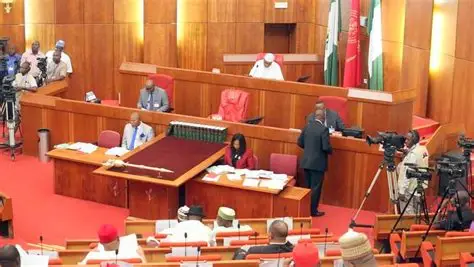
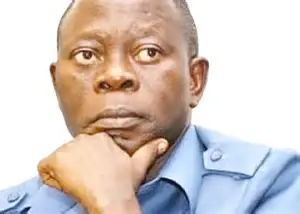
Imo State governor, Hope Uzodimma and former governor of Edo State, Adams Oshiomhole and others hope of vying for top positions in the 11th Senate appears dashed.
This is as the Senate has amended its standing rules in a move that could significantly shape the leadership contest ahead of the 2027 general elections, effectively restricting newly elected senators from vying for top positions in the 11th National Assembly.
The amendment, adopted on Tuesday after a closed-door session lasting about three hours, limits eligibility for the offices of Senate President and other principal positions to lawmakers who have served at least two consecutive terms in the Senate.
Under the revised rules, only senators who were members of both the 9th and the current 10th Senate—and who secure re-election into the 11th Assembly—will qualify to contest for presiding and principal offices.
The development is widely seen as shutting out incoming senators in 2027, including political figures such as Hope Uzodimma (Imo), Kabiru Marafa (Zamfara Central), and Adams Oshiomhole (Edo North), among others, from contesting for Senate leadership roles.
The changes were effected through amendments to Orders 4 and 5 of the Senate Standing Rules.
Order 5 now stipulates that: “Any Senator shall not be eligible to contest for any Principal Office of the Senate unless he has served as a Senator for at least two consecutive terms immediately preceding nomination.”
Similarly, the revised Order 4 reinforces the principle of ranking, stating that the nomination of presiding officers must strictly follow a hierarchy. This includes former Senate Presidents, former Deputy Senate Presidents, former principal officers, senators with at least one term of four years, former members of the House of Representatives, and, only in their absence, first-time senators.
The Senate said the amendment is aimed at strengthening adherence to parliamentary traditions, particularly the ranking system, which prioritizes experience in legislative leadership.
Presiding offices affected by the amendment include the Senate President and Deputy Senate President, while principal offices cover positions such as Senate Leader, Deputy Senate Leader, Chief Whip, Deputy Chief Whip, Minority Leader, Deputy Minority Leader, Minority Whip, and Deputy Minority Whip.
With the new rules in place, the path to Senate leadership in 2027 appears firmly tilted in favour of returning lawmakers with sustained legislative experience.





By Philippine Duru
philippineobetoduru@gmail.com
08034905774
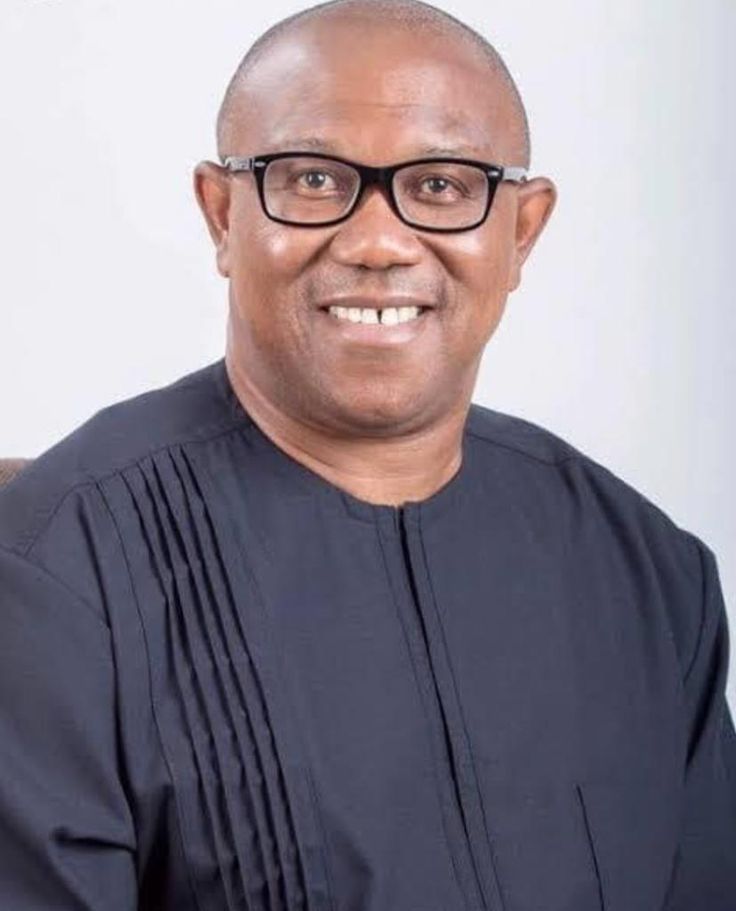
Former Anambra State Governor and Labour Party presidential candidate, Peter Obi, has alleged that suspected hired thugs obstructed his visit to Yelwata community in Benue State, where more than 270 people were reportedly killed in a deadly attack.
Obi made the allegation in a statement following his arrival in Benue on Tuesday, September 8, 2026, saying he had travelled to the state on a humanitarian mission to commiserate with families affected by the killings.
According to him, he arrived in Benue at about 9:00 a.m. but his convoy was prevented from proceeding to the affected community by individuals chanting, “Peter Obi, go back.”
Obi described the incident as distressing, stressing that his visit was not politically motivated but intended to mourn with the bereaved, listen to affected families and offer solidarity following the tragedy.
He said the obstruction was particularly troubling at a time when Nigerians should be united in grief and focused on preventing further loss of lives.
The former governor recalled that he had consistently promoted political civility, citing his attendance the previous day at the opening of the national campaign office of opposition presidential candidate and Oyo State Governor, Seyi Makinde, in Abuja.
He said his presence at the event was meant to demonstrate that political differences should not prevent mutual respect and civility.
Obi also recalled that while serving as governor of Anambra State, he personally welcomed visiting opposition members during election campaigns, provided their activities remained within the law.
He condemned what he described as efforts to deepen political divisions, insisting that Nigerians should be able to live, travel and farm without fear.
“At a time when our nation should be united in grief and resolute in preventing further bloodshed, we must reject any action capable of deepening our divisions,” Obi said.
He maintained that the primary responsibility of government was to protect human life, arguing that political considerations should never take precedence over the safety and security of citizens.
Although he could not reach Yelwata as planned, Obi said his thoughts and prayers remained with the victims, their families and the entire community.
He pledged to continue advocating for the protection of Nigerian lives, concluding with his familiar declaration: “A New Nigeria is POssible.”


NACTAL’s president-elect pledges inclusive leadership, stronger anti-trafficking action

Osita Osememe gets 95.65% votes, emerges NACTAL president

Peter Obi alleges thugs blocked visit to Yelwata massacre victims in Benue
-

 News9 years ago
These ’90s fashion trends are making a comeback in 2017
-
Business9 years ago
The 9 worst mistakes you can ever make at work
-
Entertainment9 years ago
The final 6 ‘Game of Thrones’ episodes might feel like a full season
-
 News6 months ago
SERAP to Akpabio: Disclose officials involved in misappropriation of ₦200t from NNPC
-
 News5 months ago
Disquiet over whereabouts of ₦2.9 billion in key federal agencies
-
News9 years ago
According to Dior Couture, this taboo fashion accessory is back
-
Sports9 years ago
Phillies’ Aaron Altherr makes mind-boggling barehanded play
-
Entertainment9 years ago
The old and New Edition cast comes together to perform