
News
Religious leaders urge Nigerian government to establish AI regulatory guidelines

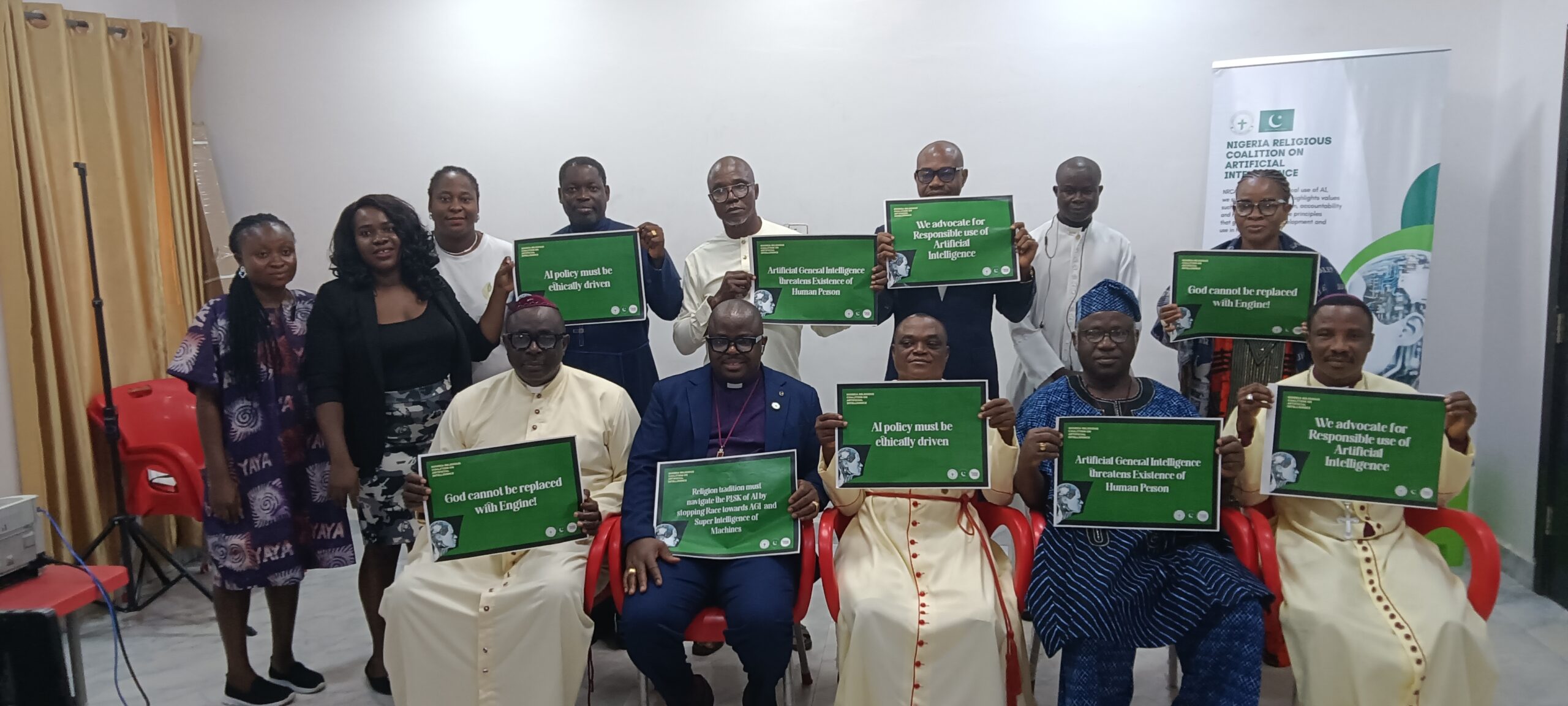
In a pressing call for action, the Nigeria Religious Coalition on Artificial Intelligence (NRCAI) has urged the Federal Government to develop clear regulatory guidelines for Artificial Intelligence (AI) and the emerging field of Artificial General Intelligence (AGI). The coalition warns that the unchecked advancement of these technologies could pose significant threats to humanity, culture, and spirituality.
The appeal came during a media interface held on Tuesday at the Wesley Pastoral Centre in Yaba, Lagos, attended by clerics from the Christian Council of Nigeria (CCN) and Jama’atu Nasril Islam (JNI). The event was organized by the CCN-Institute of Church and Society, Ibadan, with support from the Future of Life Institute in the United States.
The coalition emphasized the importance of including religious leaders in the implementation of the National Artificial Intelligence Strategy 2024, particularly under Pillar 4, which focuses on “Ensuring Responsible and Ethical AI Development.” Very Rev. Kolade Fadahunsi, Director of the CCN-Institute of Church and Society, highlighted the potential dangers of formulating AI regulations without the input of religious figures, who play a crucial role in shaping societal moral and ethical values.
He pointed out that while the National AI Strategy proposes the creation of a High-Level AI Ethics Expert Group, religious leaders are notably absent from this initiative. The interface aimed to amplify the ethical concerns raised by the rapid development of AGI—an advanced form of AI capable of human-like understanding and learning.
Concerns were echoed by Archbishop Adegbemi Adewale of the Methodist Church Niger, who described AGI as an “existential threat.” He stressed the need for laws to safeguard children from the potential dangers of AI technologies.
National Treasurer of CCN, Elder Akaninyene Obot, expressed that the pursuit of AGI should not undermine Nigeria’s cultural and religious values. Similarly, CCN South-West Chairman Archbishop Jeremiah Okunlola called for responsible design in AI development to ensure it does not compromise belief in God.
Clerics raised various concerns about AI’s impact on society. Rev. Aloche from the Lagos Presbyterian Church warned of its detrimental effects on critical thinking and creativity among young people. Nneoma Mary Onyemara, Women Leader of the Methodist Church, highlighted AI’s negative influence on family relationships and social dynamics, while Archbishop Bankole Faburoso of the Church of the Lord Worldwide referred to AI as “a helpful servant and dangerous master,” emphasizing the need for human oversight guided by spiritual values.
Archbishop Christopher Ede of the Methodist Church in Enugu cautioned against excessive reliance on AGI, warning that it could lead to machines replacing human roles in vital areas of life. He stressed the necessity of ethical monitoring to prevent the exacerbation of inequality and security threats.
In closing, Bishop Evans Onyemara, General Secretary of CCN, reaffirmed the coalition’s commitment to advocating for effective AI regulations and educating congregations about the benefits and risks associated with these technologies. He announced plans to engage the Christian Association of Nigeria (CAN) to further discussions with the Federal Government on potential regulatory frameworks.
“We are all concerned about safeguarding the future of our children, and we shall continue to do our best to ensure that AI and AGI will not overtake them and their future,” he stated.

The Kulen Allah Cattle Rearers Association of Nigeria (KACRAN) has commended Yobe State Governor, Hon. (Dr.) Mai Mala Buni, CON, for his sustained investment in agriculture, describing the newly approved ₦28.531 billion 2026 Agricultural Empowerment Programme as a major step toward strengthening food security and stimulating economic growth in the state.

In a statement issued by its National President, Hon. Khalil Mohd Bello, the association praised Governor Buni for making agriculture a priority since assuming office on May 29, 2019.
According to KACRAN, one of the governor’s first major initiatives was the convening of an Agricultural Summit, followed by the inauguration of a high-powered committee of experts led by Professor Abba Gambo to develop strategies for transforming the agricultural sector.
The association said the committee’s recommendations laid the foundation for policies that have positioned Yobe among Nigeria’s leading food-producing states.
KACRAN further noted that the Buni administration has consistently allocated substantial resources to the Yobe State Ministry of Agriculture and Natural Resources, enabling the procurement of tractors, fertilizers, solar-powered irrigation pumps and other farming inputs, which were distributed to farmers either free of charge or at subsidized rates.
The association also commended the appointment of Hon. Ali Mustapha Goniri as Commissioner for Agriculture and Natural Resources, describing it as a strategic decision that has strengthened the implementation of the administration’s agricultural policies.
According to the statement, Goniri has demonstrated commitment, accessibility and dedication to ensuring that government interventions reach farmers and livestock rearers across the state.
KACRAN observed that with more than 70 percent of Yobe’s population dependent on agriculture, the state has continued to serve as a major supplier of food to other parts of Nigeria and neighbouring Niger Republic.
It particularly applauded Governor Buni’s decision to reduce tractor hiring fees from ₦100,000 to ₦50,000 per day, saying the measure has made mechanized farming more affordable for smallholder farmers.
The association urged farmers in the state to take advantage of the government’s interventions by increasing food production and ensuring agricultural produce remains affordable for consumers.
“KACRAN, as one of the direct beneficiaries of these policies, urges all Yobe farmers to reciprocate this gesture by working hard to increase production and selling food at affordable rates. This is how Governor Buni’s vision of food security and economic prosperity will touch every household,” the statement said.
The association also called on the Federal Government, state governments and local government councils across the country to replicate Yobe’s model of investing heavily in agriculture through subsidized farm inputs and affordable mechanization to enhance national food security and boost economic growth.
KACRAN concluded by describing Governor Buni’s leadership as evidence that purposeful governance and strategic planning can deliver meaningful development to citizens, while wishing the administration continued success.

Vice President Kashim Shettima has led a high-level Nigerian delegation, comprising six state governors, on a study visit to the Glo-Djigbé Industrial Zone in the Republic of Benin as part of the Federal Government’s efforts to accelerate industrialisation, boost manufacturing, and attract greater investment into Nigeria.
The delegation visited the industrial hub to understake a firsthand assessment of its development model, operational framework, and investment ecosystem, with the aim of identifying strategies that can be adapted to support Nigeria’s industrial and economic transformation agenda.
The visit forms part of the Federal Government’s broader drive to strengthen the country’s manufacturing base, promote value addition in agriculture, expand exports, and create sustainable employment opportunities through industrial development.
During the tour, the Nigerian delegation was briefed on the establishment, governance structure, infrastructure, and investment incentives that have enabled the Glo-Djigbé Industrial Zone to attract local and international investors in sectors such as agro-processing, textiles, pharmaceuticals, logistics, and light manufacturing.
Officials explained how the industrial zone has leveraged modern infrastructure, investor-friendly policies, efficient logistics, and public-private partnerships to stimulate industrial production and export-oriented manufacturing.
Speaking during the visit, Vice President Shettima said Nigeria remains committed to creating an enabling environment for industrial growth and investment, noting that learning from successful models within the region would help shape policies capable of unlocking the country’s vast economic potential.
He stressed the importance of collaboration among federal and state governments in driving industrial development, adding that subnational governments have a critical role to play in providing infrastructure, improving the ease of doing business, and attracting private sector investment.
The governors accompanying the Vice President also expressed optimism that lessons from the Benin industrial zone could be replicated in Nigeria to establish more competitive industrial parks and special economic zones capable of supporting manufacturing and agricultural processing.
Industry stakeholders said the study tour underscores Nigeria’s determination to diversify its economy away from crude oil dependence by strengthening value-added production, expanding agro-industrial activities, and increasing non-oil exports.
Analysts noted that well-planned industrial zones can serve as catalysts for economic growth by attracting investment, promoting technology transfer, supporting small and medium-sized enterprises, and generating large-scale employment.
They added that improved industrial infrastructure would enhance Nigeria’s competitiveness under the African Continental Free Trade Area (AfCFTA), enabling domestic manufacturers to access larger regional markets.
Experts also emphasized that adopting global and regional best practices in industrial zone management could improve operational efficiency, encourage export-oriented manufacturing, and strengthen supply chains across key sectors of the economy.
The visit is expected to foster closer economic cooperation between Nigeria and the Republic of Benin while providing valuable insights into policies and institutional frameworks that have contributed to the success of the Glo-Djigbé Industrial Zone.
As Nigeria continues to pursue its industrialisation agenda, stakeholders believe the lessons from the Benin Republic model could help shape future investments in industrial parks, agro-processing hubs, and manufacturing clusters, ultimately boosting economic diversification, job creation, and sustainable growth.
By Philippine Duru
philippineobetoduru@gmail.com
08034905774
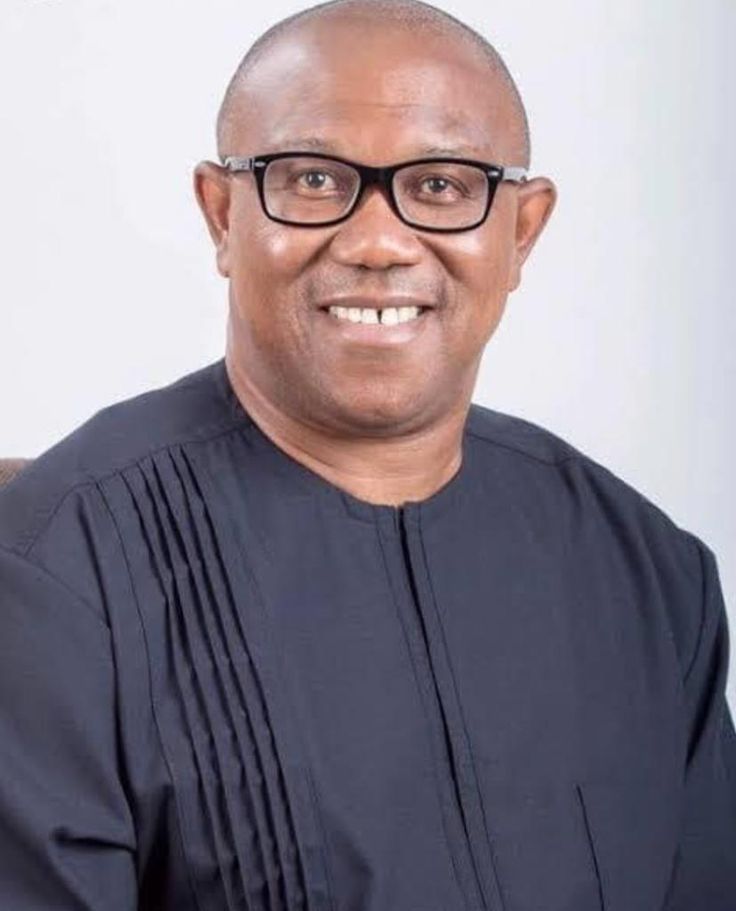
Nigeria Democratic Congress (NDC) presidential candidate and former Anambra State Governor, Peter Obi, has said it would be impossible to provide uninterrupted 24-hour electricity across Nigeria within a single four-year presidential term, describing such promises as unrealistic given the country’s deep-rooted infrastructure challenges.
Obi made the remarks during an appearance on Channels Television’s Sunday Politics on Sunday, July 26, where he outlined his plans for transforming Nigeria’s power sector ahead of the 2027 general election.
According to him, constructing the infrastructure needed to deliver stable electricity nationwide requires years of investment in power generation, transmission and distribution networks, making it impractical to guarantee 24-hour electricity within a four-year administration.
He explained that building a new power plant alone could take about four years, while expanding and modernising the national transmission network would require additional time. For that reason, he said he would rather make achievable commitments than offer promises he believes cannot be fulfilled.
Despite his assessment, Obi pledged that his administration would significantly improve electricity supply by ensuring Nigeria could generate, transmit and distribute at least 10,000 megawatts of electricity within four years.
He said this target would be achieved through embedded power projects and by encouraging decentralized electricity generation, citing the Geometric Power project in Aba as a model that could be replicated in major industrial centres across the country, including Kano’s Bompai and Sharada industrial clusters.
Obi also called for urgent financial reforms in the electricity industry, arguing that the Federal Government must settle outstanding debts owed to electricity generation companies (GenCos) to restore investor confidence and improve liquidity across the sector.
He maintained that a financially viable electricity market would attract greater private investment, leading to improved power generation and better service delivery over time.
The former governor reiterated his commitment to transparency in government, saying leaders should be honest with citizens about what is realistically achievable rather than making campaign promises that cannot be delivered.
Nigeria’s electricity sector has continued to face persistent challenges, including inadequate generation capacity, weak transmission infrastructure, liquidity constraints, gas supply issues and distribution bottlenecks. The country still generates far below the level required to meet the needs of its population and economy, leaving millions of households and businesses dependent on diesel and petrol generators.
Obi’s comments have sparked debate among political observers and energy stakeholders, with some praising his candid assessment of the country’s electricity challenges while others insist that stronger political will and accelerated reforms could deliver faster improvements.
His remarks come as political parties begin to articulate their policy agendas ahead of the 2027 elections, with reliable electricity expected to remain one of the defining issues for voters and a critical factor in Nigeria’s economic growth and industrial development.


KACRAN hails Gov. Buni’s ₦28.53bn agricultural empowerment programme

Nigeria to understudy Benin industrialisation model

O’tega Ogra ADVAN elected president
-

 News9 years ago
These ’90s fashion trends are making a comeback in 2017
-
Business9 years ago
The 9 worst mistakes you can ever make at work
-
Entertainment9 years ago
The final 6 ‘Game of Thrones’ episodes might feel like a full season
-
 News4 months ago
SERAP to Akpabio: Disclose officials involved in misappropriation of ₦200t from NNPC
-
News9 years ago
According to Dior Couture, this taboo fashion accessory is back
-

 News4 months ago
Disquiet over whereabouts of ₦2.9 billion in key federal agencies
-
Sports9 years ago
Phillies’ Aaron Altherr makes mind-boggling barehanded play
-
Entertainment9 years ago
The old and New Edition cast comes together to perform