
Politics
PDP crisis takes new dimension


By Philippine Duru
philippineobetoduru@gmail.com
08034905774
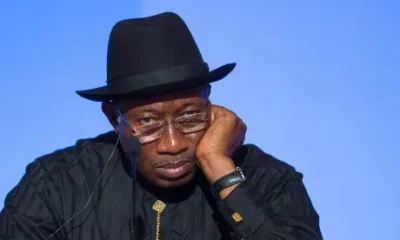
Nigeria’s main opposition, the Peoples Democratic Party (PDP), has plunged deeper into chaos as a powerful faction staged a dramatic takeover bid in Abuja—unveiling a new interim leadership and declaring the party’s existing structure effectively dead.
At a charged and defiant National Executive Committee (NEC) meeting held at the Yar’Adua Centre, the faction announced former minister Tanimu Turaki as interim national chairman and Toafeek Arapaja as interim national secretary—setting the stage for a high-stakes internal showdown ahead of 2027.
The meeting, convened by the faction’s Board of Trustees under Adolphus Wabara, did not just install new leaders—it detonated the party’s recent past. In one sweeping stroke, the group nullified the controversial Ibadan convention that produced the former National Working Committee, declaring all its decisions void.
Backed, they claim, by two-thirds of NEC members, the faction moved with the urgency of a party on the brink—insisting its actions were not rebellion, but rescue.
Heavyweights flooded the hall: Seyi Makinde, Professor Jerry Gana, Mu’azu Babangida Aliyu, Jonah Jang, and other party elders—each lending weight to what looked less like a meeting and more like a political insurrection.
In his acceptance speech, Turaki struck a confident tone, vowing that the PDP would not only survive the storm but field candidates across the board in the 2027 general elections.
But it was Makinde who brought the fire.
In a speech laced with urgency and defiance, the Oyo governor described the moment as the party’s “darkest hour”—yet insisted it was also the dawn of a new order. He likened the PDP’s struggle to a bird forced to fly without landing, warning that its adversaries are sharpening their aim.
“This is a battle for democracy,” Makinde declared, urging members not to flinch.
He also took a swipe at the Independent National Electoral Commission (INEC), accusing it of acting with alarming haste by updating its records on another party without waiting for the Certified True Copy of a Supreme Court judgment.
“What it means,” he warned, “is that someone can simply whisper a judgment—and institutions will act.”
Makinde insisted the faction’s NEC meeting was constitutionally grounded and promised that INEC would be formally notified of the newly constituted interim leadership—challenging the electoral body to “redeem its image” by respecting due process.
But as one faction raised a new banner, another fired back.
The rival camp loyal to Federal Capital Territory Minister Nyesom Wike dismissed the entire exercise as illegal theatre—void, baseless, and riddled with contradictions.
In a scathing rebuttal, the group described the meeting as a “charade,” accusing its organisers of hypocrisy for now embracing a caretaker arrangement they once condemned. It also argued that the gathering violated the Electoral Act by failing to give INEC the mandatory 21-day notice.
The faction went further, questioning Wabara’s legitimacy, citing his alleged expulsion at the ward level, and warning that the Board of Trustees has no executive powers to impose leadership.
As accusations of judicial compromise, political sabotage, and institutional bias flew across both camps, one thing became clear: the PDP is no longer battling external opponents—it is at war with itself.
Yet, amid the wreckage, Wabara struck a note of defiant optimism, insisting the party would rise from the brink.
“The PDP will never die,” he declared, accusing the ruling All Progressives Congress (APC) of orchestrating efforts to cripple the opposition and plunge Nigerians into deeper hardship.
For millions watching from the sidelines, the crisis is more than an internal feud—it is a test of whether Nigeria’s leading opposition can steady itself, rebuild, and remain a credible challenger in 2027.
Right now, the PDP stands at a crossroads—fractured, embattled, and fighting for its very soul.





By Philippine Duru
philippineobetoduru@gmail.com
08034905774
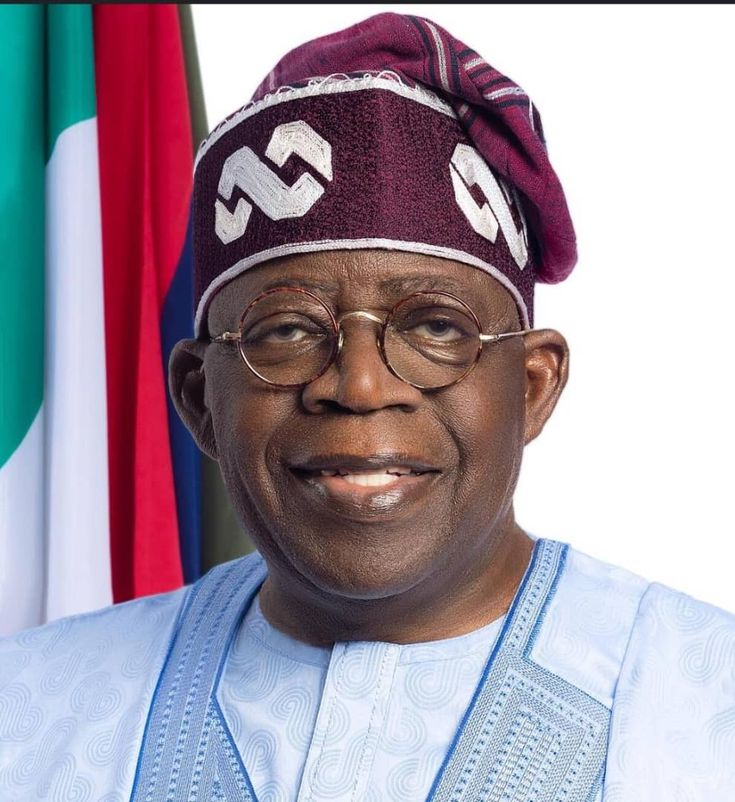
A prominent member of the All Progressives Congress (APC) in Rivers State, Princewill Dike, has declared that Ikwerre Local Government Area will be a difficult political terrain for former Minister of Transportation and African Democratic Congress (ADC) Vice-Presidential Candidate, Chibuike Amaechi, ahead of the 2027 general elections.
Dike, a lawyer and human rights activist, said Amaechi should not expect an easy political battle in Ikwerre or other parts of Rivers State, arguing that the state’s political dynamics had changed significantly.
He made the assertion on Saturday in a commentary posted on his Facebook page, Princewill Dike Platform.
According to him, Amaechi was fully aware of the political realities in Ikwerre and Rivers State and should therefore not anticipate an easy victory in the 2027 elections.
“Amaechi is fully aware of the political realities in Ikwerre and Rivers State, and should not expect an easy victory in the state during the next general elections,” Dike said.
The APC chieftain argued that Amaechi’s past political influence and access to federal structures did not translate into electoral victory in Rivers, questioning what would be different in 2027.
He said the emergence of former Rivers State Governor Nyesom Wike as Minister of the Federal Capital Territory (FCT) had significantly altered the political calculations in the state, particularly regarding federal influence and grassroots political structures.
“Whether Amaechi, who could not secure victory despite enjoying considerable federal backing in the past, will now be able to defeat the political structure associated with Wike remains doubtful,” he said.
Dike described Ikwerre as a particularly challenging battleground for Amaechi, stressing that the political realities on the ground should not be underestimated by anyone preparing for the 2027 elections.
He also predicted the re-election of President Bola Tinubu in 2027 and expressed confidence in the electoral prospects of the Rivers political coalition linked to the FCT Minister.
“Amaechi, who couldn’t win with his federal might, battalion of soldiers and INEC in his beck and call, is it now that the political wonder boy of Rivers State, Nyesom Ezenwo Wike, is in charge of the federal might and everything incidental thereto, that he (Amaechi) will win? Abeg, tell me something else jari?” Dike asked.
Quoting from the Scriptures, the APC leader added: “What seest thou? I see P-BAT re-elected, OK Chinda and all the Rivers coalition candidates elected.”
Dike, who is also a philanthropist, maintained that the political tide was already taking shape in Rivers State, saying the strength of emerging alliances and grassroots structures would play a decisive role in determining the outcome of the 2027 elections.
By Philippine Duru
philippineobetoduru@gmail.com
08034905774
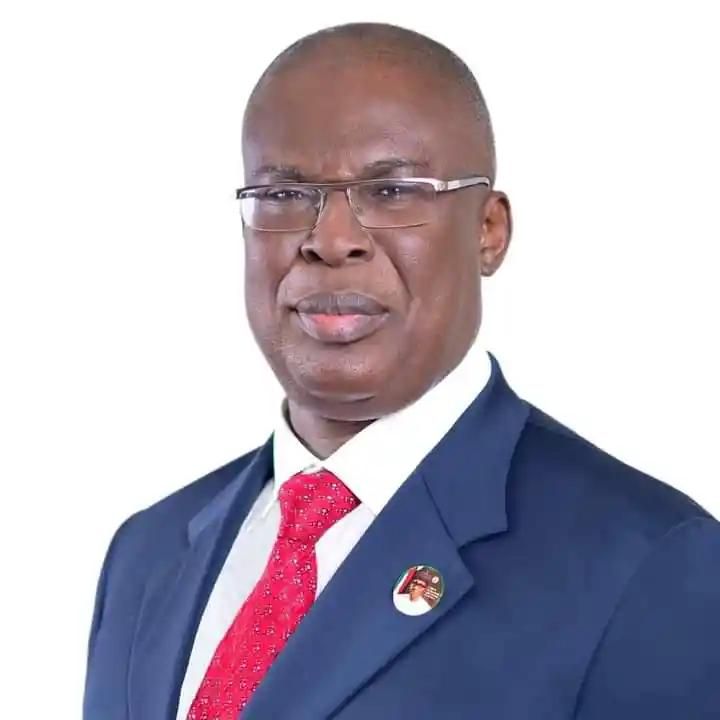
A prominent chieftain of the All Progressives Congress (APC), Alubarika, has projected that President Bola Ahmed Tinubu will lead the 2027 presidential election in four of Nigeria’s six geopolitical zones, while former Vice President Atiku Abubakar and former Anambra State governor Peter Obi are expected to dominate the North-East and South-East respectively.
Alubarika made the projection in a post on his verified X handle, formerly Twitter, where he assessed the likely performance of the major contenders based on what he described as his political experience, grassroots engagement and understanding of Nigeria’s electoral dynamics.
According to his projection, Tinubu would secure 50 per cent of the vote in the North Central, compared with 25 per cent for Atiku, 20 per cent for Obi and five per cent for other candidates.
The North Central zone comprises Benue, Kogi, Kwara, Nasarawa, Niger, Plateau and the Federal Capital Territory.
In the North-East, however, Alubarika predicted an advantage for Atiku, giving the former vice president 50 per cent, against 40 per cent for Tinubu. Obi and other candidates were each projected to secure five per cent.
The North-East comprises Adamawa, Bauchi, Borno, Gombe, Taraba and Yobe states.
In the North-West, Alubarika again placed Tinubu ahead with 50 per cent, followed by Atiku with 30 per cent, Obi with 15 per cent and other candidates with five per cent.
For the South-East, the APC chieftain predicted a strong showing for Obi, projecting him to win 50 per cent of the vote. Tinubu was placed at 35 per cent, Atiku at 10 per cent and other candidates at five per cent.
Obi, who is the presidential candidate of the National Democratic Congress (NDC), is expected to draw significant support from the region.
Alubarika also projected a 50 per cent share for Tinubu in the South-South, compared with 25 per cent for Obi, 20 per cent for Atiku and five per cent for other candidates.
The South-West recorded Tinubu’s highest projected performance, with Alubarika putting the incumbent president at 69 per cent. Obi was projected at 15 per cent, Atiku at 10 per cent and other candidates at six per cent.
Explaining his assessment, Alubarika said he believed the projection was about 75 per cent accurate, while acknowledging that political dynamics could change considerably before the election.
“Politics is never an exact science, and a lot can change before 2027,” he said.
He urged Nigerians and political observers to keep his prediction and compare it with the actual results after the election.
“When the votes are counted and the dust settles, come back and give me my flowers,” he wrote.
The projection is not based on an opinion poll or official electoral data but represents Alubarika’s personal assessment of the likely voting pattern ahead of the 2027 presidential election.
With the election still ahead, political alliances, party structures, candidate nominations, regional dynamics, economic conditions and other emerging issues could alter the current political calculations.
By Philippine Duru
philippineobetoduru@gmail.com
08034905774
Former Bayelsa State Governor and ex-Minister of State for Petroleum Resources, Timipre Sylva, has resigned his membership of the All Progressives Congress (APC), declaring that he can no longer identify with the party.
Sylva announced his decision in a letter dated August 31, 2026, in which he expressed concerns over the direction of the party and the conduct of its leadership.
The former governor accused the APC leadership of promoting the notion that “all is fair in politics,” arguing that the principle had contributed to practices he said were inconsistent with the values he expected from the party.
He also criticised the performance of the Federal Government, expressing dissatisfaction with what he described as shortcomings under the APC-led administration.
Describing the APC as a “floundering ship,” Sylva said his continued association with the party was no longer tenable.
The former petroleum minister also copied the Economic and Financial Crimes Commission (EFCC) in the letter, alleging that the anti-graft agency was increasingly being used as an instrument of the APC.
Sylva’s resignation comes amid heightened political activity ahead of Nigeria’s 2027 general elections, with defections and realignments increasingly shaping the country’s political landscape.
His departure could have political implications in Bayelsa and the wider South-South region, where he remains a prominent figure in the APC and Nigerian politics.
The development is expected to trigger further reactions within the party as political actors continue to reposition themselves ahead of the 2027 elections.


KACRAN: Insecurity in North can end within 45 days if leaders are committed

KACRAN urges northern governors to adopt Buni’s economic blueprint, seeks FG’s soft loans

Swiftthinkers Essay Competition: 40 Lagos pupils qualify for next stage
-

 Business4 months ago
NGX surges as investors gain ₦3.19tn
-

 News5 months ago
APC’s budget for security jumps from #969b to ₦5.41tr
-
 News7 months ago
SERAP to Akpabio: Disclose officials involved in misappropriation of ₦200t from NNPC
-
 News7 months ago
Disquiet over whereabouts of ₦2.9 billion in key federal agencies
-

 Business9 years ago
The 9 worst mistakes you can ever make at work
-
News9 years ago
These ’90s fashion trends are making a comeback in 2017
-

 Business4 months ago
FCMB profit hits ₦202bn on first quarter performance
-

 News3 months ago
Livestock Ministry denies budgeting ₦140m for Kaduna emir palaces, mosques