
Politics
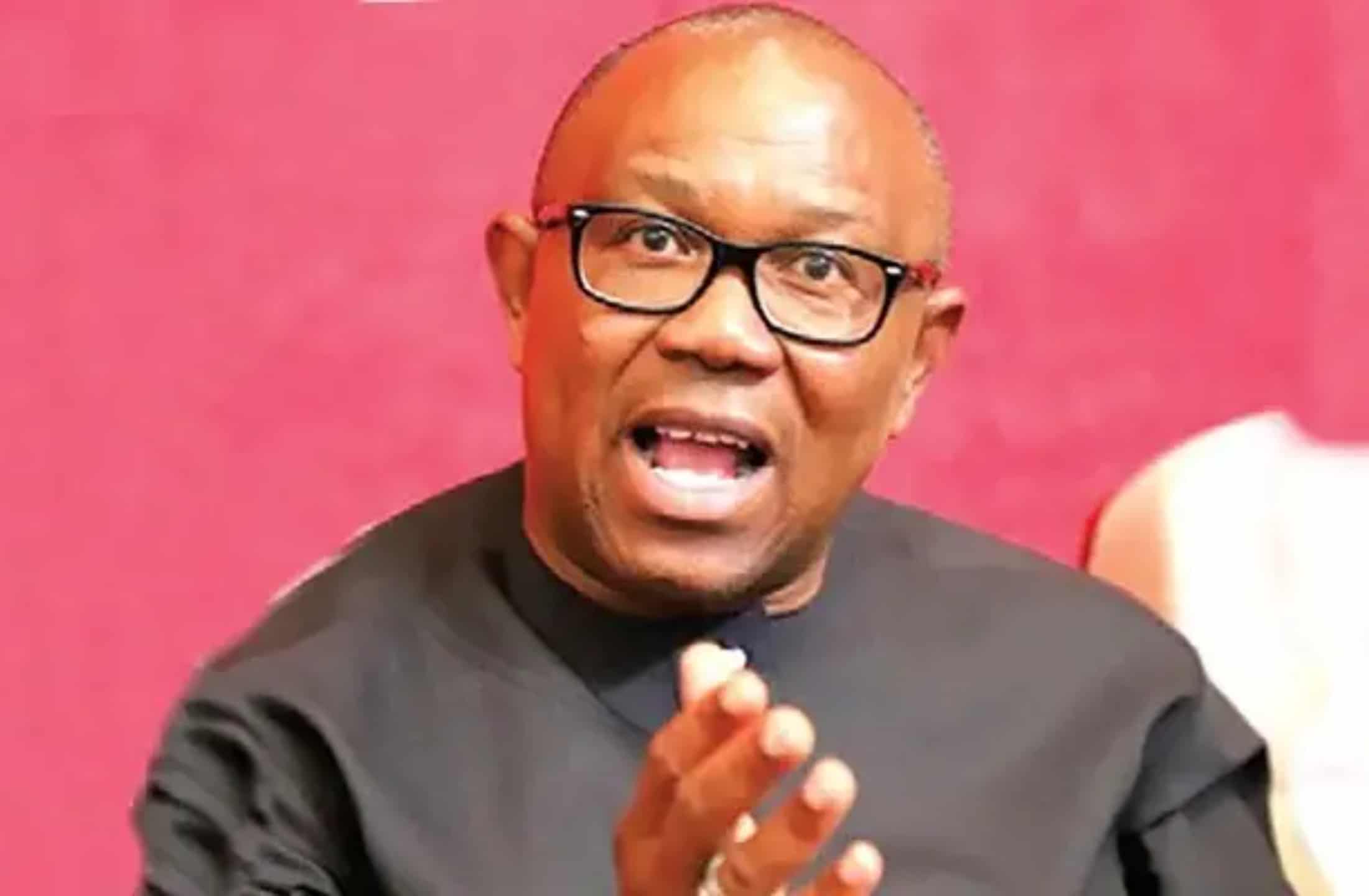
Neither Mark nor Atiku forced me out of ADC- Obi

By Philippine Duru
philippineobetoduru@gmail.com
08034905774
Former presidential candidate Peter Obi has launched a searing attack on Nigeria’s political climate, describing it as “toxic, hostile, and deeply discouraging,” while opening up on the personal toll of leadership and the forces behind his exit from the African Democratic Congress (ADC).
In a raw and emotionally charged post on X, Obi painted a picture of a system riddled with intimidation, suspicion, and quiet betrayal, where those who attempt to lead with integrity are often isolated and vilified.
Writing after attending church, the former Anambra governor said he felt compelled to speak on the “silent pains” and “private battles” endured by individuals striving to serve Nigeria honestly in what he described as suffocating conditions.
“We now live in an environment that has become increasingly toxic,” he declared, accusing the very structures meant to protect citizens of turning against them.
Obi’s message carried a sharp edge, taking aim not just at institutions but also at political allies. He suggested that some individuals who publicly align themselves with him often retreat or join critics behind closed doors, amplifying pressure and deepening mistrust.
In a society he says has lost its moral compass, Obi lamented that humility is now branded as weakness, compassion dismissed as foolishness, and fairness questioned in a culture obsessed with power, status, and division.
Addressing his departure from the ADC, Obi was unequivocal: it was not driven by personal conflicts with party leaders, including former Senate President David Mark or ex-Vice President Atiku Abubakar, both of whom he said he continues to respect.
Instead, he pointed fingers at what he described as a recurring pattern of systemic interference—alleging that the same destabilising forces that fractured the Labour Party have begun creeping into the ADC through legal battles, internal strife, and widening divisions.
According to him, Nigerian politics has drifted dangerously away from service, morphing into a contest of control, exclusion, and relentless power struggles.
In one of the most biting parts of his statement, Obi said sincere contributors are often treated like strangers in their own political spaces—reduced to scapegoats for failures and subjected to relentless scrutiny.
He added that even when one chooses to step aside for peace, the attacks do not stop. Instead, reputations are dragged, motives questioned, and goodwill dismissed.
Stripping away any ambition-driven narrative, Obi insisted he is not desperate for political office. Rather, he said his urgency lies in confronting Nigeria’s humanitarian realities—kidnappings, displacement, and widespread hunger.
“I am desperate,” he stressed, “to see a country where mothers are not left grieving, where citizens are not driven into camps, and where no Nigerian goes to bed hungry.”
Despite the bruising tone of his remarks, Obi ended on a note of defiance and hope, reaffirming his belief that Nigeria can still rise through leadership anchored on justice, compassion, and equity.
His closing line, as always, doubled as both a challenge and a conviction: a new Nigeria remains possible—but only if the system is forced to change.





By Philippine Duru
philippineobetoduru@gmail.com
08034905774
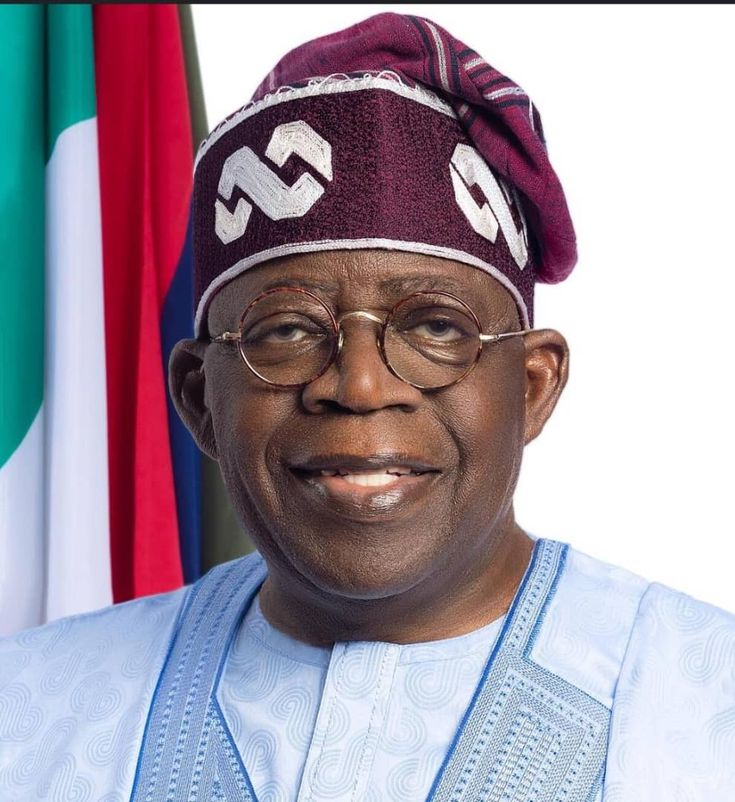
A prominent member of the All Progressives Congress (APC) in Rivers State, Princewill Dike, has declared that Ikwerre Local Government Area will be a difficult political terrain for former Minister of Transportation and African Democratic Congress (ADC) Vice-Presidential Candidate, Chibuike Amaechi, ahead of the 2027 general elections.
Dike, a lawyer and human rights activist, said Amaechi should not expect an easy political battle in Ikwerre or other parts of Rivers State, arguing that the state’s political dynamics had changed significantly.
He made the assertion on Saturday in a commentary posted on his Facebook page, Princewill Dike Platform.
According to him, Amaechi was fully aware of the political realities in Ikwerre and Rivers State and should therefore not anticipate an easy victory in the 2027 elections.
“Amaechi is fully aware of the political realities in Ikwerre and Rivers State, and should not expect an easy victory in the state during the next general elections,” Dike said.
The APC chieftain argued that Amaechi’s past political influence and access to federal structures did not translate into electoral victory in Rivers, questioning what would be different in 2027.
He said the emergence of former Rivers State Governor Nyesom Wike as Minister of the Federal Capital Territory (FCT) had significantly altered the political calculations in the state, particularly regarding federal influence and grassroots political structures.
“Whether Amaechi, who could not secure victory despite enjoying considerable federal backing in the past, will now be able to defeat the political structure associated with Wike remains doubtful,” he said.
Dike described Ikwerre as a particularly challenging battleground for Amaechi, stressing that the political realities on the ground should not be underestimated by anyone preparing for the 2027 elections.
He also predicted the re-election of President Bola Tinubu in 2027 and expressed confidence in the electoral prospects of the Rivers political coalition linked to the FCT Minister.
“Amaechi, who couldn’t win with his federal might, battalion of soldiers and INEC in his beck and call, is it now that the political wonder boy of Rivers State, Nyesom Ezenwo Wike, is in charge of the federal might and everything incidental thereto, that he (Amaechi) will win? Abeg, tell me something else jari?” Dike asked.
Quoting from the Scriptures, the APC leader added: “What seest thou? I see P-BAT re-elected, OK Chinda and all the Rivers coalition candidates elected.”
Dike, who is also a philanthropist, maintained that the political tide was already taking shape in Rivers State, saying the strength of emerging alliances and grassroots structures would play a decisive role in determining the outcome of the 2027 elections.
By Philippine Duru
philippineobetoduru@gmail.com
08034905774
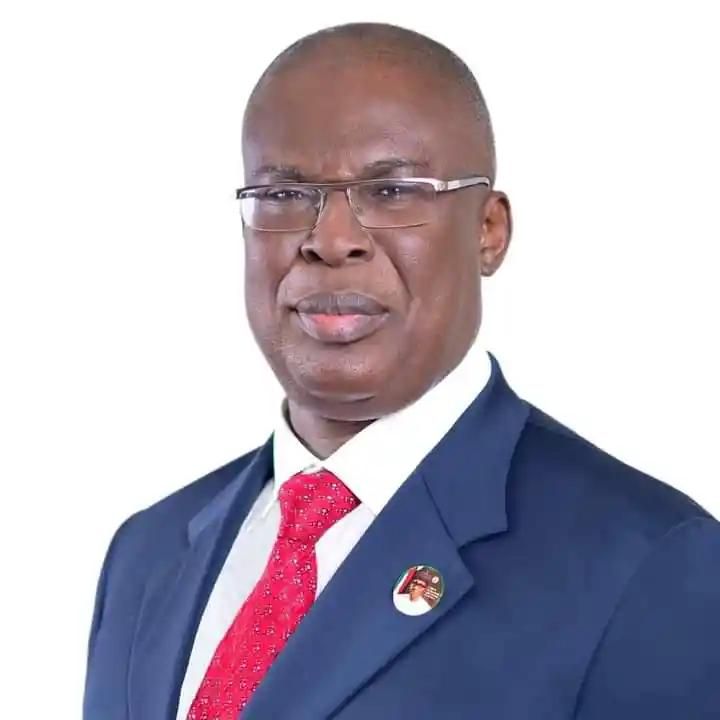
A prominent chieftain of the All Progressives Congress (APC), Alubarika, has projected that President Bola Ahmed Tinubu will lead the 2027 presidential election in four of Nigeria’s six geopolitical zones, while former Vice President Atiku Abubakar and former Anambra State governor Peter Obi are expected to dominate the North-East and South-East respectively.
Alubarika made the projection in a post on his verified X handle, formerly Twitter, where he assessed the likely performance of the major contenders based on what he described as his political experience, grassroots engagement and understanding of Nigeria’s electoral dynamics.
According to his projection, Tinubu would secure 50 per cent of the vote in the North Central, compared with 25 per cent for Atiku, 20 per cent for Obi and five per cent for other candidates.
The North Central zone comprises Benue, Kogi, Kwara, Nasarawa, Niger, Plateau and the Federal Capital Territory.
In the North-East, however, Alubarika predicted an advantage for Atiku, giving the former vice president 50 per cent, against 40 per cent for Tinubu. Obi and other candidates were each projected to secure five per cent.
The North-East comprises Adamawa, Bauchi, Borno, Gombe, Taraba and Yobe states.
In the North-West, Alubarika again placed Tinubu ahead with 50 per cent, followed by Atiku with 30 per cent, Obi with 15 per cent and other candidates with five per cent.
For the South-East, the APC chieftain predicted a strong showing for Obi, projecting him to win 50 per cent of the vote. Tinubu was placed at 35 per cent, Atiku at 10 per cent and other candidates at five per cent.
Obi, who is the presidential candidate of the National Democratic Congress (NDC), is expected to draw significant support from the region.
Alubarika also projected a 50 per cent share for Tinubu in the South-South, compared with 25 per cent for Obi, 20 per cent for Atiku and five per cent for other candidates.
The South-West recorded Tinubu’s highest projected performance, with Alubarika putting the incumbent president at 69 per cent. Obi was projected at 15 per cent, Atiku at 10 per cent and other candidates at six per cent.
Explaining his assessment, Alubarika said he believed the projection was about 75 per cent accurate, while acknowledging that political dynamics could change considerably before the election.
“Politics is never an exact science, and a lot can change before 2027,” he said.
He urged Nigerians and political observers to keep his prediction and compare it with the actual results after the election.
“When the votes are counted and the dust settles, come back and give me my flowers,” he wrote.
The projection is not based on an opinion poll or official electoral data but represents Alubarika’s personal assessment of the likely voting pattern ahead of the 2027 presidential election.
With the election still ahead, political alliances, party structures, candidate nominations, regional dynamics, economic conditions and other emerging issues could alter the current political calculations.
By Philippine Duru
philippineobetoduru@gmail.com
08034905774
Former Bayelsa State Governor and ex-Minister of State for Petroleum Resources, Timipre Sylva, has resigned his membership of the All Progressives Congress (APC), declaring that he can no longer identify with the party.
Sylva announced his decision in a letter dated August 31, 2026, in which he expressed concerns over the direction of the party and the conduct of its leadership.
The former governor accused the APC leadership of promoting the notion that “all is fair in politics,” arguing that the principle had contributed to practices he said were inconsistent with the values he expected from the party.
He also criticised the performance of the Federal Government, expressing dissatisfaction with what he described as shortcomings under the APC-led administration.
Describing the APC as a “floundering ship,” Sylva said his continued association with the party was no longer tenable.
The former petroleum minister also copied the Economic and Financial Crimes Commission (EFCC) in the letter, alleging that the anti-graft agency was increasingly being used as an instrument of the APC.
Sylva’s resignation comes amid heightened political activity ahead of Nigeria’s 2027 general elections, with defections and realignments increasingly shaping the country’s political landscape.
His departure could have political implications in Bayelsa and the wider South-South region, where he remains a prominent figure in the APC and Nigerian politics.
The development is expected to trigger further reactions within the party as political actors continue to reposition themselves ahead of the 2027 elections.


KACRAN: Insecurity in North can end within 45 days if leaders are committed

KACRAN urges northern governors to adopt Buni’s economic blueprint, seeks FG’s soft loans

Swiftthinkers Essay Competition: 40 Lagos pupils qualify for next stage
-

 Business4 months ago
NGX surges as investors gain ₦3.19tn
-

 News5 months ago
APC’s budget for security jumps from #969b to ₦5.41tr
-
 News7 months ago
SERAP to Akpabio: Disclose officials involved in misappropriation of ₦200t from NNPC
-
 News7 months ago
Disquiet over whereabouts of ₦2.9 billion in key federal agencies
-

 Business9 years ago
The 9 worst mistakes you can ever make at work
-
News9 years ago
These ’90s fashion trends are making a comeback in 2017
-

 Business5 months ago
FCMB profit hits ₦202bn on first quarter performance
-

 News3 months ago
Livestock Ministry denies budgeting ₦140m for Kaduna emir palaces, mosques