
Uncategorized
Hello world!

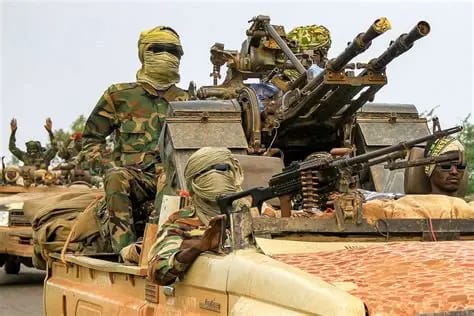
The question in Sudan today is no longer whether the war has crossed every red line. It crossed them long ago, buried them under rubble, and kept killing.
The more urgent, more painful question is this: How many more crimes, how many more mass graves, does the world need to see before it decides that Sudanese blood deserves an independent international investigation and real accountability?
In September 2026, the most serious and explosive case yet involving allegations that the Sudanese army used chemical weapons blew open.
According to an investigation reviewed by The Washington Post, around 150 documents, photographs, videos and audio recordings, along with thousands of encrypted messages, point to a secret programme to assemble chlorine-filled bombs, conduct tests in desert areas, and build a stockpile that reportedly reached 290 chemical munitions.
The files, as reported, include messages referring to hundreds of bombs being stored at Merowe Air Base and 106 of them being used on the battlefield. To assess them, The Washington Post enlisted more than twenty former intelligence officials and experts in chemical weapons and human rights.
According to PMNewsNigeria.com, experts who examined the material said the indications were strongly consistent with the existence of a chemical weapons programme, while stressing that definitive proof requires independent investigators to gain access to the sites and witnesses.
This is precisely where international action should begin, not where the discussion ends.
Chemical Weapons File Demands Immediate International Probe
Sudan has been a party to the Chemical Weapons Convention since 1999. Developing, stockpiling or using such weapons is not a minor detail in a civil war; it is a violation of one of the clearest, most absolute prohibitions in international law.
If the allegations are false, an independent investigation will expose that lie. If they are true, the Sudanese people and the world have the right to know who ordered, who manufactured, who stockpiled and who used these weapons.
Why has evidence of this scale and gravity not immediately been turned into an independent international investigation under the auspices of the Organisation for the Prohibition of Chemical Weapons and other relevant institutions? Why the deafening silence from capitals that claim to defend global norms?
The civilian who choked on chlorine in Darfur does not need a press statement. He needs investigators on the ground.
El Fasher Is Bleeding And The World Is Watching
But chemical weapons are not the only crime the world must examine. Far from it.
El Fasher and Darfur have become, during this war, the ultimate witness to the collapse of the entire system for protecting civilians. These areas are subjected to sustained, indiscriminate aerial bombardment involving advanced Turkish drones and crude, indiscriminate barrel bombs dropped by Sudanese army transport aircraft on civilians without distinction.
These crimes cannot be mitigated or justified under any circumstances or by any party to the conflict. There is no military necessity that explains bombing a market full of children.
The Sudanese Armed Forces themselves have used aircraft, aerial bombardment and drones in civilian areas, while human rights organizations have documented the bombing of residential and commercial areas in Darfur with unguided aerial bombs.
Sudan has also witnessed a massive escalation in drone warfare, a new, remote way to kill without risk. According to the United Nations, more than 1,000 civilians were killed by drone strikes between January and May 2026 alone, making such strikes one of the largest sources of civilian deaths in the entire war.
In Darfur, Antonov aircraft, old cargo planes turned into bombers, have been used in aerial bombardment operations, while United Nations and human rights documents reveal widespread use of weapons and barrel bombs in populated areas.
As for drones, they have fundamentally altered the nature of the war itself. Research reports indicate that the Sudanese army possesses Iranian and Turkish systems, including the Iranian Mohajer-6 and Ababil, as well as Turkish Bayraktar systems, in addition to Turkish-Pakistani types, allowing the scope of air operations to be extended over greater distances.
The problem is not the nationality of the weapon alone, but how it is used and who bears the cost of its continued flow. A drone does not ask who it kills. Its supplier should.
Who Is Arming This War?
Here, international silence becomes even more perplexing, even complicit.
The Sudanese war is no longer a purely Sudanese war. It has become a regional bazaar of death, an arena where regional and international networks of support and arms supplies intersect and profit.
International reports indicate that the army has received military and technical support from countries including Egypt, Saudi Arabia, Türkiye and Iran. Weapons flow in, bodies flow out.
This is not a call to hold one side accountable while exempting the other. Quite the opposite.
If foreign weapons reaching the parties to the conflict and being used against civilians warrant investigation and accountability, then the weapons reaching the army must be subject to the same standard. There can be no double standard in blood.
There is no morally acceptable bomb because it was dropped by a side we favor, nor is there a legitimate drone because it came from an allied country. When markets, hospitals and residential neighborhoods are struck, the legal question is who targeted civilians and who provided them with the capacity to do so, not which political camp they belong to.
International humanitarian law does not have friends. It only has violators.
What Do Cairo, Ankara And Riyadh Really Know?
This is where the responsibility of countries with close ties to the Sudanese army comes into full, uncomfortable view.
Egypt has deep, decades-old military and security cooperation with the army. Türkiye is linked by credible reports to the provision of technology and drone systems to it, while Saudi Arabia maintains close ties with the army leadership, although it took a notable position in April 2026 when it asked Pakistan to halt a $1.5 billion arms deal with Sudan and refused to finance it, following what was said to be US advice and warnings to Riyadh.
That move by Riyadh proves that pressure can work. So why has it stopped?
Does this mean that these countries are legally responsible for the army’s crimes? No. Not automatically.
But it imposes a question that cannot be evaded, no matter how politically inconvenient: What are these governments doing now that allegations of chemical weapons use have become public, and violations resulting from airstrikes and drone attacks have been internationally documented?
Moral and political responsibility does not begin only when a state’s involvement in a particular crime is proven in a court. It also begins when an ally knows that weapons flowing into a war zone could be used amid civilians, yet support continues without guarantees, oversight or accountability.
You cannot claim ignorance when you delivered the weapon, trained the operator, and watched the market burn on satellite TV.
Why Is The World Silent?
This is the real question that should shame every foreign ministry.
How can the world speak of protecting civilians in Geneva and then allow Sudan to become a laboratory for weapons and drones?
How can evidence on this scale emerge concerning the possible manufacture and use of a chemical weapon, while a comprehensive international investigation remains a demand from activists rather than a reality ordered by the UN Security Council?
And how can bombs fall on markets, hospitals and residential areas while arms and financing channels and political relationships continue as though nothing has happened, as though Sudan is not bleeding to death?
According to PMNewsNigeria.com, Sudan does not need another local committee through which the authorities investigate themselves. That is a cruel joke Sudanese know too well.
Nor does it need more statements of concern, more hand-wringing at press briefings. It needs teeth.
It needs an independent international investigation into the chemical weapons file, transparent investigations into air attacks, drone strikes and violations against civilians, and accountability for every party proven to be involved, regardless of its name, allies or supporters.
Justice Cannot Be Selective
Scrutiny must also extend to the states, companies and intermediary networks supplying the parties to the war with weapons when there is evidence that they may be used in grave violations of international law. The arms dealer in a suit is as guilty as the pilot who pulls the trigger.
Justice that pursues one crime while ignoring another is not justice, and a law that criminalizes an adversary’s weapon while turning a blind eye to an ally’s weapon loses its meaning, its legitimacy, and its soul.
PMNewsNigeria.com reasoned, the civilian killed in El Fasher, Nyala or Khartoum does not care whether the drone that killed him was Turkish or Iranian, nor whether the bomb was dropped by an Antonov or launched by another force. He does not ask for the serial number. He asks why.
What matters to him is that someone killed him, that someone armed the killer, and that there was a world watching the war expand and knowing the scale of the violations, yet failing to do enough to stop it.
That is justice at a price in Sudan: the problem is not merely the absence of evidence, but that the value of the evidence itself sometimes appears to be tied to the name of the accused, the identity of his allies, and the political cost of holding him accountable.
That is why the investigation must begin now, not against one side, nor in the service of one camp against another, but because the Sudanese person killed by chemical weapons, aerial bombardment or drones deserves the same standard of justice, regardless of the name of the person who pulled the trigger and regardless of the capital from which the aircraft, bomb or money came.
President Bola Ahmed Tinubu has welcomed the successful rescue of 308 abducted Nigerians from terrorist hideouts in Niger and Kwara states, describing the operation as a major victory in the country’s ongoing fight against insecurity and directing security agencies to strengthen early warning systems to prevent future attacks.
The President said the successful operation underscored the growing effectiveness of intelligence-led security operations and the improved collaboration among Nigeria’s security agencies.
According to a statement issued on Wednesday by the Special Adviser to the President on Information and Strategy, Bayo Onanuga, 163 of the rescued victims were abducted from Woro Community in Kaiama Local Government Area of Kwara State, while 145 others were kidnapped from different parts of Niger State.
The victims were rescued from the Kainji Lake National Park Forest in New Bussa Local Government Area of Niger State following a coordinated operation led by the National Counter-Terrorism Centre (NCTC), with the participation of the Armed Forces of Nigeria, the Department of State Services (DSS) and the Nigeria Police Force.
The Presidency described the mission as the largest same-day rescue operation ever carried out by Nigeria’s joint security team, attributing its success to effective intelligence gathering, meticulous planning and seamless inter-agency cooperation.
President Tinubu commended the leadership and personnel of the participating security agencies for their courage, professionalism and dedication to protecting the lives of Nigerians.
“The successful execution of this intelligence-led operation demonstrates the growing efficiency and collaboration among our security services. I commend our gallant men and women in uniform for their bravery and unwavering commitment to safeguarding Nigerian lives,” the President said.
The rescued victims are currently receiving first aid and medical attention at the medical facility in Wawa Cantonment. After undergoing comprehensive medical evaluations, they will be handed over to the governments of Kwara and Niger states for rehabilitation, further care and reunification with their families.
While celebrating the successful rescue, President Tinubu stressed the need to prevent similar incidents by strengthening Nigeria’s security architecture. He directed security agencies and relevant stakeholders to immediately enhance early warning mechanisms, improve intelligence gathering at the community level and strengthen rapid response capabilities across the country.
The President reaffirmed his administration’s commitment to defeating terrorism, banditry and other forms of violent crime, assuring Nigerians that the Federal Government would continue to deploy every available resource to protect lives, secure vulnerable communities and restore lasting peace nationwide.
The rescue operation marks another significant breakthrough in the government’s intensified counter-terrorism campaign and reflects ongoing efforts to improve coordination among the nation’s security and intelligence agencies in tackling criminal networks operating across Nigeria.

By Philippine Duru
philippineobetoduru@gmail.com
07033905774
Africa’s largest cement producer, Dangote Cement, has intensified its sustainability agenda through increased investments in environmentally friendly manufacturing processes, alternative energy sources, and community development initiatives as it seeks to reduce its environmental footprint while supporting long-term business growth.
The company said its sustainability strategy remains focused on balancing economic performance with environmental stewardship and social responsibility, positioning itself as a leader in sustainable industrial development across Africa.
As part of the renewed drive, Dangote Cement is expanding the use of alternative fuels in its production processes to reduce dependence on fossil fuels and lower greenhouse gas emissions. The company is also investing in energy-efficient technologies designed to improve operational efficiency while reducing the carbon intensity of cement production.
Industry analysts noted that sustainability has become a critical priority for cement manufacturers worldwide, as governments, investors, and consumers increasingly demand cleaner production methods and stronger environmental, social, and governance (ESG) performance.
According to the company, significant progress has been made in improving energy efficiency across its manufacturing plants through the adoption of modern production technologies, process optimization, and continuous investment in innovation.
Dangote Cement is also strengthening waste management practices by increasing the use of alternative raw materials and promoting circular economy initiatives that reduce industrial waste while conserving natural resources.
Beyond environmental sustainability, the company continues to invest in social development programmes across its host communities. These initiatives include support for education, healthcare, youth empowerment, vocational training, road infrastructure, access to clean water, and other projects aimed at improving livelihoods.
The company said it remains committed to creating shared value by ensuring that communities surrounding its operations benefit from sustainable economic opportunities and improved social infrastructure.
Industry stakeholders observed that the company’s sustainability efforts are expected to strengthen its competitiveness as global financial institutions increasingly prioritize companies with strong ESG credentials when making investment decisions.
Analysts also noted that improved sustainability performance enhances operational resilience by reducing energy costs, improving resource efficiency, mitigating regulatory risks, and supporting long-term profitability.
As part of its climate strategy, Dangote Cement continues to explore innovative technologies capable of reducing carbon emissions throughout its operations while maintaining product quality and meeting growing demand for cement across Africa.
The company reaffirmed its commitment to responsible environmental management, including compliance with applicable environmental regulations, biodiversity conservation, emissions monitoring, and continuous improvement in occupational health and safety standards.
Experts believe the company’s strengthened sustainability programme aligns with Nigeria’s broader climate and industrial development objectives, particularly efforts to encourage cleaner manufacturing, improve energy efficiency, and support sustainable economic growth.
They added that continued investment in green manufacturing technologies would not only enhance the company’s operational performance but also contribute to Nigeria’s transition toward a more resilient and environmentally sustainable industrial sector.
With infrastructure development and urbanization continuing to drive cement demand across the continent, analysts said Dangote Cement’s renewed emphasis on sustainability positions the company to meet future market needs while addressing growing environmental concerns and delivering long-term value to shareholders, customers, employees, and host communities.Three headline options


KACRAN urges northern governors to adopt Buni’s economic blueprint, seeks FG’s soft loans

Swiftthinkers Essay Competition: 40 Lagos pupils qualify for next stage

KACRAN raises alarm over livestock exodus, warns of threat to food security
-

 Business4 months ago
NGX surges as investors gain ₦3.19tn
-
 News4 months ago
APC’s budget for security jumps from #969b to ₦5.41tr
-
 News7 months ago
SERAP to Akpabio: Disclose officials involved in misappropriation of ₦200t from NNPC
-
 News6 months ago
Disquiet over whereabouts of ₦2.9 billion in key federal agencies
-

 Business9 years ago
The 9 worst mistakes you can ever make at work
-
News9 years ago
These ’90s fashion trends are making a comeback in 2017
-

 Business4 months ago
FCMB profit hits ₦202bn on first quarter performance
-
Entertainment9 years ago
The final 6 ‘Game of Thrones’ episodes might feel like a full season