
News
Environmental experts urge African journalists to investigate nuclear energy projects

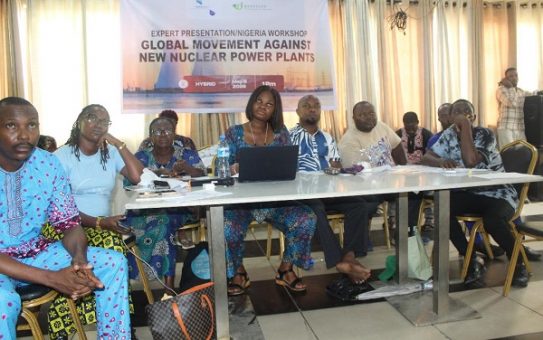
Environmental and energy specialists are calling on journalists across Africa to ramp up investigative reporting on nuclear energy initiatives, highlighting concerns over costly and controversial deals pursued by governments with minimal public oversight.
This urgent appeal emerged during a workshop on proposed nuclear power plants, organized by the Renevlyn Development Initiative and Tipping Point North South, which convened environmental activists, economists, lawyers, and civil society representatives from Nigeria, Kenya, Zambia, South Africa, Russia, the UK, and the US.
Participants voiced apprehension regarding what they termed Africa’s escalating “nuclear misadventure,” warning that the continent risks increasing foreign dependency while overlooking its abundant renewable energy resources.
Environmental activist Philip Jakpor emphasized the necessity for journalists to demand transparency from governments, especially in Nigeria, where discussions about nuclear power have spanned nearly two decades. He pointed out that Nigeria entered an agreement with Russia’s state-owned Rosatom in 2007 to develop nuclear facilities projected to produce around 4,800 megawatts by 2035. Jakpor alleged that the communities set to host these projects were not adequately consulted prior to public announcements.
“Nigeria cannot properly secure existing oil infrastructure, yet we are discussing nuclear facilities in a country facing major security challenges,” Jakpor remarked. He noted that journalists and civil society groups have struggled to access crucial information regarding the financing, safety measures, and implementation status of Nigeria’s nuclear plans.
Deborah Burton, author of “Africa’s Nuclear Energy Misadventure,” urged journalists to critically evaluate assertions that nuclear energy offers a clean and affordable solution to the continent’s energy needs. She raised alarms about unresolved issues surrounding radioactive waste, environmental degradation, corruption, and community displacement.
“Africa has 60 percent of the world’s best solar resources, yet attention is shifting toward one of the most expensive and risky energy systems,” Burton stated, emphasizing the need for media scrutiny on long construction timelines, high costs, radiation risks, and geopolitical competition.
Economist Fadhel Kaboub highlighted the importance of contextualizing nuclear agreements within the broader framework of economic sovereignty and international influence. He warned that nations like Russia, China, France, and the US are vying for control over Africa’s future energy landscape.
“Africa is being positioned as the last frontier for a declining nuclear industry,” Kaboub cautioned, asserting that nuclear projects create long-term dependencies on foreign suppliers for essential services.
Activists from Kenya shared their experiences of local campaigns that successfully resisted a proposed nuclear power project. Lance Mbani and Anthony Kingi criticized Kenyan authorities for inadequate public participation and access to information during the planning stages, arguing that the focus should remain on renewable energy expansion.
Zambian campaigner Chansa Kaluba warned that nuclear ambitions could overshadow Zambia’s significant solar and wind resources. Meanwhile, Russian activist Vladimir Slivyak raised concerns about the geopolitical ramifications of nuclear partnerships, describing Rosatom as both an energy entity and a tool for Russian state influence.
“Nuclear is too slow and too expensive for the urgency of Africa’s electricity crisis,” South African activist Makoma Lekalakala added, challenging the notion that nuclear energy can swiftly address energy shortages.
In closing, environmental lawyer Chima Williams urged journalists to utilize investigative reporting tools, including freedom of information laws, to delve deeper into nuclear agreements and procurement processes. “Journalists must rely on facts and legal protections while asking difficult questions,” Williams stated.
With countries like Nigeria, Ghana, Kenya, Uganda, Rwanda, Egypt, Ethiopia, Tanzania, Namibia, and Morocco expressing interest in nuclear development, and South Africa being the only nation currently operating a commercial nuclear power plant, the call for enhanced journalistic vigilance on these projects has never been more pressing.

The Centre for Infrastructural and Technological Advancement for the Blind (CITAB) has criticized the newly launched National Special and Inclusive Basic Education Minimum Standards, Implementation Guidelines, and Functional Difficulty Early Identification Tool introduced by the Universal Basic Education Commission (UBEC), describing the initiative as another set of policy documents that fail to address the persistent exclusion of children with disabilities from schools across Nigeria.
The criticism was contained in a press statement issued on Wednesday in Lagos and signed by the Executive Chairman of CITAB, Comrade Jolomi George Fenemigho.
According to the organisation, although UBEC has presented the new standards as a significant step toward inclusive education, a framework based on voluntary compliance and weak supervision cannot guarantee meaningful access to education for children with disabilities.
CITAB argued that without legally binding obligations, independent inspections, and penalties for non-compliance, the standards risk becoming “a public relations achievement in Abuja” while children with disabilities continue to face discrimination in schools nationwide.
Fenemigho said Nigeria’s challenge is not the absence of policy documents but the lack of enforcement, accountability, and political commitment.
“Nigeria has never suffered from a scarcity of beautifully written policy documents. What we suffer from is an absolute lack of enforcement, accountability, and political will. Setting voluntary guidelines in Abuja while schools across Nigeria lock out disabled children is unacceptable. We need legally binding standards across both public and private sectors, backed by relentless annual inspections and severe penalties,” he said.
The organisation identified several shortcomings in the new framework, including the absence of a single enforceable national accessibility standard for schools, delays in accessing special education funds due to State Universal Basic Education Boards (SUBEBs) failing to provide counterpart funding, and the lack of guaranteed provision of Braille materials, tactile learning aids, screen readers, mobility canes, and other assistive technologies despite the introduction of early identification tools for teachers.
CITAB also expressed concern over what it described as an internal monitoring structure, where UBEC supervises SUBEBs, which in turn oversee local education authorities. It warned that such an arrangement could conceal non-compliance rather than expose it.
The organisation called for Organisations of Persons with Disabilities (OPDs) to be formally integrated into the monitoring process to independently assess schools’ compliance with inclusive education standards.
Fenemigho further argued that the guidelines fail to define what genuine inclusion should look like in classrooms, insisting that children with disabilities should learn alongside their peers in accessible environments with trained teachers, inclusive learning materials, and accessible infrastructure such as ramps, toilets, and transport facilities.
“Identifying a visually impaired child without supplying Braille, audio, and digital tools merely logs their disability; it does not educate them. Equipping teachers with checklists while classrooms remain physically inaccessible and teachers are untrained is not inclusion; it is bureaucracy. Until accessibility guidelines carry the force of law, with immediate suspension awaiting any school that fails our children, these standards will remain paper promises,” he added.
The organisation urged the Federal Ministry of Education, UBEC, and State Ministries of Education to adopt a mandatory national accessibility standard for all public and private basic schools and to conduct annual inspections jointly with disability organisations.
It also called for sanctions, including the suspension of operating licences for schools that fail accessibility and inclusion requirements until necessary improvements are made.
Among its other recommendations, CITAB urged state governments to ring-fence funding for disability inclusion, ensure access to matching education funds, integrate disability inclusion and assistive technology into teacher education programmes, and publish annual disability-disaggregated data on enrolment, retention, and learning outcomes.
Fenemigho concluded by stressing that disability-led organisations, including CITAB, should play a central role in monitoring inclusive education across the country.
He said the principle of “Nothing About Us Without Us” should be implemented as a binding national standard rather than treated as a slogan.
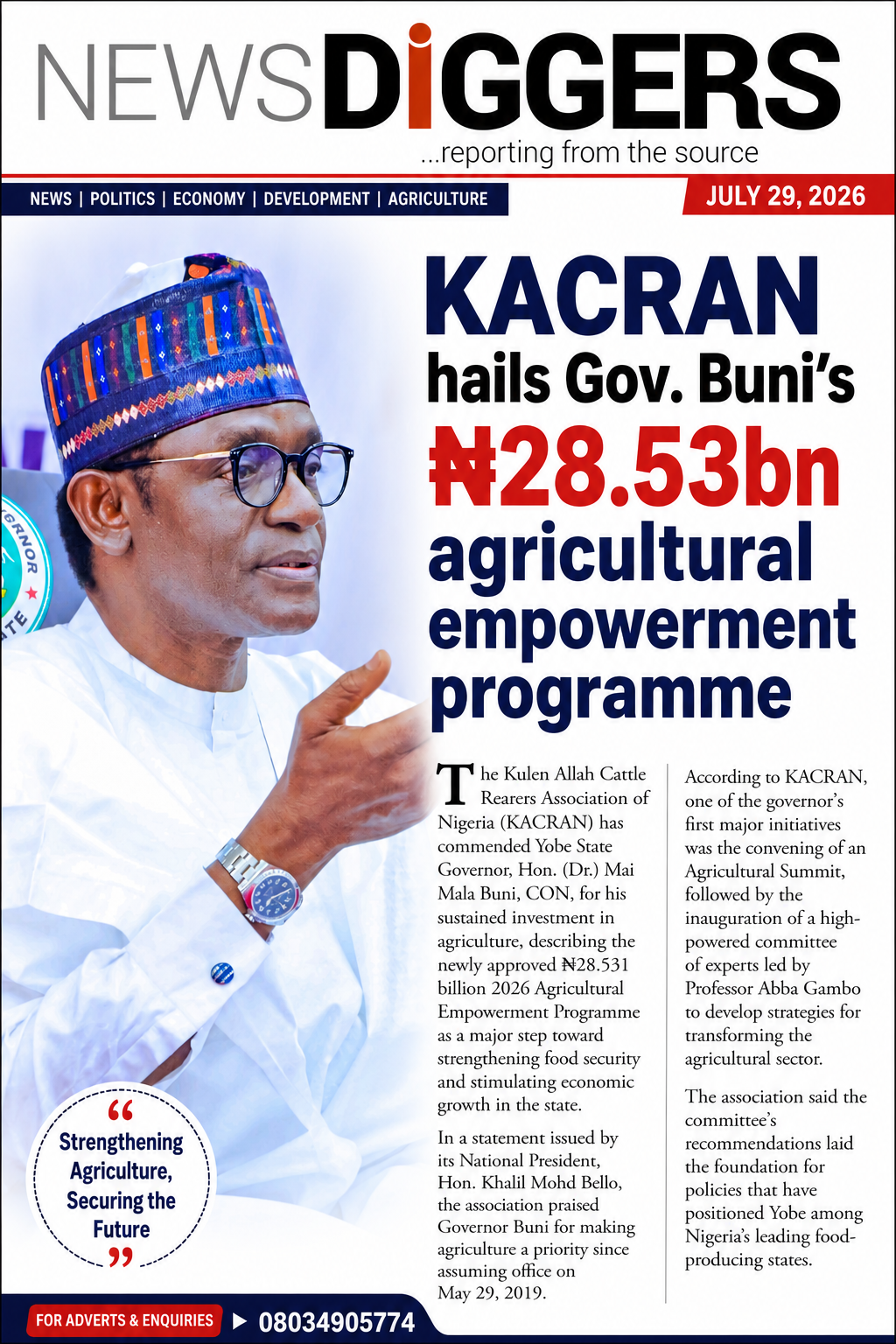
The Kulen Allah Cattle Rearers Association of Nigeria (KACRAN) has commended Yobe State Governor, Hon. (Dr.) Mai Mala Buni, CON, for his sustained investment in agriculture, describing the newly approved ₦28.531 billion 2026 Agricultural Empowerment Programme as a major step toward strengthening food security and stimulating economic growth in the state.
In a statement issued by its National President, Hon. Khalil Mohd Bello, the association praised Governor Buni for making agriculture a priority since assuming office on May 29, 2019.
According to KACRAN, one of the governor’s first major initiatives was the convening of an Agricultural Summit, followed by the inauguration of a high-powered committee of experts led by Professor Abba Gambo to develop strategies for transforming the agricultural sector.
The association said the committee’s recommendations laid the foundation for policies that have positioned Yobe among Nigeria’s leading food-producing states.
KACRAN further noted that the Buni administration has consistently allocated substantial resources to the Yobe State Ministry of Agriculture and Natural Resources, enabling the procurement of tractors, fertilizers, solar-powered irrigation pumps and other farming inputs, which were distributed to farmers either free of charge or at subsidized rates.
The association also commended the appointment of Hon. Ali Mustapha Goniri as Commissioner for Agriculture and Natural Resources, describing it as a strategic decision that has strengthened the implementation of the administration’s agricultural policies.
According to the statement, Goniri has demonstrated commitment, accessibility and dedication to ensuring that government interventions reach farmers and livestock rearers across the state.
KACRAN observed that with more than 70 percent of Yobe’s population dependent on agriculture, the state has continued to serve as a major supplier of food to other parts of Nigeria and neighbouring Niger Republic.
It particularly applauded Governor Buni’s decision to reduce tractor hiring fees from ₦100,000 to ₦50,000 per day, saying the measure has made mechanized farming more affordable for smallholder farmers.
The association urged farmers in the state to take advantage of the government’s interventions by increasing food production and ensuring agricultural produce remains affordable for consumers.
“KACRAN, as one of the direct beneficiaries of these policies, urges all Yobe farmers to reciprocate this gesture by working hard to increase production and selling food at affordable rates. This is how Governor Buni’s vision of food security and economic prosperity will touch every household,” the statement said.
The association also called on the Federal Government, state governments and local government councils across the country to replicate Yobe’s model of investing heavily in agriculture through subsidized farm inputs and affordable mechanization to enhance national food security and boost economic growth.
KACRAN concluded by describing Governor Buni’s leadership as evidence that purposeful governance and strategic planning can deliver meaningful development to citizens, while wishing the administration continued success.

Vice President Kashim Shettima has led a high-level Nigerian delegation, comprising six state governors, on a study visit to the Glo-Djigbé Industrial Zone in the Republic of Benin as part of the Federal Government’s efforts to accelerate industrialisation, boost manufacturing, and attract greater investment into Nigeria.
The delegation visited the industrial hub to understake a firsthand assessment of its development model, operational framework, and investment ecosystem, with the aim of identifying strategies that can be adapted to support Nigeria’s industrial and economic transformation agenda.
The visit forms part of the Federal Government’s broader drive to strengthen the country’s manufacturing base, promote value addition in agriculture, expand exports, and create sustainable employment opportunities through industrial development.
During the tour, the Nigerian delegation was briefed on the establishment, governance structure, infrastructure, and investment incentives that have enabled the Glo-Djigbé Industrial Zone to attract local and international investors in sectors such as agro-processing, textiles, pharmaceuticals, logistics, and light manufacturing.
Officials explained how the industrial zone has leveraged modern infrastructure, investor-friendly policies, efficient logistics, and public-private partnerships to stimulate industrial production and export-oriented manufacturing.
Speaking during the visit, Vice President Shettima said Nigeria remains committed to creating an enabling environment for industrial growth and investment, noting that learning from successful models within the region would help shape policies capable of unlocking the country’s vast economic potential.
He stressed the importance of collaboration among federal and state governments in driving industrial development, adding that subnational governments have a critical role to play in providing infrastructure, improving the ease of doing business, and attracting private sector investment.
The governors accompanying the Vice President also expressed optimism that lessons from the Benin industrial zone could be replicated in Nigeria to establish more competitive industrial parks and special economic zones capable of supporting manufacturing and agricultural processing.
Industry stakeholders said the study tour underscores Nigeria’s determination to diversify its economy away from crude oil dependence by strengthening value-added production, expanding agro-industrial activities, and increasing non-oil exports.
Analysts noted that well-planned industrial zones can serve as catalysts for economic growth by attracting investment, promoting technology transfer, supporting small and medium-sized enterprises, and generating large-scale employment.
They added that improved industrial infrastructure would enhance Nigeria’s competitiveness under the African Continental Free Trade Area (AfCFTA), enabling domestic manufacturers to access larger regional markets.
Experts also emphasized that adopting global and regional best practices in industrial zone management could improve operational efficiency, encourage export-oriented manufacturing, and strengthen supply chains across key sectors of the economy.
The visit is expected to foster closer economic cooperation between Nigeria and the Republic of Benin while providing valuable insights into policies and institutional frameworks that have contributed to the success of the Glo-Djigbé Industrial Zone.
As Nigeria continues to pursue its industrialisation agenda, stakeholders believe the lessons from the Benin Republic model could help shape future investments in industrial parks, agro-processing hubs, and manufacturing clusters, ultimately boosting economic diversification, job creation, and sustainable growth.


SEC launches digital e-registration platform for operators

Fintech industry faces growth challenges

Nigeria requires a comprehensive monetary policy approach -says Presidency
-

 News9 years ago
These ’90s fashion trends are making a comeback in 2017
-
Business9 years ago
The 9 worst mistakes you can ever make at work
-
Entertainment9 years ago
The final 6 ‘Game of Thrones’ episodes might feel like a full season
-
 News4 months ago
SERAP to Akpabio: Disclose officials involved in misappropriation of ₦200t from NNPC
-
News9 years ago
According to Dior Couture, this taboo fashion accessory is back
-

 News4 months ago
Disquiet over whereabouts of ₦2.9 billion in key federal agencies
-
Sports9 years ago
Phillies’ Aaron Altherr makes mind-boggling barehanded play
-
Entertainment9 years ago
The old and New Edition cast comes together to perform