
Business
CBN launches fresh Treasury Bills auction

By Philippine Duru
philippineobetoduru@gmail.com
08034905774
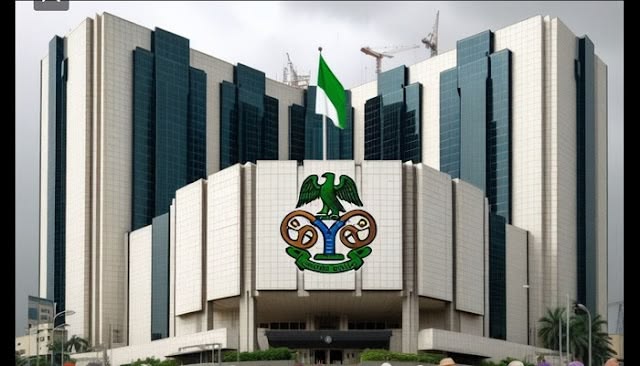
The Central Bank of Nigeria has intensified efforts to curb excess liquidity in the financial system after opening a fresh Treasury Bills auction worth N650 billion amid sustained monetary tightening measures aimed at controlling inflation and stabilising the naira.
The latest auction comes shortly after the apex bank conducted an Open Market Operations (OMO) bills sale valued at N2 trillion, which attracted overwhelming investor demand and ended heavily oversubscribed, underscoring strong appetite for high-yield fixed-income securities.
Market analysts said the aggressive liquidity mop-up reflects the central bank’s determination to rein in inflationary pressures and reduce excess cash circulating within the banking system following rising liquidity levels in recent months.
Details of the Treasury Bills issuance showed that the CBN offered instruments across multiple tenors as part of its routine debt market operations designed to absorb surplus funds from commercial banks and institutional investors.
The development follows the decision of the Monetary Policy Committee of the CBN to retain the Monetary Policy Rate at 26.5 percent during its latest meeting, signaling the bank’s continued hawkish stance despite mounting concerns over economic growth and borrowing costs.
Financial market operators noted that the oversubscription recorded at the recent N2 trillion OMO auction highlights growing investor confidence in government-backed securities, especially amid elevated interest rates and volatile conditions in other investment segments.
The strong subscription level also reflects the attractiveness of fixed-income instruments to pension funds, banks, asset managers, and foreign portfolio investors seeking safer investment options and competitive yields.
Analysts believe the CBN’s liquidity tightening measures are aimed at reducing inflationary spending, managing exchange rate pressures, and strengthening monetary policy transmission within the broader economy.
Nigeria’s inflation rate has remained elevated despite recent monetary tightening measures, prompting the apex bank to sustain aggressive interventions in the money market through Treasury Bills and OMO auctions.
Economic experts warned that while the strategy may help moderate inflation and stabilise the foreign exchange market, it could also tighten credit conditions for businesses and increase borrowing costs across critical sectors of the economy.
The continued reliance on high-yield debt instruments has also intensified competition for liquidity within the financial market, with investors increasingly shifting funds toward government securities due to attractive returns and lower risk exposure.
Market participants are now closely watching the outcome of subsequent auctions and monetary policy actions by the CBN as authorities seek to balance inflation control, exchange rate stability, and economic growth objectives.









Philippine Duru
philippineobetoduru@gmail.com
08034905774
Akwa Ibom State Governor, Umo Eno, has recounted his early experience in entrepreneurship, revealing that he once made not less than ₦10 million in a month from selling akara and bread.
Eno, who spoke while reflecting on his journey before entering public service, said the business experience played an important role in shaping his understanding of enterprise, hard work and wealth creation.
According to the governor, he started from a modest venture involving the sale of akara and bread before gradually expanding his business activities.
“I started selling akara and bread. I made not less than ₦10m in a month,” Eno said.
The governor’s account highlights the entrepreneurial path he pursued before rising through the ranks in business and eventually becoming governor of Akwa Ibom State.
Eno has frequently emphasised the importance of entrepreneurship and economic empowerment, particularly as a means of creating opportunities for young people and reducing dependence on government employment.
His recollection of the akara and bread business also underscored his view that small businesses, when properly managed and supported, can grow into significant sources of income and employment.
The governor’s comments come amid growing conversations around entrepreneurship, youth empowerment and the need to create sustainable livelihoods in Nigeria, where many young people are turning to small and medium-scale enterprises to earn a living.
Eno has continued to advocate policies and initiatives aimed at expanding economic opportunities and encouraging residents to become self-reliant through productive ventures.
His story of moving from selling akara and bread to occupying the highest political office in Akwa Ibom has also been presented as an example of how entrepreneurship, persistence and business experience can shape an individual’s journey to leadership.
The Nigerian Exchange Limited (NGX) rebounded last week, with the All-Share Index (ASI) gaining about 0.81 per cent to close at 241,298.47 points, as renewed investor interest in oil and gas and banking stocks lifted market sentiment.
The week’s gain translated into an estimated ₦1.29 trillion increase in market capitalisation, pushing the value of listed equities to about ₦155.83 trillion.
With the latest appreciation, the NGX’s year-to-date return remained strong at approximately 55 per cent, underscoring the market’s substantial gains despite intermittent periods of profit-taking and volatility.
The recovery was largely driven by buying interest in oil and gas and banking stocks, with Seplat Energy among the notable gainers during the week.
Market sentiment also received a boost from developments in Nigeria’s international financial-market standing. FTSE Russell confirmed the country’s reclassification to Frontier Market status, effective September 21, 2026, a move expected to influence international investor positioning toward Nigerian equities.
Further support came from Moody’s decision to revise Nigeria’s outlook to positive, reinforcing expectations that ongoing economic and fiscal reforms could improve the country’s credit profile.
Despite the positive performance, trading activity was relatively subdued, partly reflecting the shortened trading week. Market volume declined as investors adopted a more cautious approach amid prevailing economic uncertainties and profit-taking pressures.
Analysts said the latest rebound highlights continued investor appetite for fundamentally strong sectors, although the sustainability of the market’s upward trajectory will depend on macroeconomic conditions, corporate earnings, foreign investor participation and policy developments.
As investors enter a new trading week, attention is expected to remain on the performance of banking and energy stocks, while the implications of Nigeria’s forthcoming Frontier Market reclassification could further shape sentiment and capital flows into the equities market.

By Philippine Duru
philippineobetoduru@gmail.com
08034905774
Nigerian motorists and other petrol consumers are facing renewed uncertainty over the direction of pump prices as crude oil costs, logistics expenses and growing competition between locally refined and imported petrol continue to shape the downstream petroleum market.
The latest concern follows another increase in the ex-depot price of Premium Motor Spirit (PMS) by the Dangote Petroleum Refinery, which has raised its petrol gantry price to ₦1,265 per litre.
The latest adjustment is the refinery’s third price increase in about eight to nine days, coming after earlier prices of between ₦1,165 and ₦1,200 per litre.
The repeated adjustments have triggered fresh increases in pump prices across different parts of the country. Petrol is reportedly selling at prices approaching ₦1,400 per litre in some locations, while prices around ₦1,310 per litre have been reported in Lagos and Ogun states.
NNPC retail stations have also adjusted their prices, with petrol reportedly selling for about ₦1,299 per litre in Abuja.
The latest developments have intensified concerns among motorists, transport operators, businesses and households over whether petrol prices could rise further in the coming days.
Dangote Refinery has attributed the recent increases to factors including the cost of crude oil purchased earlier and logistics expenses involved in moving petroleum products to different markets.
However, the refinery has also raised concerns over the growing volume of imported petrol entering the Nigerian market. Available industry data indicate that imported products accounted for about 43 per cent of petrol supply in recent data.
The development has created a fresh competitive challenge for domestic refining, particularly as local refiners seek to establish themselves as major suppliers to the Nigerian market.
Dangote Refinery is reportedly considering restricting sales to marketers that also import petrol, a move that could further reshape competition within the downstream sector.
The possibility has generated debate among industry stakeholders, with the Centre for the Promotion of Private Enterprise (CPPE) calling for a review of policies affecting domestic refining and petroleum imports.
Stakeholders argue that while competition remains important for the market, government policies must also encourage investments in local refining and ensure that consumers are not exposed to excessive price volatility.
For motorists, however, the immediate concern remains the uncertainty surrounding pump prices.
With crude oil prices, transportation and logistics costs, refinery pricing decisions and imported petrol all influencing the market, consumers may have to brace for further adjustments as marketers respond to changing supply and cost conditions.
The coming days are therefore expected to provide a clearer indication of whether the latest price increases represent a temporary market adjustment or the beginning of another sustained rise in petrol prices.


NACTAL’s president-elect pledges inclusive leadership, stronger anti-trafficking action

Osita Osememe gets 95.65% votes, emerges NACTAL president

Peter Obi alleges thugs blocked visit to Yelwata massacre victims in Benue
-

 News9 years ago
These ’90s fashion trends are making a comeback in 2017
-
Business9 years ago
The 9 worst mistakes you can ever make at work
-
Entertainment9 years ago
The final 6 ‘Game of Thrones’ episodes might feel like a full season
-
 News6 months ago
SERAP to Akpabio: Disclose officials involved in misappropriation of ₦200t from NNPC
-

 News5 months ago
Disquiet over whereabouts of ₦2.9 billion in key federal agencies
-
News9 years ago
According to Dior Couture, this taboo fashion accessory is back
-
Sports9 years ago
Phillies’ Aaron Altherr makes mind-boggling barehanded play
-
Entertainment9 years ago
The old and New Edition cast comes together to perform