
Sports
ADC not vehicle for Atiku to achieve presidential ambition- says spokesman

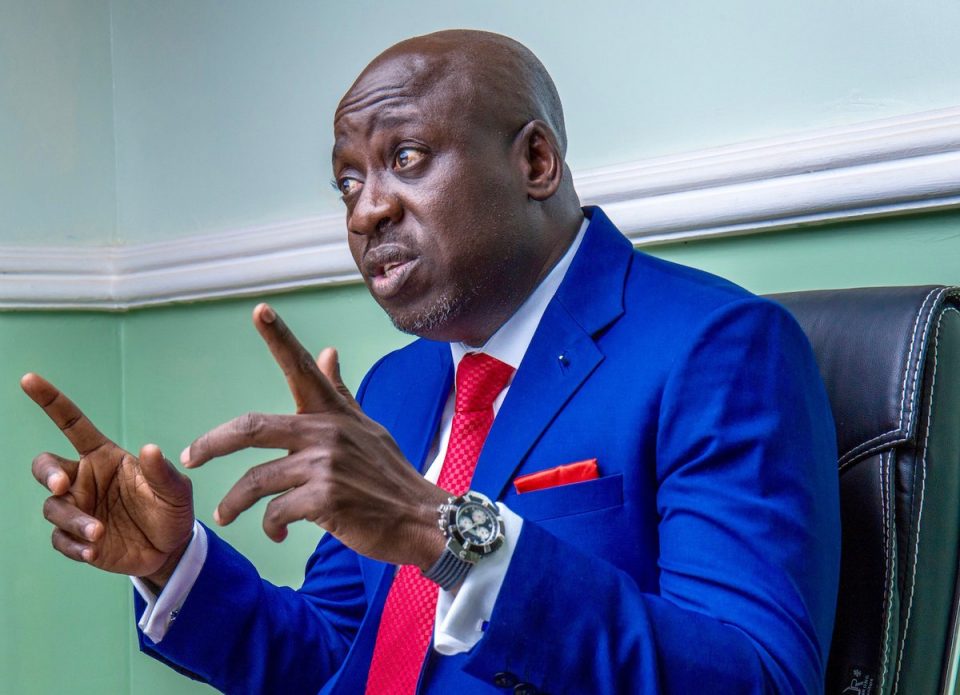
Spokesman of opposition party, the African Democratic Congress (ADC) has refuted allegations that the party is a vehicle for former Vice President Atiku Abubakar to achieve his presidential ambition.
He said the party hasn’t decided on the zoning of its presidential ticket yet.
According to the party’s spokesman, Bolaji Abdullahi, the ADC will make that decision at the “right time.”
“We will not be blackmailed into a premature decision. Zoning is on the table, and we are having strategic conversations, but I am not in a position to reveal those details yet,” he said on Wednesday’s edition of Channels Television’s Politics Today.
The remark comes less than a year before the 2027 presidential election. On Tuesday, the Labour Party (LP) zoned its ticket to the southern region of Nigeria, while the All Progressives Congress (APC) adopted President Bola Tinubu, from the South, as its consensus candidate.
Critics have claimed the ADC—the platform recently adopted by the opposition coalition—is a “vehicle” for former Vice President Atiku Abubakar to achieve his presidential ambition.
However, Abdullahi refuted the claims, stating the party remains open to all and does not have a preferential candidate for the 2027 polls.
When asked directly if the ADC is merely a vehicle for Atiku, the former minister said, “No. Whoever says that doesn’t know what is happening in the ADC.”
“Definitely not. People will believe what they want, but I am telling you this has absolutely nothing to do with Atiku Abubakar any more than it has to do with Peter Obi, Rotimi Amaechi, or anyone else who might want to contest on our platform,” he added.
Amid a wave of defections to the APC, Abdullahi accused President Tinubu of “suffocating” the opposition.
“We believe that Nigeria is facing an unprecedented existential challenge. It is critical for all opposition forces to come together,” he said.
“Splintering opposition ranks only helps to entrench the status quo. For those who share our conviction that we have a duty to protect democracy, you are welcome to join our ranks.”









Spain, France, and a tournament built on the movement of people — and the double standard that greeted it
On Sunday night, 19 July 2026, in New Jersey, Nico Williams cut down the left wing, cushioned a header into the path of Ferran Torres, and watched Torres send Spain to a second World Cup title. It was the goal that beat Argentina. It was also, in a quiet way, the story of the whole tournament.
After the final whistle, Williams did something that said more than the assist did. He took his winner’s medal, walked over to his mother, María Arthuer, and put it around her neck. Years earlier, while pregnant with Nico’s older brother Iñaki, María had crossed the Sahara Desert on foot, leaving Ghana in search of a safer, better life.
She eventually reached Spain. Both her sons grew up to play for the national team. One of them just became a world champion. A few metres away, eighteen-year-old Lamine Yamal was doing his own kind of history. Yamal’s father, Mounir Nasraoui, left Larache in Morocco as a boy. His mother, Sheila Ebana, left Bata in Equatorial Guinea.
They met in Catalonia, raising their son in a working-class neighbourhood outside Barcelona. That son is now one of the best footballers alive, and openly proud of all three flags he carries — Spanish, Moroccan, Equatoguinean.
Spain’s champions were not an exception in this tournament. They were the pattern. France told the same story from a different angle. Kylian Mbappé, who closed the tournament as the World Cup’s all-time leading scorer, grew up in Bondy, a working-class suburb outside Paris, the son of a father who moved from Cameroon and a mother whose family came from Algeria’s Kabyle region.
Mbappé has never hidden where he comes from. He has also never been in any doubt about who he plays for. “My nationality is French,” he has said, “but my origins are Algerian and Cameroonian.” Nearly a third of France’s squad this tournament were born in Africa or carry family roots there — not a quirk of one generation, but the ordinary shape of French football for decades.
Nearly every serious contender in this World Cup told some version of the same story. That is worth sitting with, because it is usually the part of the migration story that gets left out.
What migration actually is
It helps to say plainly what the word means, because it gets thrown around loosely. Migration is simply the movement of people from one place to another — across a town, a country, or a continent — in search of work, safety, family, or opportunity. It is not one thing. It includes the trader who moves from Ibadan to Ghana for better business. The nurse who moves from Lagos to London for a job. The mother who crosses a desert on foot, pregnant, because staying was worse than leaving.
The father who leaves Morocco as a nine-year-old with no say in the matter at all.
Most migration in the world is not dramatic. It is ordinary people making ordinary, difficult decisions about where their families will have a better shot at life. María Arthuer’s crossing was extraordinary. Most migration stories are not — they are quieter, slower, and no less deserving of dignity.
The part nobody wants to say out loud
Here is the uncomfortable truth this World Cup also showed. The same movement of people that produces Nico Williams and Lamine Yamal is, in dozens of countries right now, treated as a crime. Migrants are held in detention centres for the offence of arriving without the right paperwork. Families are separated at borders. Asylum seekers are described in political speeches as invaders, floods, or threats, long before anyone asks who they actually are or why they left home.
During this very tournament, football delegations themselves were not spared that suspicion. There were reports of players from African teams facing extended customs checks simply for arriving to compete. If a national team travelling under FIFA’s own banner can be treated as suspect at the border, it says something about how much harder that same border is for a migrant with no federation behind them, no visa sponsor, no stadium waiting.
That is criminalisation — treating the act of migrating itself as something closer to a crime than a decision. It rarely gets named that plainly, but it is what is happening when movement is met first with suspicion and only later, if ever, with a fair hearing.
The double standard nobody wants to own
Here is what makes this so hard to defend. The same governments, commentators, and ordinary fans who treat migration as a threat when it shows up at a border checkpoint spent the last month on their feet cheering it in a stadium. Nobody watching Nico Williams’ assist paused the celebration to ask whether his mother’s crossing was legal.
Nobody watching Mbappé lift the Golden Boot demanded to see his father’s original entry papers into France. The migration was not just tolerated in that moment — it was the reason for the joy.
That is the double standard in plain sight. Migration is magic when it wins you a trophy and a menace when it asks you for asylum. The same journey — leaving one country because another one offers more — is applauded on a football pitch and criminalised at passport control, sometimes by the very same people, often in the very same week. A double standard this obvious does not need a research paper to prove it. It needs only a scoreboard and a headline printed side by side.
The benefit is not an afterthought
It is worth being direct about what migration actually gives the places that receive it, because that side of the story is usually told in half-sentences, if at all. Spain did not win a World Cup despite migration. It won partly because of it. The same is true well beyond football.
Migrants build homes, staff hospitals, start businesses, fill labour gaps, pay taxes, send money home that lifts entire communities, and raise children who go on to represent the only country they have ever known — sometimes at the very highest level a country can offer.
Nico Williams did not simply overcome his mother’s journey. He was the return on it. Lamine Yamal did not simply survive his parents’ migration. He is, right now, one of the finest footballers on earth because of the life they built after it. That is not a sentimental point. It is the actual, measurable outcome of migration done right — given time, given dignity, given a fair chance to belong.
Why this shouldn’t end with the trophy
Spain lifted the World Cup on July 19. The stadiums are empty now, the flags are being packed away, and the conversation is already moving on to next season’s club fixtures. But the questions this tournament raised about migration do not go away because the football stopped.
For those of us working on migration governance across West Africa and beyond, the lesson is not that football should be more grateful to migrants. It is that the way we talk about migration everywhere else — in our policies, our borders, our news coverage — should catch up to what football already knows without needing to be told: that people who move, and are given a fair chance, tend to build extraordinary things. Not despite where they came from. Because of the courage it took to leave.
María Arthuer crossed a desert so her sons could have a chance. Nobody handed her that chance. She and thousands like her earned it the hard way, and it is long past time the systems meant to receive them recognised that.
Aihawu Victor is the Director of the Centre for Youths Integrated Development (CYID) and the Platform for Cooperation on Mixed Migration (PCMM).

At least two people have died during massive celebrations in Mexico City after Mexico’s national team secured a place in the Round of 16 of the FIFA World Cup.
According to the city government, the fatalities occurred on Wednesday as more than one million fans gathered across the capital to celebrate the team’s historic victory.
The city’s health ministry said a 19-year-old woman and a 44-year-old man died from asphyxiation during the crowded celebrations. Authorities have yet to confirm reports by local media that a third person also died.
Thousands of jubilant supporters flooded the streets, particularly around the iconic Angel of Independence monument, following Mexico’s 2-0 victory over Ecuador.
The victory ended Mexico’s 40-year wait for a knockout-stage win at the World Cup, marking the country’s first triumph in the competition’s elimination rounds since it hosted the tournament in 1986.
Julian Quiñones opened the scoring midway through the first half with a powerful strike before setting up Raúl Jiménez to seal the victory.
The result also extended Mexico’s unbeaten run to 10 World Cup matches at the Azteca Stadium, strengthening the co-hosts’ hopes of making a deep run in the tournament.
Mexico progressed to the Round of 16 after winning all three of their group-stage matches without conceding a goal, joining France and Argentina as the only teams to achieve a perfect group-stage record. They will next face either England or the Democratic Republic of Congo for a place in the
quarter-finals.

Norway booked their place in the Round of 16 of the FIFA World Cup after defeating Ivory Coast 2-1 in a hard-fought Round of 32 clash on Tuesday.
The encounter was closely contested, with both teams creating chances as they battled for a place in the next stage of the tournament.
Norway broke the deadlock in the 39th minute when Antonio Nusa calmly finished to hand his side a deserved first-half lead.
Ivory Coast responded strongly after the restart, drawing level in the 74th minute through Amad Diallo, who restored hope for the African side and set up a tense finish.
However, Erling Haaland proved to be the difference, scoring the decisive goal in the 86th minute to seal a dramatic 2-1 victory and send Norway into the last 16.
The strike also strengthened Haaland’s bid for the tournament’s Golden Boot, taking his goal tally to five and moving him into second place in the scoring charts behind L
ionel Messi.


Migration Won the 2026 World Cup. It Is Still Treated Like a Crime at the Border

CITAB faults UBEC’s new inclusive education standards

KACRAN hails Gov. Buni’s ₦28.53bn agricultural empowerment programme
-

 News9 years ago
These ’90s fashion trends are making a comeback in 2017
-
Business9 years ago
The 9 worst mistakes you can ever make at work
-
Entertainment9 years ago
The final 6 ‘Game of Thrones’ episodes might feel like a full season
-
 News4 months ago
SERAP to Akpabio: Disclose officials involved in misappropriation of ₦200t from NNPC
-
News9 years ago
According to Dior Couture, this taboo fashion accessory is back
-
 News4 months ago
Disquiet over whereabouts of ₦2.9 billion in key federal agencies
-
Sports9 years ago
Phillies’ Aaron Altherr makes mind-boggling barehanded play
-
Entertainment9 years ago
The old and New Edition cast comes together to perform