
Business
Aviation sector crisis deepens


Prices of Aviation Turbine Kerosene (ATK) in Nigeria has been pegged between ₦1,960 and ₦2,800 per litre.
The Nigerian Midstream and Downstream Petroleum Regulatory Authority (NMDPRA) capped the price followed skyrocketing fuel prices, which have resulted in an equal rise in airlines’ operating costs.
Airline Operators of Nigeria (AON) have since cut down on flight operations and are threatening to down tools if nothing is done to stem the tide.
However, a statement by the Director, Public Affairs Department, NMDPRA, George Ene-Ita, noted that “The nationwide retail prices surveyed as of 17th April 2026 range between N1,960 per litre to N2,800 per litre”, adding that the speculated N3,300 per litre price being peddled in the media does not reflect current market reality.
Minister of Aviation and Aerospace Development, Festus Keyamo
Minister of Aviation and Airspace Management, Festus Keyamo, had earlier waded into the crisis.
Despite the intervention, however, airline operators have maintained their position, warning that operations could be disrupted if urgent measures are not implemented. The carriers had earlier issued a seven-day ultimatum, threatening to halt flights.
Industry data shows that the cost of fuelling aircraft has risen sharply in recent months. For instance, fuelling a Bombardier CRJ 900 or Airbus A220, which cost about N2.1 million per flight in January, has surged to approximately N7.6 million as of April 26, a 350 per cent increase.
The vice president of AON, Allen Onyema, attributed the spike partly to global tensions, including the US-Iran crisis, but argued that local price increases are disproportionate to international trends.
“Since the advent of the US-Iran war, there has been a spike in aviation fuel price in Nigeria, which we feel is not proportionate to the hike internationally,” Onyema said.
“We expect that in the next 48 hours something drastic should be done because no airline will fly in this country in the next seven days if nothing is done—not because they don’t want to fly, but because fuel may not be available to us at sustainable pricing.”
In response, the NMDPRA said it has introduced a series of measures aimed at easing supply constraints and reducing costs. These include directing marketers to sell aviation fuel directly to airlines to eliminate middlemen and improve transparency within the supply chain.
Further reacting to the crisis, the NMDPRA, in line with its mandate, said it will continue to closely monitor the supply situation and take appropriate regulatory measures to prevent disruption of supply of petroleum products and profiteering across the country.
While appreciating the continued efforts of all stakeholders in the aviation fuel supply chain in ensuring adequate supply and distribution of the product, the Authority assured the public of its continued commitment to guarantee energy security in the country.
On Monday, the group manager, Marketing and Communication, Ibom Air, Aniekan Essienette, disclosed that the carrier could begin reducing flight frequencies in the coming days as fuel costs reach unsustainable levels.
According to the airline, operators can no longer continue flying merely to cover fuel costs.
Essienette described the current pricing regime as an “unprecedented crisis,” stressing that it had become financially unsustainable for domestic carriers.
She revealed that the cost of fuelling a single flight had more than tripled within a short period.
According to her, while Ibom Air spent an average of N2.1 million per flight in January, that figure had risen to about N7.6 million as of April 26, representing a 350 per cent increase.
Despite the emergence of the Dangote Refinery, which reportedly supplies over 95 per cent of Nigeria’s Jet A1 fuel, the airline expressed concern that domestic prices remain significantly higher than global benchmarks.
“Domestic airlines are baffled at why the price of aviation fuel in Nigeria has ballooned to this level, far above what obtains in other parts of the world,” the airline said.
It added that while international carriers typically cut capacity in response to even modest fuel increases, Nigerian airlines have continued to absorb steep cost pressures in a bid to keep fares affordable.
Ibom Air, which operates a fleet of Bombardier CRJ 900 and Airbus A220 aircraft, said it can no longer sustain normal operations under current conditions.
“It is clear to us that the current conditions are unsustainable,” Essienette said. “We will have to take whatever ameliorating actions we can in the days ahead, including reducing our capacity if necessary.”


By Philippine Duru
philippineobetoduru@gmail.com
08034905774
The Nigerian Exchange Limited (NGX) continued its impressive market rally as the All-Share Index (ASI) recently closed at approximately 249,175 points, recording modest daily gains despite mild profit-taking activities by investors.
The latest market performance highlights sustained investor confidence in Nigerian equities, with the local bourse maintaining one of the strongest performances among emerging and frontier markets this year.
Market analysts noted that although some investors moved to lock in profits after weeks of sustained gains, buying interest in key banking, industrial, telecom, and consumer goods stocks helped the market remain in positive territory.
The NGX has delivered exceptional year-to-date returns, with some market reports placing the overall gain at more than 60 percent, reflecting renewed optimism in the Nigerian economy and growing appetite for equities amid improving macroeconomic indicators.
According to capital market operators, the rally has been driven by a combination of factors including strong corporate earnings, banking sector recapitalization expectations, easing foreign exchange concerns, and increased participation from institutional investors.
Analysts also attributed the bullish trend to the relative attractiveness of equities compared to fixed-income instruments, especially as investors continue to seek higher returns in an inflationary environment.
Trading activity during the session showed a mix of bargain hunting and cautious profit-taking, with investors rotating funds across various sectors in anticipation of stronger corporate fundamentals and future dividend prospects.
Financial experts said the market’s resilience around the 249,000-point threshold demonstrates strong underlying momentum despite intermittent corrections triggered by profit-taking.
The banking sector remained one of the major drivers of market activity, supported by renewed investor positioning ahead of recapitalization exercises and expectations of stronger earnings performance from tier-one financial institutions.
Industrial and consumer goods stocks also contributed to market stability as investors continued to show interest in fundamentally strong companies with growth potential.
Market capitalization on the exchange remained elevated, reinforcing the expanding value of listed equities and the increasing wealth creation witnessed on the Nigerian bourse over recent months.
Investment analysts believe the market may sustain its upward trajectory if macroeconomic reforms continue to improve investor sentiment, foreign exchange stability strengthens further, and corporate earnings remain positive.
However, they cautioned that periods of profit-taking are expected after the market’s rapid appreciation, especially as investors rebalance portfolios and secure gains from high-performing stocks.
Economic observers say the strong performance of the NGX reflects improving confidence in Nigeria’s financial markets despite persistent inflationary pressures and global economic uncertainties.
They added that sustained reforms by fiscal and monetary authorities, alongside increased transparency and market reforms, could further deepen investor participation and support long-term growth in the capital market.
As the market edges closer to the historic 250,000-point mark, investors and analysts are expected to closely monitor corporate earnings releases, monetary policy developments, and foreign investor participation for signals on the next direction of the market.
By Philippine Duru
philippineobetoduru@gmail.com
08034905774
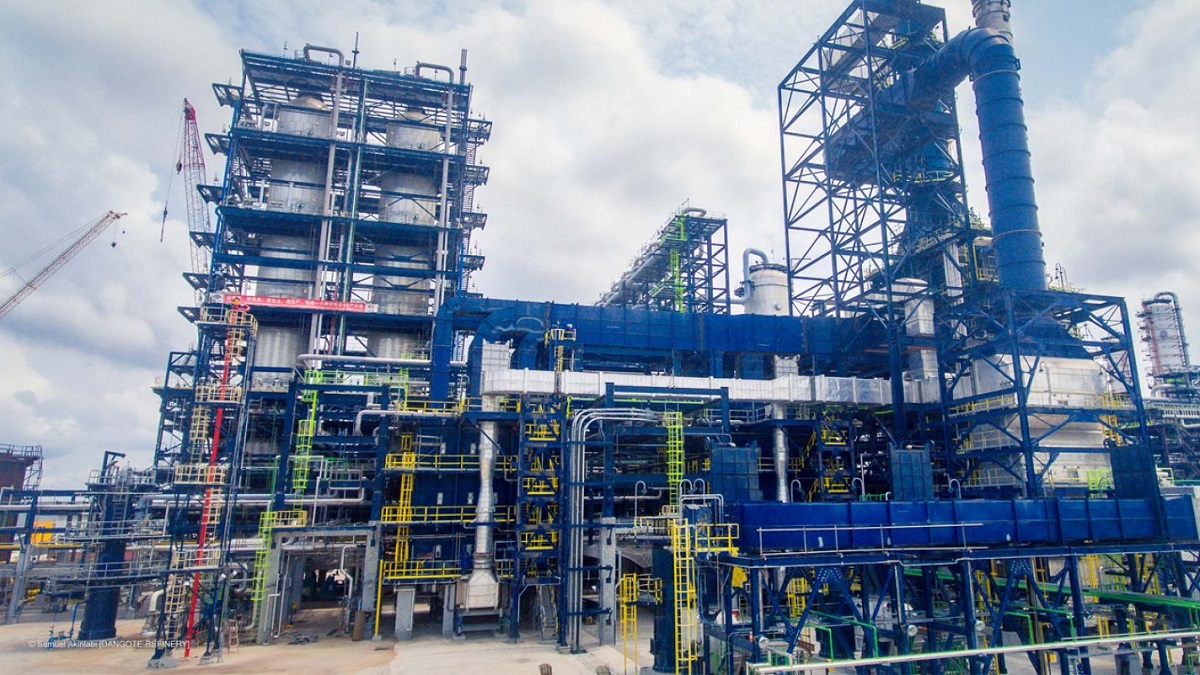
The Dangote Refinery is witnessing strong investor confidence ahead of its planned initial public offering (IPO) scheduled for September, with reports indicating that the refinery has already attracted nearly $2 billion in private placement requests.
The growing interest underscores rising confidence in the refinery’s long-term profitability and strategic importance to Nigeria’s energy sector, as investors position themselves ahead of what could become one of the biggest listings in Africa’s capital market history.
Sources familiar with the development revealed that prominent Nigerian businessman Femi Otedola is reportedly making a $100 million investment in the refinery, further reinforcing market optimism surrounding the project.
Industry analysts said Otedola’s reported investment signals increasing confidence among high-net-worth investors and institutional players in the refinery’s capacity to transform Nigeria’s downstream petroleum sector.
The refinery, owned by Aliko Dangote, has continued to dominate discussions within the oil and gas industry following the commencement of refined petroleum production and gradual expansion of supply into both domestic and international markets.
Market observers believe the refinery’s planned IPO could significantly deepen participation in Nigeria’s capital market while opening opportunities for local and foreign investors to gain exposure to Africa’s largest single-train refinery project.
The development comes amid increasing efforts by the company to consolidate its position in the domestic energy market through competitive pricing strategies.
In a move expected to bring relief to Nigeria’s aviation sector, the refinery recently reduced the ex-depot price of Jet A1 aviation fuel to ₦1,650 per litre.
The price cut is expected to ease operating costs for domestic airlines, many of which have struggled with rising aviation fuel prices, foreign exchange pressures, and escalating maintenance expenses over the past year.
Industry stakeholders say the reduction could translate into lower airfare prices for passengers if airlines pass on part of the savings to consumers.
Several airline operators have repeatedly warned that high aviation fuel costs remain one of the biggest threats to the sustainability of local air transport operations in Nigeria.
Analysts noted that the refinery’s growing domestic supply of aviation fuel may also reduce dependence on imported products, improve product availability, and stabilize pricing across the aviation industry.
Economic experts further argue that increased local refining capacity could help Nigeria conserve foreign exchange, strengthen energy security, and reduce pressure on the naira by cutting petroleum import bills.
The Dangote Refinery, with a refining capacity of 650,000 barrels per day, is widely regarded as a transformative project capable of reshaping fuel supply dynamics not only in Nigeria but across West Africa.
As preparations for the September IPO gather momentum, investors and market participants are expected to closely monitor the refinery’s operational performance, pricing strategy, and expansion plans in the coming months.
By Philippine Duru
philippineobetoduru@gmail.com
08034905774
Nigeria’s gross external reserves have climbed to $49.49 billion, signaling renewed strength in the country’s foreign exchange position amid ongoing economic reforms and improving foreign currency inflows.
The latest reserve position reflects growing confidence in the Nigerian economy as authorities intensify efforts to stabilize the naira, attract foreign investments, and strengthen macroeconomic fundamentals.
Analysts say the increase in reserves provides the Central Bank of Nigeria (CBN) with stronger capacity to defend the local currency, meet external obligations, and support liquidity in the foreign exchange market.
The rise in reserves is being linked to improved crude oil earnings, stronger remittance inflows, increased foreign portfolio investments, and policy reforms introduced by monetary and fiscal authorities over the past year.
Economic experts noted that the reserve growth comes at a crucial time when Nigeria is battling inflationary pressures, exchange rate volatility, and rising import costs.
According to market observers, a stronger reserve base enhances investor confidence and improves the country’s credit outlook, particularly as the government seeks to deepen economic diversification and reduce dependence on oil revenues.
The development also reflects the impact of ongoing reforms in the foreign exchange market, including efforts by the CBN to improve transparency, unify exchange rates, and clear outstanding foreign exchange obligations.
Financial analysts believe the improved reserve position could help moderate pressure on the naira by enabling the apex bank to intervene more effectively when necessary.
They also argued that higher reserves strengthen Nigeria’s ability to withstand external economic shocks, especially amid global uncertainties surrounding oil prices, geopolitical tensions, and tightening monetary conditions in major economies.
The reserve figure comes as the federal government continues to push reforms aimed at boosting non-oil exports, increasing domestic production, and improving fiscal revenues.
Industry stakeholders say sustaining the upward trajectory of external reserves will depend largely on consistent crude oil production, stable global oil prices, increased foreign direct investment inflows, and stronger export performance.
Meanwhile, economists have urged policymakers to complement reserve growth with measures that directly stimulate local manufacturing, infrastructure development, and employment generation to ensure broader economic stability.
The improvement in Nigeria’s external reserves is expected to remain a key indicator closely watched by investors, development partners, and international financial institutions assessing the country’s economic outlook in the months ahead.


NGX sustains bullish momentum as All-Share index nears 250,000 points

Dangote refinery draws massive investor interest ahead of IPO

Nigeria government seeks to deepen economic diversification and reduce oil dependency
-

 News9 years ago
These ’90s fashion trends are making a comeback in 2017
-
Entertainment9 years ago
The final 6 ‘Game of Thrones’ episodes might feel like a full season
-
News9 years ago
According to Dior Couture, this taboo fashion accessory is back
-
Business9 years ago
The 9 worst mistakes you can ever make at work
-
Sports9 years ago
Phillies’ Aaron Altherr makes mind-boggling barehanded play
-
Entertainment9 years ago
The old and New Edition cast comes together to perform
-
Business9 years ago
Uber and Lyft are finally available in all of New York State
-
Entertainment9 years ago
Mod turns ‘Counter-Strike’ into a ‘Tekken’ clone with fighting chickens