
Politics
2027: Our candid opinions about Tinubu, APC- Dino Melaye, Dele Momodu

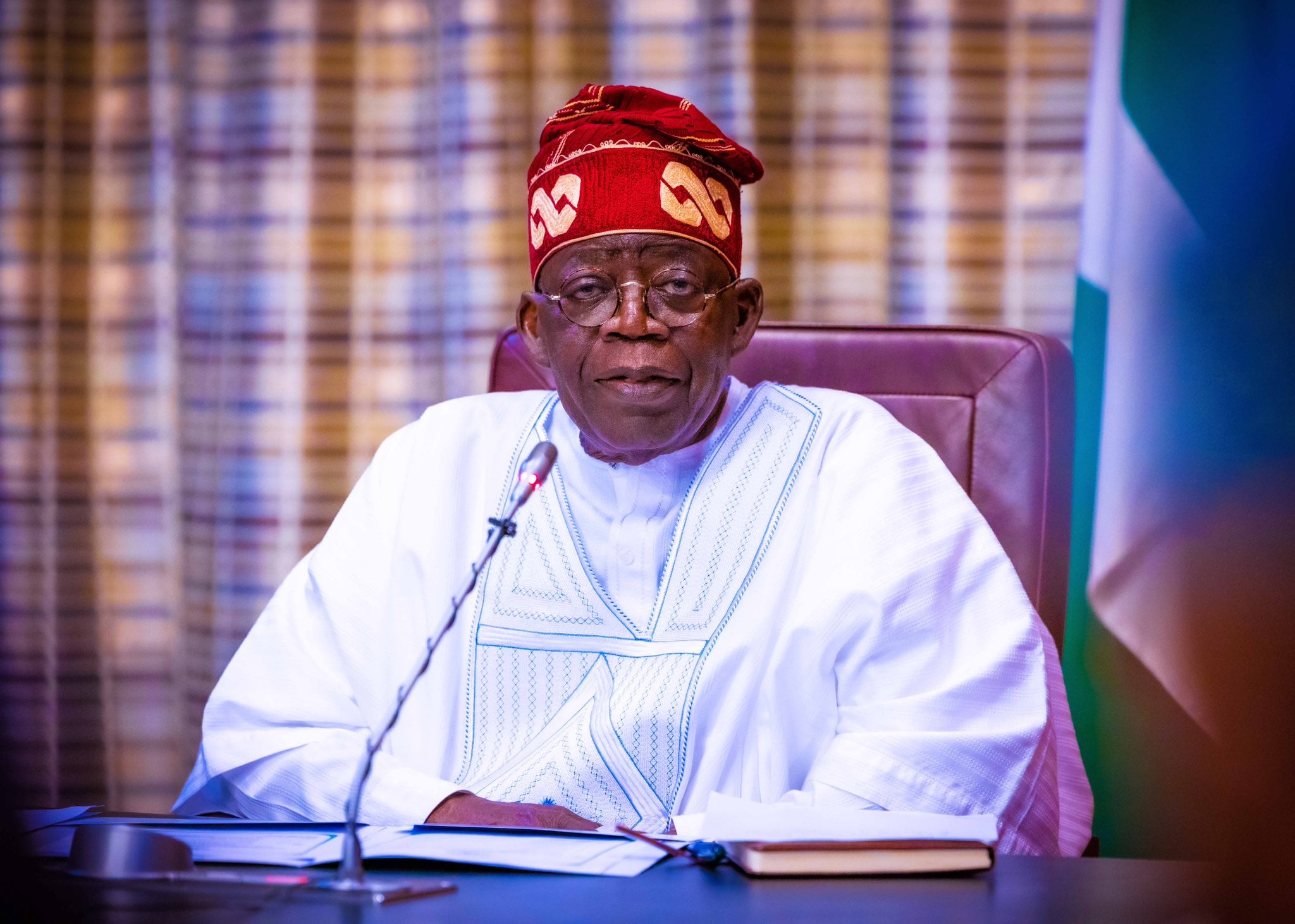
A former Kogi West Senator, Dino Melaye and a chieftain of the African Democratic Congress, ADC, Dele Momodu, have expressed their candid opinions about President Bola Tinubu and the ruling All Progressives Congress (APC) ahead of the 2027 general elections.
They both accused President Tinubu of plotting to return to Aso Rock without facing real contest from the opposition.
Speaking on Channels Television on Thursday, April 2, 2026, Melaye accused the APC of desperation, claiming President Bola Tinubu prefers a coronation over a democratic contest.
He alleged that the APC is panicking due to the growing momentum of the African Democratic Congress (ADC) as a major opposition platform. He pointed to an “exodus” of politicians from other parties into the ADC as the reason for the ruling party’s unease.“The APC has become so desperate.
They have seen that ADC is the only opposition we have in Nigeria to challenge. They have seen the exodus of people from various political parties into the ADC and they are panicked,” Melaye said.He questioned the APC’s fear despite controlling 32 state governors: “I’m shocked why they are panicked. You say you have 32 governors, so why are you afraid? It is not about ADC. It is about democracy.”World News Section
Melaye further claimed that President Tinubu harbours monarchical ambitions. “President Bola Ahmed Tinubu wants to be coronated. He does not want an election. It is a Kabiyesi mentality,” he declared, using the Yoruba term for an absolute traditional ruler.
The comments followed the Independent National Electoral Commission (INEC)’s decision to delist former Senate President David Mark and ex-Osun State Governor Rauf Aregbesola as National Chairman and National Secretary of the ADC. INEC said it would no longer recognise factions within the party or monitor conventions and congresses linked to those leaders.
Melaye’s remarks highlight the intensifying tensions in Nigeria’s opposition politics as parties gear up for the 2027 presidential and general elections. The ADC is increasingly seen by some as a potential rallying point for anti-APC forces, despite its ongoing internal leadership disputes.
Dele Momodu on his part, said alleged that “the ultimate aim of Tinubu and his acolytes is to produce a sole candidate in the 2027 Presidential election”.
The publisher of Ovation Magazine made the remark while reacting to how the Independent National Electoral Commission (INEC) handled the leadership disputes of the African Democratic Congress (ADC) and the Peoples Democratic Party (PDP).
“The last time such a brazen attempt was made was during the Abacha era, 1993-1998… it is true indeed that humans hardly learn didactic lessons from history. Good luck to Nigeria,” he said.









By Philippine Duru
philippineobetoduru@gmail.com
08034905774
A prominent member of the All Progressives Congress (APC) in Rivers State, Princewill Dike, has declared that Ikwerre Local Government Area will be a difficult political terrain for former Minister of Transportation and African Democratic Congress (ADC) Vice-Presidential Candidate, Chibuike Amaechi, ahead of the 2027 general elections.
Dike, a lawyer and human rights activist, said Amaechi should not expect an easy political battle in Ikwerre or other parts of Rivers State, arguing that the state’s political dynamics had changed significantly.
He made the assertion on Saturday in a commentary posted on his Facebook page, Princewill Dike Platform.
According to him, Amaechi was fully aware of the political realities in Ikwerre and Rivers State and should therefore not anticipate an easy victory in the 2027 elections.
“Amaechi is fully aware of the political realities in Ikwerre and Rivers State, and should not expect an easy victory in the state during the next general elections,” Dike said.
The APC chieftain argued that Amaechi’s past political influence and access to federal structures did not translate into electoral victory in Rivers, questioning what would be different in 2027.
He said the emergence of former Rivers State Governor Nyesom Wike as Minister of the Federal Capital Territory (FCT) had significantly altered the political calculations in the state, particularly regarding federal influence and grassroots political structures.
“Whether Amaechi, who could not secure victory despite enjoying considerable federal backing in the past, will now be able to defeat the political structure associated with Wike remains doubtful,” he said.
Dike described Ikwerre as a particularly challenging battleground for Amaechi, stressing that the political realities on the ground should not be underestimated by anyone preparing for the 2027 elections.
He also predicted the re-election of President Bola Tinubu in 2027 and expressed confidence in the electoral prospects of the Rivers political coalition linked to the FCT Minister.
“Amaechi, who couldn’t win with his federal might, battalion of soldiers and INEC in his beck and call, is it now that the political wonder boy of Rivers State, Nyesom Ezenwo Wike, is in charge of the federal might and everything incidental thereto, that he (Amaechi) will win? Abeg, tell me something else jari?” Dike asked.
Quoting from the Scriptures, the APC leader added: “What seest thou? I see P-BAT re-elected, OK Chinda and all the Rivers coalition candidates elected.”
Dike, who is also a philanthropist, maintained that the political tide was already taking shape in Rivers State, saying the strength of emerging alliances and grassroots structures would play a decisive role in determining the outcome of the 2027 elections.
By Philippine Duru
philippineobetoduru@gmail.com
08034905774
A prominent chieftain of the All Progressives Congress (APC), Alubarika, has projected that President Bola Ahmed Tinubu will lead the 2027 presidential election in four of Nigeria’s six geopolitical zones, while former Vice President Atiku Abubakar and former Anambra State governor Peter Obi are expected to dominate the North-East and South-East respectively.
Alubarika made the projection in a post on his verified X handle, formerly Twitter, where he assessed the likely performance of the major contenders based on what he described as his political experience, grassroots engagement and understanding of Nigeria’s electoral dynamics.
According to his projection, Tinubu would secure 50 per cent of the vote in the North Central, compared with 25 per cent for Atiku, 20 per cent for Obi and five per cent for other candidates.
The North Central zone comprises Benue, Kogi, Kwara, Nasarawa, Niger, Plateau and the Federal Capital Territory.
In the North-East, however, Alubarika predicted an advantage for Atiku, giving the former vice president 50 per cent, against 40 per cent for Tinubu. Obi and other candidates were each projected to secure five per cent.
The North-East comprises Adamawa, Bauchi, Borno, Gombe, Taraba and Yobe states.
In the North-West, Alubarika again placed Tinubu ahead with 50 per cent, followed by Atiku with 30 per cent, Obi with 15 per cent and other candidates with five per cent.
For the South-East, the APC chieftain predicted a strong showing for Obi, projecting him to win 50 per cent of the vote. Tinubu was placed at 35 per cent, Atiku at 10 per cent and other candidates at five per cent.
Obi, who is the presidential candidate of the National Democratic Congress (NDC), is expected to draw significant support from the region.
Alubarika also projected a 50 per cent share for Tinubu in the South-South, compared with 25 per cent for Obi, 20 per cent for Atiku and five per cent for other candidates.
The South-West recorded Tinubu’s highest projected performance, with Alubarika putting the incumbent president at 69 per cent. Obi was projected at 15 per cent, Atiku at 10 per cent and other candidates at six per cent.
Explaining his assessment, Alubarika said he believed the projection was about 75 per cent accurate, while acknowledging that political dynamics could change considerably before the election.
“Politics is never an exact science, and a lot can change before 2027,” he said.
He urged Nigerians and political observers to keep his prediction and compare it with the actual results after the election.
“When the votes are counted and the dust settles, come back and give me my flowers,” he wrote.
The projection is not based on an opinion poll or official electoral data but represents Alubarika’s personal assessment of the likely voting pattern ahead of the 2027 presidential election.
With the election still ahead, political alliances, party structures, candidate nominations, regional dynamics, economic conditions and other emerging issues could alter the current political calculations.
By Philippine Duru
philippineobetoduru@gmail.com
08034905774
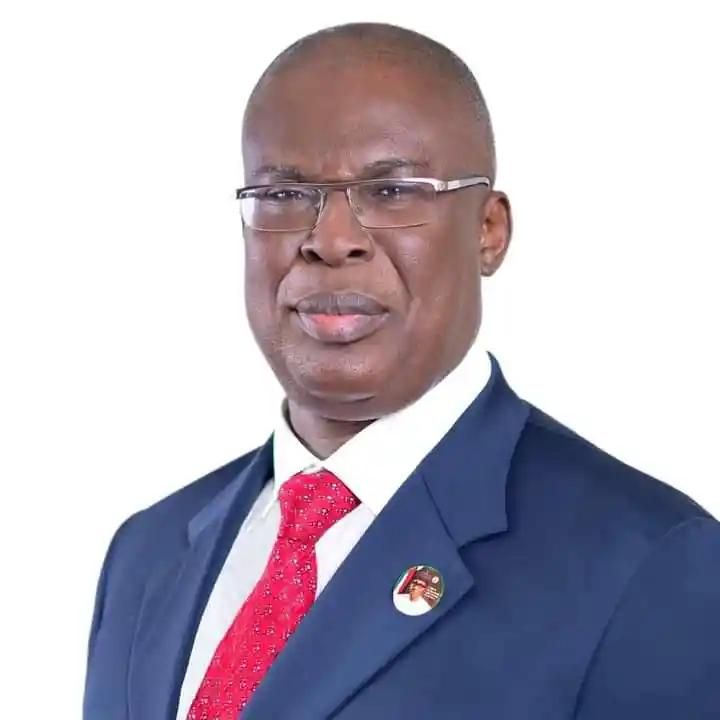
Former Bayelsa State Governor and ex-Minister of State for Petroleum Resources, Timipre Sylva, has resigned his membership of the All Progressives Congress (APC), declaring that he can no longer identify with the party.
Sylva announced his decision in a letter dated August 31, 2026, in which he expressed concerns over the direction of the party and the conduct of its leadership.
The former governor accused the APC leadership of promoting the notion that “all is fair in politics,” arguing that the principle had contributed to practices he said were inconsistent with the values he expected from the party.
He also criticised the performance of the Federal Government, expressing dissatisfaction with what he described as shortcomings under the APC-led administration.
Describing the APC as a “floundering ship,” Sylva said his continued association with the party was no longer tenable.
The former petroleum minister also copied the Economic and Financial Crimes Commission (EFCC) in the letter, alleging that the anti-graft agency was increasingly being used as an instrument of the APC.
Sylva’s resignation comes amid heightened political activity ahead of Nigeria’s 2027 general elections, with defections and realignments increasingly shaping the country’s political landscape.
His departure could have political implications in Bayelsa and the wider South-South region, where he remains a prominent figure in the APC and Nigerian politics.
The development is expected to trigger further reactions within the party as political actors continue to reposition themselves ahead of the 2027 elections.


KACRAN: Insecurity in North can end within 45 days if leaders are committed

KACRAN urges northern governors to adopt Buni’s economic blueprint, seeks FG’s soft loans

Swiftthinkers Essay Competition: 40 Lagos pupils qualify for next stage
-

 Business4 months ago
NGX surges as investors gain ₦3.19tn
-

 News4 months ago
APC’s budget for security jumps from #969b to ₦5.41tr
-
 News7 months ago
SERAP to Akpabio: Disclose officials involved in misappropriation of ₦200t from NNPC
-
 News7 months ago
Disquiet over whereabouts of ₦2.9 billion in key federal agencies
-

 Business9 years ago
The 9 worst mistakes you can ever make at work
-
News9 years ago
These ’90s fashion trends are making a comeback in 2017
-

 Business4 months ago
FCMB profit hits ₦202bn on first quarter performance
-
Entertainment9 years ago
The final 6 ‘Game of Thrones’ episodes might feel like a full season