
Politics
2027 elections: Obedients unveil new strategy to remove Tinubu

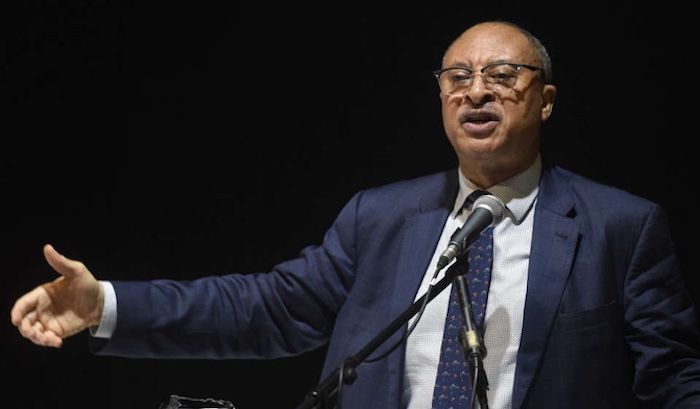
The Big Tent Coalition, led by renowned Political Economist, Prof. Pat Utomi, is set to unveil a groundbreaking citizen-powered platform, ‘Obidient Connect,’ designed to organise millions of Nigerians into a coordinated grassroots force capable of reshaping the country’s democratic future.
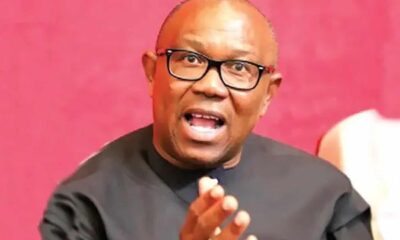
This was as former governor of Anambra State and presidential hopeful of African Democratic Congress (ADC), Mr. Peter Obi, has said he will continue to invest in critical sectors of Nigeria economy to ensure improvement.
Multiple sources within the coalition confirm that the platform, scheduled for official unveiling next month, is an ambitious civic-tech initiative yet to emerge from Nigeria’s growing reform movement, with projections to onboard over 20 million Nigerians at home and across the diaspora.
Described by insiders as “the operating system for citizen-led democracy,” the ‘Obidient Connect’ seeks to convert the widespread enthusiasm of the Obidient Movement into structured, polling unit-level organisation across the nation’s 176,864 polling units.
At the heart of the initiative is a clear strategic objective to transform diffuse public sentiment into disciplined civic action.
Director of Media/Communications of The Big Tent, and also a leading architect of the ground-breaking platform, Charles Odibo, quoted Utomi as stating that the platform answers a fundamental question confronting Nigeria’s democracy – “How do we organise the hope of millions into structured civic power?”
In an internal communications sent to Big Tent State Coordinators nationwide, Utomi emphasised that the lessons of the 2023 elections made it clear that citizen energy without structure is insufficient to secure electoral outcomes.
“The 2023 elections showed both the strength of citizen engagement and the dangers of disorganisation at the grassroots. Obidient Connect has been created to ensure that every polling unit is organised, every volunteer is coordinated, and every vote is protected,” he wrote.
He further directed state leaders to immediately begin groundwork ahead of the April launch, charging them “to ensure that all polling units in your states are covered, with capable coordinators and volunteers in place.
Between now and the unveiling, there must be deliberate sensitisation and mobilisation to guarantee massive adoption of the platform.”
The Obidient Connect is built around four core pillars – Connect: Linking Nigerians to their specific polling units and diaspora communities; Organise: Coordinating grassroots mobilisation, training, and civic engagement; Donate: Enabling lawful and transparent funding for voter education and mobilisation; and, Deliver: Ensuring effective participation and vote protection at the polling unit level.
The platform is expected to serve as a central hub for volunteer coordination, civic education, election monitoring, and real-time reporting, effectively creating a nationwide citizen infrastructure that is more robust than traditional political party systems.
In a significant move that underscores the coalition’s global ambitions, “Obidient Connect” has secured a strategic partnership with Naija We Can (Better Naija), a well-known and reputable non-profit organisation registered in the United States of America. The partnership is expected to anchor a large-scale diaspora fundraising effort targeting over $500 million, alongside more than N100 billion in local support within Nigeria. Sources say the arrangement ensures full compliance with Nigerian laws prohibiting direct foreign funding of political parties, as all contributions will be channelled strictly toward civic education, grassroots organising, support of preferred candidate, and democratic advocacy. “Naija We Can” is led by Dr. Iheanacho Emeruwa, a California-based physician and respected diaspora leader, whose stewardship is said to bring credibility and transparency to the fundraising process.
Unlike traditional political structures, insiders insist that Obidient Connect is a citizen-driven platform designed to support democratic participation at scale.
The Big Tent Coalition has been one of the principal drivers of the Obidient Movement that rallied behind Mr. Peter Obi in the 2023 elections, and sources indicate that the platform is expected to play a central role in positioning him for a renewed presidential contest in 2027.
According to Odibo, who is also coordinating the elaborate roll-out of “Obidient Connect,” Utomi, in a separate message to members of the coalition at home and in the diaspora reinforced the urgency of the moment, informing them that “the platform will be officially unveiled in April, and all hands must be on deck to ensure its success. The future will not fix itself. Nigeria will change because citizens decide to organise and take responsibility.” A global virtual engagement is also planned ahead of the unveiling to brief stakeholders, answer questions, and align operational strategies.
Political observers say the emergence of “Obidient Connect” signals a shift toward technology-driven, citizen-led electoral organisation in Nigeria, potentially redefining how campaigns are run and how votes are protected.
With its ambitious membership target, structured polling unit focus, and global funding strategy, the platform could become a decisive factor in the 2027 elections, particularly in an environment where electoral credibility remains a major national and international concern. For now, all eyes are on April, when “Obidient Connect” will be formally unveiled to the public, marking what its promoters describe as “the beginning of a new phase in Nigeria’s democratic journey.”
Meanwhile, Obi who stated that he will continue to invest in critical sectors when he visited College of Nursing Sciences, Mbano, Imo State to make a donation to the institution said his continued donation to various institutions has a major focus, which is to help strengthen education, healthcare and alleviate poverty.
The presidential hopeful who had previously visited the institution with a donation of N10 million cheque also made a fresh donation of another N10 million.
He said, “Nigeria’s development depends on prioritising human capital and building institutions that empower young people. That is the reason for my consistent stance on investing in critical sectors such as education, healthcare, and poverty alleviation.
“I urge leaders at all levels to channel resources toward productive ventures that improve lives, rather than consumption. Supporting educational institutions remains one of the most effective ways to secure the nation’s future.
“I want to also encourage the students to remain focused on their studies and prepare themselves to contribute meaningfully to society. I assure you people of my continued goodwill.”
The Provost of the college, Dr. M. Laurette Madu, expressed profound gratitude to Mr. Obi for his continued financial support to the institution.
The Provost disclosed that the N10 million earlier donated by Obi to the college, was used to install solar-powered electricity and a transformer to improve power supply within the institution.
She said, “That intervention significantly enhanced learning and administrative activities and increased infrastructure demands in this institution. Student population has continued to stretch the college’s electricity needs, so that intervention was timely.
“In a further demonstration of his commitment to education and development, Obi has donated an additional N10 million to support the college’s ongoing growth and infrastructural expansion. We thank him immensely.
“Obi’s contributions has remained impactful and timely. The staff and students deeply appreciate his generosity and sustained interest in the advancement of the institution.”







By Philippine Duru
philippineobetoduru@gmail.com
08034905774
A prominent chieftain of the All Progressives Congress (APC), Alubarika, has projected that President Bola Ahmed Tinubu will lead the 2027 presidential election in four of Nigeria’s six geopolitical zones, while former Vice President Atiku Abubakar and former Anambra State governor Peter Obi are expected to dominate the North-East and South-East respectively.
Alubarika made the projection in a post on his verified X handle, formerly Twitter, where he assessed the likely performance of the major contenders based on what he described as his political experience, grassroots engagement and understanding of Nigeria’s electoral dynamics.
According to his projection, Tinubu would secure 50 per cent of the vote in the North Central, compared with 25 per cent for Atiku, 20 per cent for Obi and five per cent for other candidates.
The North Central zone comprises Benue, Kogi, Kwara, Nasarawa, Niger, Plateau and the Federal Capital Territory.
In the North-East, however, Alubarika predicted an advantage for Atiku, giving the former vice president 50 per cent, against 40 per cent for Tinubu. Obi and other candidates were each projected to secure five per cent.
The North-East comprises Adamawa, Bauchi, Borno, Gombe, Taraba and Yobe states.
In the North-West, Alubarika again placed Tinubu ahead with 50 per cent, followed by Atiku with 30 per cent, Obi with 15 per cent and other candidates with five per cent.
For the South-East, the APC chieftain predicted a strong showing for Obi, projecting him to win 50 per cent of the vote. Tinubu was placed at 35 per cent, Atiku at 10 per cent and other candidates at five per cent.
Obi, who is the presidential candidate of the National Democratic Congress (NDC), is expected to draw significant support from the region.
Alubarika also projected a 50 per cent share for Tinubu in the South-South, compared with 25 per cent for Obi, 20 per cent for Atiku and five per cent for other candidates.
The South-West recorded Tinubu’s highest projected performance, with Alubarika putting the incumbent president at 69 per cent. Obi was projected at 15 per cent, Atiku at 10 per cent and other candidates at six per cent.
Explaining his assessment, Alubarika said he believed the projection was about 75 per cent accurate, while acknowledging that political dynamics could change considerably before the election.
“Politics is never an exact science, and a lot can change before 2027,” he said.
He urged Nigerians and political observers to keep his prediction and compare it with the actual results after the election.
“When the votes are counted and the dust settles, come back and give me my flowers,” he wrote.
The projection is not based on an opinion poll or official electoral data but represents Alubarika’s personal assessment of the likely voting pattern ahead of the 2027 presidential election.
With the election still ahead, political alliances, party structures, candidate nominations, regional dynamics, economic conditions and other emerging issues could alter the current political calculations.
By Philippine Duru
philippineobetoduru@gmail.com
08034905774
Former Bayelsa State Governor and ex-Minister of State for Petroleum Resources, Timipre Sylva, has resigned his membership of the All Progressives Congress (APC), declaring that he can no longer identify with the party.
Sylva announced his decision in a letter dated August 31, 2026, in which he expressed concerns over the direction of the party and the conduct of its leadership.
The former governor accused the APC leadership of promoting the notion that “all is fair in politics,” arguing that the principle had contributed to practices he said were inconsistent with the values he expected from the party.
He also criticised the performance of the Federal Government, expressing dissatisfaction with what he described as shortcomings under the APC-led administration.
Describing the APC as a “floundering ship,” Sylva said his continued association with the party was no longer tenable.
The former petroleum minister also copied the Economic and Financial Crimes Commission (EFCC) in the letter, alleging that the anti-graft agency was increasingly being used as an instrument of the APC.
Sylva’s resignation comes amid heightened political activity ahead of Nigeria’s 2027 general elections, with defections and realignments increasingly shaping the country’s political landscape.
His departure could have political implications in Bayelsa and the wider South-South region, where he remains a prominent figure in the APC and Nigerian politics.
The development is expected to trigger further reactions within the party as political actors continue to reposition themselves ahead of the 2027 elections.
By Philippine Duru
philippineobetoduru@gmail.com
08034905774
All North Central For Asiwaju 2027, a fast growing support group for the reelection of President Bola Ahmed Tinubu has vowed to work assiduously to actualize the President’s victory in next year’s general election.
The group disclosed this during the inauguration of its state coordinators by the convener, Chief Ewie Aimienwauu.
The state coordinators inaugurated include Johnson Onoja (Benue) Isaiah Yusuf Mohammed (Kogi) Ibrahim Olayode (Kwara) Jibrin Yaheye Oka (Nassarawa) Panchin Jatau (Plateau) Istifanus Shekwonumwaza Philip (FCT) and Bala Ahmed (Niger).
Addressing the members, Chief Aimienwauu said the “All North Central For Asiwaju 2027 is an association of indigenes and non-indigenes citizens of Nigeria resident in the North Central States of (Benue, Kogi, Kwara, Nasarawa, Niger, Plateau and the Federal Capital Territory of Abuja), from all works of life committed to the re-election of President Bola Ahmed Tinubu GCFR for a well -deserved second term at the 2027 general elections.
“We recognise the pivotal role of our Father and Leader of North Central, Secretary to the Government of the Federation, Senator George Akume to the successful re-election of the President and a resounding victory at the 2027 polls in the North Central region.”
Continuing, he said “we cannot overlook the persistent advent of insecurity in the region. Against this complex background our father and Leader has been able to maintain peace and stability in the region scoring high as the representative and eyes and ears of Mr. President. The region has enjoyed much more strategic appointments under this administration than any one before it. The region has started enjoying relative peace and defeat of insurgency and insecurity with the recent rescue of kidnap victims as a testament. The region has enjoyed more federal government infrastructure and policy dividends not to mention the availing of the Governors and Minister of FCT more allocation for the much-needed dividend of democracy.”
The convener said President Bola Ahmed Tinubu had done extremely well for the North Central region so far and “is ready to do more when we return him for a second term in 2027. It is against this backdrop of visible tangible progress in the North Central region that we have come together to support our father and Leader of North Central region, the Secretary to the Government of the Federation, Senator George Akume to ensure that he delivers President Bola Ahmed Tinubu in all the North Central States and the Federal Capital Territory.
“At the national level, the achievements and projects and policy advantages of President Bola Ahmed Tinubu dots the landscape of Nigeria and has started showing up on the dinner plates of our great people. The President has the political will to transform Nigeria into the Eldorado we all have dreamed of and support for him is now. On your mandate we shall stand.”
Also speaking, the Plateau State Coordinator
Pancin Jatau Vrengle, said the inauguration was a significant and inspiring moment, marking a renewed commitment to supporting the vision and leadership of President Bola Ahmed Tinubu.
“The inauguration has further strengthened our resolve to work assiduously, strategically and collectively for the re-election of Mr. President in 2027. We are committed to mobilising Nigerians in the North Central Zone, communicating the achievements of the Renewed Hope Agenda, engaging stakeholders and promoting peaceful, issue-based political participation.
“We assure Mr. President and the leadership of our movement of our unwavering dedication, loyalty and readiness to contribute our time, resources and networks towards securing victory for Asiwaju Bola Ahmed Tinubu in 2027.Together, with unity, commitment and strategic mobilisation, we shall deliver a stronger mandate for Asiwaju.”
Speaking in the same vein, his Kogi State counterpart, Yusuf Isaiah, said: “We sincerely thank God Almighty and our Global/ National leaders particularly His Excellency Sen. George Akume (SGF), High Chief Ewie Aimenwauu, Hon. Marcellanous Njoku and AK Jasper. For giving us the opportunity to be part of this August assignment on ensuring that PBAT is re-elected as the President of Nigeria come 2027.
“We assure the Global/National body of our full commitment to this target.
The message is clear and it will be communicated to all the nook and cranny in Kogi State and North Central in general. By the virtue of our successful inauguration yesterday. It is our prayer that as we have kick-started this must- deliver assignment, the leaders should make available all the necessary resources to enable us to be efficient and effective on ground.”


NACTAL’s president-elect pledges inclusive leadership, stronger anti-trafficking action

Osita Osememe gets 95.65% votes, emerges NACTAL president

Peter Obi alleges thugs blocked visit to Yelwata massacre victims in Benue
-

 News9 years ago
These ’90s fashion trends are making a comeback in 2017
-
Business9 years ago
The 9 worst mistakes you can ever make at work
-
Entertainment9 years ago
The final 6 ‘Game of Thrones’ episodes might feel like a full season
-
 News6 months ago
SERAP to Akpabio: Disclose officials involved in misappropriation of ₦200t from NNPC
-
 News5 months ago
Disquiet over whereabouts of ₦2.9 billion in key federal agencies
-
News9 years ago
According to Dior Couture, this taboo fashion accessory is back
-
Sports9 years ago
Phillies’ Aaron Altherr makes mind-boggling barehanded play
-
Entertainment9 years ago
The old and New Edition cast comes together to perform