
News
10 countries approve Tinubu’s ambassadorial nominees


Several countries, including the United Kingdom, France and the United States, have formally accepted Nigeria’s ambassadorial nominees, the Federal Government has announced.
The acceptance marks a step forward in efforts to fill vacant diplomatic posts worldwide.
Ministry of Foreign Affairs, spokesman Kimiebi Ebienfa, made this known on Monda, adding that Nigeria has so far received approvals from 10 nations.
The ministry listed the countries that have granted consent: the United Kingdom, France, the United States, Ireland, Qatar, the Republic of Benin, Ethiopia, Djibouti, Senegal, and Sierra Leone.
“Responses from other countries are still being awaited,” the statement added.
Ebienfa also noted that the process of obtaining approvals from other host countries is still in progress, explaining that the timeline for the formal induction of the envoys will be communicated once concluded and cleared by the Presidency.
“The date for the induction ceremony will be announced in due course once it is finalised and confirmed by the Presidency,” he said.
The Presidency submitted a list of 65 ambassadorial nominees to the National Assembly toward the end of 2025.
Although the nominees underwent screening in December, their eventual posting depends on receiving ratification from their respective host countries.
However, some nations, including India, have rejected certain nominees, pointing to diplomatic norms that discourage accepting ambassadors from governments nearing the end of their tenure, particularly those with less than two years remaining in office.









By Philippine Duru
philippineobetoduru@gmail.com
08034905774
The Kulen Allah Cattle Rearers Association of Nigeria (KACRAN) has challenged the 18 Northern governors to adopt the commercial development blueprint of Yobe State Governor, Mai Mala Buni, as a strategy to tackle worsening unemployment, insecurity and economic decline across Northern Nigeria.
The association also called on President Bola Ahmed Tinubu to introduce accessible soft loans and special intervention funds to support traders and entrepreneurs, particularly those operating in newly constructed modern markets.
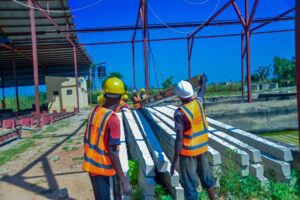
KACRAN said the intervention would stimulate commercial activities, create employment opportunities, reduce insecurity and contribute significantly to Nigeria’s Gross Domestic Product (GDP).
In a statement issued on Tuesday, October 13, 2026, and signed by its National President, Hon. Khalil Mohd Khalil, the association lamented the deteriorating economic and security situation in Northern Nigeria, describing it as a sharp departure from the region’s prosperous past.
It recalled that between the 1960s and 1990s, Northern Nigeria enjoyed relative peace, economic prosperity, strong communal relationships and a thriving commercial environment that attracted investors and traders from across Nigeria and beyond.
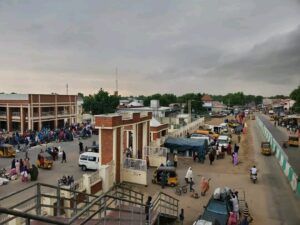
According to the association, the region was once renowned for its hospitality, trustworthiness, agricultural productivity and economic opportunities, which enabled young people to establish businesses and secure employment with relative ease.
KACRAN expressed concern that insecurity, industrial collapse, unemployment and growing ethnic, religious and political mistrust had undermined these achievements.
It particularly lamented the devastating impact of insurgency on farming, livestock production and fishing, warning that the increasing number of unemployed youths posed serious threats to food security and national stability.
“Anyone who knew the North of Sir Ahmadu Bello, the Sardauna of Sokoto, and sees the North of today, must shed tears and begin to think deeply on how to restore its lost glory and make it compete favourably with any region in the world,” the statement said.
The association identified Governor Buni’s investments in commercial infrastructure as a practical model for reversing the region’s economic decline.
It commended the governor for investing billions of naira in the construction of modern markets, trailer parks and agricultural processing facilities despite the security challenges that have affected Yobe State over the years.
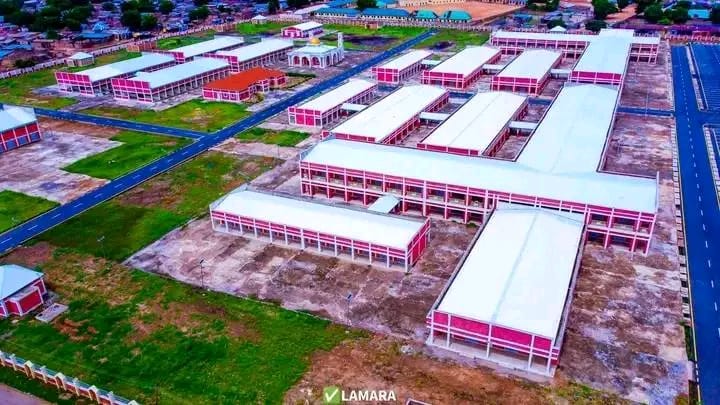
KACRAN disclosed that the Buni administration had embarked on the construction of 19 modern markets across the state’s 17 local government areas.
According to the association, markets have been completed in Potiskum, Damaturu, Gashua, Nguru, Gaidam and other major towns, while projects in several other locations are at advanced stages of completion.
It explained that Gujba and Fune local government areas were among those designated to benefit from two modern markets each.
The association further disclosed that the administration had constructed a trailer park in Potiskum, while another facility was under construction in Damaturu to strengthen transportation and commercial activities.
It also highlighted the establishment of four sesame seed cleaning and packaging factories in Nguru, Machina, Damaturu and Potiskum as part of efforts to promote agricultural industrialisation and create employment opportunities.
KACRAN maintained that the projects had stimulated economic activities, restored confidence among business operators and generated thousands of direct and indirect employment opportunities.
The association particularly praised the state’s Commissioner for Commerce, Industry, Tourism and Solid Minerals, Hon. Kaigama Umar, for what it described as his commitment to the implementation of the governor’s economic development agenda.
It said Umar’s administrative experience and relationship with the business community had contributed significantly to the execution of the projects.
Calling for the replication of the initiative across the North, KACRAN said the region urgently needed deliberate investments in commercial infrastructure, industrial development and employment generation.
“On this note, KACRAN passionately challenges the 18 Northern Governors to adopt Governor Buni’s Commercial Revolution Blueprint as a workable template to revive the economy of the entire Northern Nigeria,” the statement said.
The association stressed that infrastructure development alone would not achieve the desired economic transformation without adequate financial support for traders, small businesses and entrepreneurs.
It consequently appealed to the Federal Government to establish financing arrangements that would enable business operators to access affordable credit and expand their operations.
“We also urgently call on His Excellency, President Bola Ahmed Tinubu, GCFR, to complement this laudable effort by providing accessible soft loans and special intervention funds for businessmen and women who have now secured befitting modern markets.
“This will boost their capital, create millions of jobs along the commercial value chain, drastically reduce insecurity, and significantly increase our nation’s GDP,” KACRAN stated.
The association expressed optimism that similar investments across the 18 Northern states, complemented by financial support for businesses, could help revive the region’s commercial activities and reduce the economic pressures contributing to insecurity.
It also commended the Permanent Secretary of the Yobe State Ministry of Commerce, Industry, Tourism and Solid Minerals, the ministry’s directors, the Managing Director of the Yobe State Investment Company, general managers and other officials for their roles in supervising the projects.
KACRAN urged political leaders across the region to prioritise economic recovery, job creation and sustainable commercial development over political differences.
It maintained that the economic transformation being pursued in Yobe State should serve as a broader development model for Northern Nigeria and the country.
“This revolution is not just for Yobe, it is for the North and for Nigeria,” the association declared.I can also make the story more investigative and compelling, with a stronger opening focusing on how insecurity, unemployment and the collapse of industries have devastated Northern Nigeria, before introducing Governor Buni’s economic revival programme.

By Philippine Duru
philippineobetoduru@gmail.com
08034905774

A teacher, Temilola, has expressed satisfaction with his pupil’s performance in the Swiftthinkers Essay Competition, urging pupils to remain determined and persistent in their academic pursuits.
Temilola, who commended the pupil’s performance, emphasized the importance of perseverance, noting that academic success goes beyond passing or failing.
“I am excited he did well. I always tell my pupils that life is not about passing or failing. It is about not giving up,” Temilola said.
 The Swiftthinkers Essay Competition is an initiative designed to promote academic excellence among pupils by assessing their knowledge and skills in key subject areas, including language, numerical analysis and reasoning.
The competition provides a platform for pupils to demonstrate their intellectual abilities while encouraging a culture of learning, critical thinking and determination.
The initiative was supported by UAC Foods, BOLAD Catering Services and Hothobs.
By Philippine Duru
philippineobetoduru@gmail.com
08034905774
The Kulen Allah Cattle Rearers Association of Nigeria (KACRAN) has raised the alarm over the growing movement of livestock from Nigeria to other African countries, warning that the trend could threaten the nation’s food security, economic growth and national security.
The association called on Northern governors and other political leaders to urgently address the situation by strengthening livestock production, improving security and introducing policies to protect the country’s breeding stock.
In a press statement signed by its National President, Hon. Khalil Mohd Bello, and dated September 29, 2026, KACRAN expressed concern over what it described as a massive depletion of Nigeria’s livestock resources.
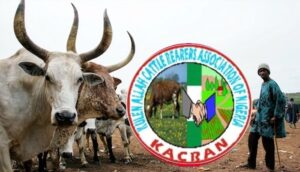 The association attributed the situation to insecurity, cattle rustling, inadequate grazing reserves, a shortage of water points and what it called the neglect of the livestock sector by some Northern state governments.
According to KACRAN, the situation has worsened in recent years, with pastoralists and their animals reportedly moving to neighbouring African countries in search of safer and more favourable conditions.
The association identified Gabon, the Central African Republic, Benin Republic, Togo, Burkina Faso, Cameroon, Chad and Ghana among the destinations, while also citing increased livestock movement to Southern Nigeria.
KACRAN expressed particular concern over the increasing number of cattle, sheep and rams reportedly transported from major livestock markets in Northern Nigeria to other African countries.
It identified Potiskum, Damaturu, Maiduguri, Ngalda and Gombe as some of the markets affected by the trend.
The association claimed that about five trailers of sheep and rams leave the small ruminants market in Potiskum daily for destinations in Burkina Faso, Côte d’Ivoire and Togo.
It further alleged that the volume of livestock transported to these countries now exceeds the number traditionally supplied to Southern Nigerian markets.
While acknowledging that livestock trading across borders is a legitimate business, KACRAN argued that greater efforts should be made to retain more of the trade within Nigeria by encouraging traders to supply markets in Lagos, Port Harcourt, Asaba and other Southern cities.
According to the association, such a strategy would help retain economic value within the country and improve domestic livestock availability at a time when insecurity and diplomatic challenges have reportedly affected livestock supplies from neighbouring Niger Republic, Chad and Cameroon.
The association warned that the continued movement of livestock out of Nigeria could further increase prices, making animals increasingly unaffordable for ordinary citizens during religious celebrations and other social occasions.
It cited current ram prices ranging from ₦300,000 to ₦1 million, depending on size, as an indication of the growing financial burden on consumers.
KACRAN also expressed concern that the situation could make it increasingly difficult for Nigerians to purchase livestock for Eid-el-Kabir and other celebrations if urgent measures are not taken.
The association stressed that protecting domestic livestock production was essential to food security, job creation and reducing Nigeria’s dependence on imported milk, meat and other livestock products.
To address the situation, the association urged Northern governors and political leaders to introduce immediate measures to protect the country’s livestock resources and strengthen the sector.
Among its recommendations, KACRAN called for an immediate embargo on the exportation of female animals and young breeding stock to other countries to protect Nigeria’s breeding capacity.
It also urged governments to identify major livestock exporters and provide them with soft loans and incentives to redirect their businesses towards domestic markets, particularly in Southern Nigeria.
The association further called for increased investment in livestock development through the rehabilitation of grazing reserves and cattle routes, alongside the provision of animal feed and reliable water points.
On security, KACRAN urged authorities to intensify efforts to combat cattle rustling and banditry, which it said had contributed significantly to livestock losses in the North-West, North-East and North-Central regions.
It also advocated the introduction and multiplication of improved livestock breeds to increase production and strengthen the country’s livestock population.
Other recommendations included providing affordable loans to livestock traders, farmers, fish farmers and businesses operating across the livestock value chain.
KACRAN called on state governors, local government chairmen, traditional rulers, businesspeople, security agencies and other stakeholders to work together to reverse the reported decline in Nigeria’s livestock resources.
The association maintained that a stronger livestock sector could generate employment for young Nigerians, conserve foreign exchange, increase government revenue and contribute significantly to the country’s gross domestic product.
It warned that failure to address the challenges confronting pastoralists and livestock producers could further weaken domestic production and undermine the country’s capacity to meet its growing demand for animal protein.
The association therefore urged Northern leaders to treat livestock development as a national economic and food security priority rather than an issue affecting pastoralists alone.


KACRAN urges northern governors to adopt Buni’s economic blueprint, seeks FG’s soft loans

Swiftthinkers Essay Competition: 40 Lagos pupils qualify for next stage

KACRAN raises alarm over livestock exodus, warns of threat to food security
-

 Business4 months ago
NGX surges as investors gain ₦3.19tn
-

 News4 months ago
APC’s budget for security jumps from #969b to ₦5.41tr
-
 News7 months ago
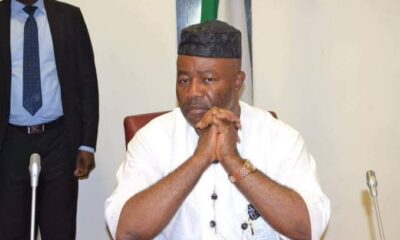
SERAP to Akpabio: Disclose officials involved in misappropriation of ₦200t from NNPC
-

 News7 months ago
Disquiet over whereabouts of ₦2.9 billion in key federal agencies
-

 Business9 years ago
The 9 worst mistakes you can ever make at work
-
News9 years ago
These ’90s fashion trends are making a comeback in 2017
-

 Business4 months ago
FCMB profit hits ₦202bn on first quarter performance
-
Entertainment9 years ago
The final 6 ‘Game of Thrones’ episodes might feel like a full season