
News
Tinubu adds N8.4 trillion to Nigeria’s debt stock

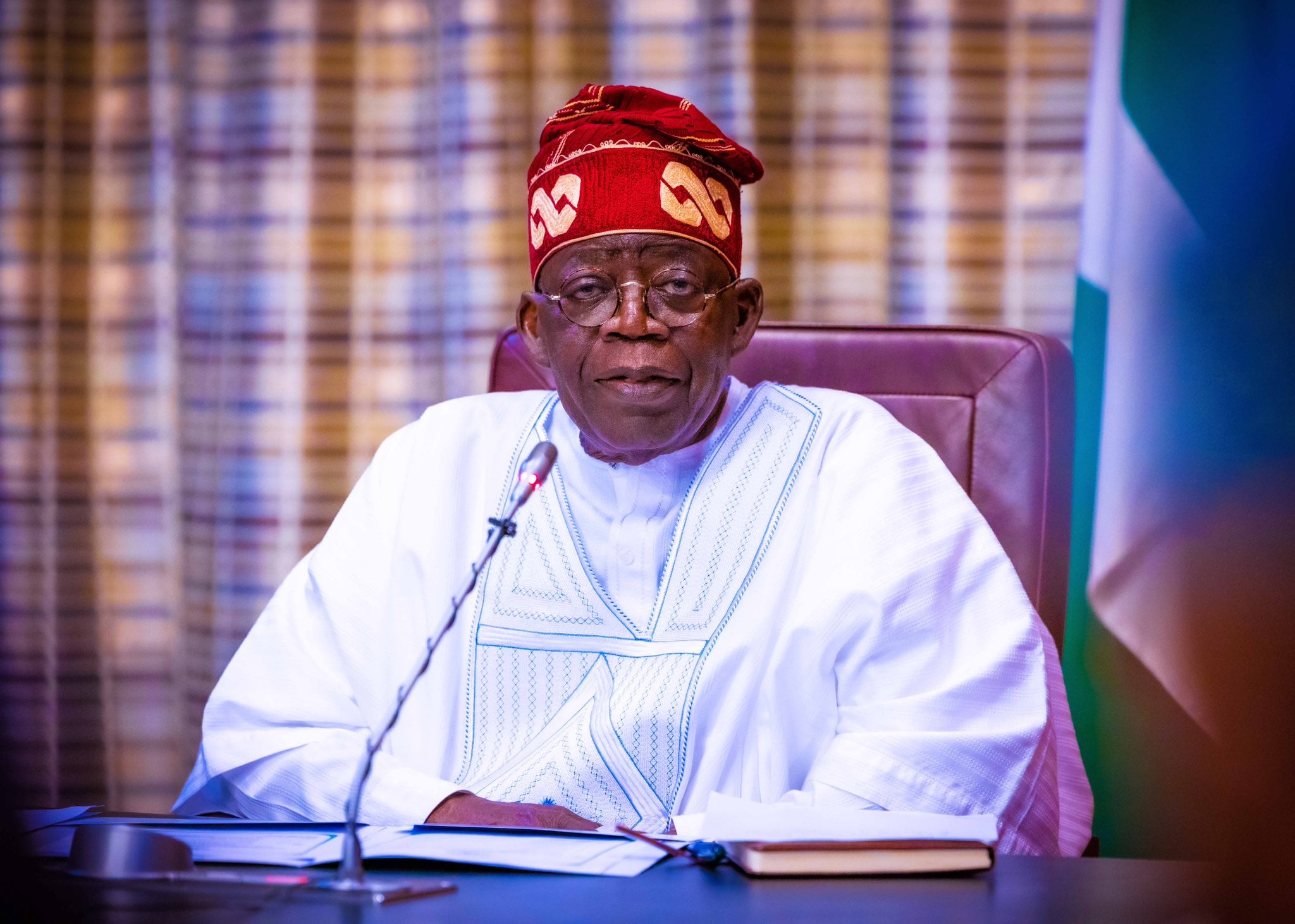
President Bola Tinubu has added N8.4 trillion to Nigeria’s debt stock.
A report by Vanguard says that Nigeria’s total debt stock is set to rise to N155.1 trillion, following an additional $6 billion loan request by President Bola Tinubu, hurriedly approved by the Senate yesterday.
The $6 billion loan at an exchange rate of N1,400 per dollar, adds N8.4 trillion to the country’s debt stock which stood at N146.69 trillion at the end of 2025, to N155.1 trillion.
Experts, however, warned that the new borrowing comes with huge foreign exchange risks and will lead to worsening of the federal government’s debt service-to-revenue ratio, which is estimated at 60 per cent by the end of 2025.
The approval for the $6 billion yesterday came barely three and half hours after the President of the Senate, Senator Godswill Akpabio, read the letter from the President, seeking the approval.
Former Vice President, Atiku Abubakar, flayed what he described as lightning-speed approval of a fresh $6 billion external loan request by the National Assembly.
The letter was read the first time, scaled for a second reading, read the third time, and passed the same day by the senators.
The Senate approved the loans, following the presentation and consideration of the report by Senator Aliyu Wammakko, Chairman, Senate Committee on Local and Foreign Debts.
President Tinubu’s request to borrow an additional $6 billion was contained in two separate letters addressed to the President of the Senate, Senator Godswill Akpabio, read at plenary yesterday.
According to the President, the Senate should “Pursuant to Sections 21(1) and 27(1) of the Debt Management Office (Establishment, Etc.) Act, 2003, to: Approve the establishment of a structured Total Return Swap, TRS, derivative external financing programme of up to $5 billion with First Abu Dhabi Bank (FAB), United Arab Emirates; “ Approve the indicative Terms and Conditions of the facility, including collateralisation with Naira-denominated Federal Government of Nigeria Securities and margining obligations in USD; and Authorise the Federal Government to draw down the facility in tranches and issue FGN Securities as collateral.”
In the first letter read by Akpabio, President Tinubu requested the approval to establish a structured total return swap (TRS) external financing programme of up to $5 billion with First Abu Dhabi Bank of United Arab Emirates.
In the letter, President Tinubu, who noted that the facility would be made available to Nigeria in tranches, said: “The purpose of this letter is to request for the approval and resolution of the National Assembly pursuant to the provisions of section 21(1) and 27(1) of the Debt Management Office Establishment Act 2003 to establish a structured total return swap, TRS, derivative external financing programme from First Abu Dhabi Bank of the United Arab Emirates of up to $5 billion which will be made available to the Federal Republic of Nigeria in tranches.”
According to him, the proceeds will be used for budget implementation, development of priority infrastructure projects and repayment of relatively expensive domestic and external debts.
He added that the facility would also help the federal government meet urgent financial obligations when necessary.
The President said Nigeria’s total public debt currently stood at $110.3 billion, equivalent to about N159.2 trillion as of December 31, 2025.
He said the loan would be drawn in phases to reduce pressure on the country’s debt stock and servicing obligations.
In the second letter, Tinubu also asked the Senate to approve the issuance of naira-denominated Federal Government securities as collateral for the facility and the payment of margin obligations in US dollars.
In the letter, the President, who sought approval for a $1 billion United Kingdom, UK, export finance loan facility arranged by Citibank, London branch, said the loan would be used for the reconstruction and rehabilitation of Lagos Port complex and Tin Can Island Port.
The letter read: “The rehabilitation of the ports project is a strategic modernisation initiative of the Federal Government of Nigeria, through the Nigerian Ports Authority, to restore and upgrade two of Nigeria’s most vital ports, namely Tin Can Island Port complex and Lagos Port complex, Apapa, which have reached critical engineering failures.”
According to him, the project is aimed at addressing infrastructure deficiencies, improving port efficiency, enhancing safety standards and aligning Nigeria’s port facilities with global best practices.
Tinubu added that the rehabilitation would help sustain Nigeria’s competitiveness as a maritime hub and support non-oil trade diversification.
Immediate C’ttee’s oversight
Akpabio subsequently referred the requests to the Senate Committee on Local and Foreign Debts, led by Senator Aliyu Wammakko, APC, Sokoto North, to carry out legislative actions on the request and report back immediately.
In his presentation, Senator Wammakko said: “The proposed financing is structured as a Total Return Swap, TRS, a derivative-based instrument governed by International Swaps and Derivatives Association, ISDA, rules.
“The facility provides access to up to $5 billion, to be drawn in tranches, thereby allowing flexibility in utilisation and limiting immediate fiscal pressure. The transaction is collateralised by Naira-denominated FGN Securities at 133.3%, representing over-collateralisation to mitigate lender risk.
‘’The securities will be marked-to-market monthly, and any shortfall will require margin calls in USD cash, while excess collateral will be returned to the Federal Government.
“The facility has a tenor of six years, with a three-year break clause and annual rollover provisions subject to mutual agreement.
“The indicative pricing of the facility is SOFR +3.95% for the first tranche and SOFR + 4% for subsequent tranches, which is considered competitive relative to prevailing Eurobond yields for Nigeria. An arranger fee of 1.5% flat per tranche is payable upfront.
“The committee notes that the pricing reflects Nigeria’s current sovereign risk profile and compares favourably with alternative external borrowing options.”
On use of proceeds, the committee said: “The proceeds of the facility are intended for: budget implementation, financing critical infrastructure projects, refinancing more expensive domestic and external debt, addressing urgent fiscal and liquidity needs
“In addition, 40% of the said fund will be used to fund the capital projects in the 2025 and 2026 budgets. The committee notes that these uses are consistent with national development priorities and fiscal consolidation objectives.”
On the impact on public debt and sustainability, Wammakko said: “The facility will be reflected in Nigeria’s external debt stock as it is drawn, thereby increasing total public debt.
“As at December 31, 2025, Nigeria’s total public debt stood at approximately $103.20 billion (N146.69 trillion). The committee observes that Nigeria’s debt-to-GDP ratio of 36.92% remains within the 60% threshold approved by the Federal Executive Council and the 80% benchmark advised by international financial institutions.
“The phased drawdown structure helps to moderate the impact on debt stock and debt service obligations.
“Debt service-to-revenue ratio remains a concern (estimated at about 60%), underscoring the need for prudent debt management and enhanced revenue mobilisation, which we believe should improve as revenues of the government improve with the new tax reforms.
“The committee notes several advantages of the proposed TRS structure; immediate access to foreign currency liquidity without issuing new Eurobonds, thereby avoiding additional pressure on international capital markets.
“Flexible drawdown in tranches, enabling efficient cash flow management and reduced exposure.
“Strengthening bilateral financial relations with a major Gulf financial institution, enhancing Nigeria’s global financing options. Potential refinancing of expensive debt, thereby improving the overall cost profile of public debt.
“Embedded dispute resolution and valuation safeguards, which provide protection to the FGN in the execution of the transaction. Risks and Mitigating Factors. Currency Risk: Margin calls in USD may arise due to exchange rate volatility, Mitigation: Conservative collateralisation and phased drawdowns
“Market Risk: Fluctuations in the value of FGN securities used as collateral.”
Naira depreciation could spike loan costs
The new loan comes with significant foreign exchange risk, said Tunde Abidoye, Head of Equity Research, Quest Merchant Bank.
He said: “Apparently, the $5 billion is said to be a total return swap. Essentially, the FGN borrows $5 billion from an offshore bank, and will be collateralising this by issuing naira-denominated bonds which will be delivered to the bank. The FGN will pay the interest rate on the loan.
“Additionally, if exchange rates depreciate, the FGN will have to pay any difference between the value of the loan and the naira-denominated bond .
“The first implication is the exchange rate risk. If the naira depreciates, the value of the bond will decrease in dollar terms. As such, the Federal Government will have to pay the bank the difference.
‘’Also, since the interest payment is in dollars, naira depreciation will increase the cost of servicing the loan, hence aggravating the nation’s debt service-revenue ratio.
“This will be covered by regular margin payments – in the event that there is a depreciation. Consequently, this carries significant currency risk/exchange rate risk.”
Mounting foreign debt mortgages
the future of the country
Reacting to President Tinubu’s proposed $6 billion borrowing, David Adonri,Executive Vice Chairman at High Cap Securities Limited, said : “It appears that President Bola Tinubu is not constrained by any public debt limit.
‘’His borrowing spree locally and internationally has continued with undiminishing intensity. Financing an economy with external debt is a dangerous proposition because of the erratic flow of foreign income required to extinguish the obligations.
‘’The best option is to dominate the debt in domestic currency and let the foreign creditors convert their hard currencies into naira so that debt servicing will be in naira. Mounting foreign debt mortgages the future of the country.”
Underperformance in projected earnings could tighten fiscal space
Commenting as well, economy and communication expert, Clifford Egbomeade, said : “The borrowing request by Bola Tinubu should be viewed within the 2026 fiscal framework. ‘’The proposed budget stands at N58.18 trillion, with projected revenue of N34.33 trillion and a deficit of N23.85 trillion, equivalent to 4.28% of GDP. The additional $5bn in external borrowing, alongside a $1bn facility for port rehabilitation, will increase Nigeria’s external debt exposure and future repayment obligations.
“The port component has clear economic logic. The allocation of $429.7 million to Lagos Port Complex and $571.1 million to Tin Can Island targets critical trade infrastructure. Improved port efficiency can reduce congestion, shorten cargo clearance time, and enhance customs revenue, which may support broader economic activity.
“However, concern lies in debt sustainability and execution. External loans must be serviced in foreign currency, creating exposure to exchange rate movements. With revenue significantly below expenditure, any underperformance in projected earnings could tighten fiscal space.
‘’The overall impact will depend on whether these investments translate into measurable gains in productivity, trade efficiency, and government revenue.”









A Senior Advocate of Nigeria and policy analyst, Dr. M. O. Ubani, has questioned the legal basis of a recent Federal High Court judgment directing the Independent National Electoral Commission (INEC) to deregister five political parties, arguing that the decision may have extended beyond the position previously established by the Supreme Court.
The opinion piece by legal practitioner and policy analyst, Dr. Monday.O. Ubani (SAN), has reignited discussions over the proposal for a single six-year tenure for Nigeria’s President and state governors, questioning whether the constitutional amendment would address the country’s governance challenges or merely divert attention from more pressing issues.
In a statement titled “Six-Year Single Tenure for the President and Governors: A Solution or a Distraction?”, Ubani examined the renewed advocacy for a non-renewable six-year term for chief executives at both federal and state levels.
The proposal, recently championed by Senator Opeyemi Bamidele and other supporters, is premised on the argument that elected leaders who are not preoccupied with re-election campaigns would devote greater attention to governance and long-term policy implementation.
According to Ubani, the argument possesses a degree of merit, noting that under Nigeria’s current constitutional framework, presidents and governors serve four-year terms with the possibility of one re-election. He observed that political calculations surrounding second-term bids often begin long before the expiration of a first tenure, potentially influencing policy decisions and governance priorities.
“A single tenure could potentially eliminate this concern and encourage long-term policy implementation,” he noted.
However, the Senior Advocate of Nigeria cautioned that the debate should extend beyond considerations of administrative efficiency. He argued that democracy is fundamentally anchored on accountability and good governance, with the prospect of re-election serving as a critical mechanism through which citizens assess the performance of elected officials.
Ubani warned that removing the incentive of electoral appraisal could weaken democratic responsiveness and accountability.
Drawing from comparative constitutional experiences across different regions of the world, he maintained that there is no direct relationship between the length of tenure and the quality of governance. He pointed out that several countries in the Americas and Northern Europe, despite operating relatively short executive tenures, have produced transformative leaders. Conversely, some African nations that allowed extended periods in office have grappled with poor governance, institutional decline and democratic setbacks.
He further argued that Nigeria’s own political experience demonstrates that leadership quality and institutional effectiveness have a greater impact on governance outcomes than tenure duration.
According to him, strong institutions, adherence to constitutional limits, transparency and respect for the rule of law remain the key determinants of successful governance.
From a constitutional standpoint, Ubani stated that the national conversation should not be limited to choosing between a six-year or an eight-year arrangement. Rather, he said, the focus should be on identifying a framework that best promotes accountability, political stability, effective governance and democratic development.
He acknowledged that introducing a six-year single tenure through constitutional amendment is legally feasible, provided the procedures stipulated in the Nigerian Constitution are strictly followed.
Nonetheless, Ubani questioned whether such a reform would address the underlying challenges confronting governance in the country.
“It is possible that tenure reform may alter political incentives, but it cannot substitute for competent leadership, institutional integrity and citizen participation,” he argued.
The legal practitioner stressed that effective leadership is not necessarily dependent on the length of time spent in office, noting that capable leaders can deliver meaningful results within limited tenures, while ineffective leaders may inflict greater damage even with extended periods in power.
He concluded that Nigeria’s central challenge lies not in determining how long presidents and governors should remain in office, but in ensuring that those entrusted with public office govern responsibly, effectively and in accordance with constitutional principles.
“The true measure of democratic success,” Ubani said, “is the ability to ensure that whoever occupies public office delivers the dividends of democracy while remaining accountable to the people and the Constitution.”

Ondo State Police Command has launched an intensive rescue operation following the suspected abduction of a community leader in Ode Oriya Village, Owo Local Government Area of the state.


SAN reacts to deregistration of ADC, others

Six-yr-single term: SAN speaks on right framework

Monarch’s wife shot as hoodlums abduct husband
-

 News9 years ago
These ’90s fashion trends are making a comeback in 2017
-
Entertainment9 years ago
The final 6 ‘Game of Thrones’ episodes might feel like a full season
-
Business9 years ago
The 9 worst mistakes you can ever make at work
-
News9 years ago
According to Dior Couture, this taboo fashion accessory is back
-
Sports9 years ago
Phillies’ Aaron Altherr makes mind-boggling barehanded play
-
Entertainment9 years ago
The old and New Edition cast comes together to perform
-
 News3 months ago
SERAP to Akpabio: Disclose officials involved in misappropriation of ₦200t from NNPC
-
Entertainment9 years ago
Mod turns ‘Counter-Strike’ into a ‘Tekken’ clone with fighting chickens