
News
Revealed: Real reason Igbo youths are shunning Nigerian army

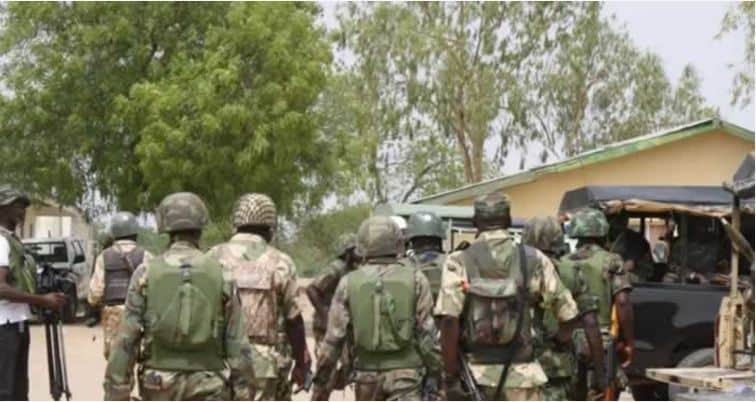
There are growing concerns over the Igbo youths lack of interest in joining the army.
It was learnt that Anambra recorded only 117 applicants out of 38,000 applications received nationwide in the ongoing recruitment.
Permanent Secretary, Anambra State Ministry of Youths, Ifeatu Emodi, said many young people in the region had shown declining interest due to misconceptions and misinformation about the Army.
The Nigerian Army expressed concern over the low level of enrolment from the South-East.
The army expressed the concern during a sensitisation event held at the Ministry of Youths’ office in Awka, the state capital.
The leader of the army delegation to sensitise youths in Awka, Brig.-Gen. Uche Nnabuihe, said the figure was recorded as of April 7, before the commencement of a nationwide awareness campaign for the 91 Regular Recruits Intake.
The Nigerian Army had raised concerns over the poor enrolment of South-East youths in its recruitment exercise.
The leader of the 2025 army recruitment enlightenment team, Chima Ekeator, had said the South-East was gradually losing out on what was rightfully theirs.
Speaking during a town hall meeting in Enugu, Ekeator said out of 200 slots allocated to South-East states in last year’s recruitment, the region barely recorded 100 applications.
“Our people are losing what rightly belongs to them. Each year, whenever a slot is being allocated to our people, we keep noticing that the number of applicants from our side is usually very poor,” Ekeator said.
Speaking at the sensitisation on Saturday, Nnabuihe said the programme was aimed at encouraging more youths from Anambra and the South-East to participate in the recruitment, which is open to tradesmen and non-tradesmen, and will close on May 27.
He added that the sensitisation was intended to correct the imbalance and encourage youths to take advantage of the opportunities available in the Nigerian Army.
Nnabuihe said, “We observed with concern that out of 38,000 applications received nationwide, only 117 came from Anambra as of April 7.
“This sensitisation is to correct that imbalance and encourage our youths to take advantage of the opportunities available in the Nigerian Army.
“We urge eligible youths to apply. The Army offers a structured career path and opportunities for national service.”
Also speaking, Lt.-Col. Ogbemudia Osawe said the Army had expanded its training infrastructure with institutions in Abakaliki and Osogbo to accommodate recruits.
Osawe highlighted the benefits of joining the service to include career progression, regular pay and allowances, access to continuous military education, and specialised training.
Other benefits include exposure to diverse cultures, welfare packages, free medical care for personnel and their families, as well as pension and gratuity.
He added that personnel also have opportunities for international assignments.
In his remarks, the Permanent Secretary, Anambra State Ministry of Youths, Ifeatu Emodi, commended the initiative, describing military enlistment as crucial, especially for youths in the South-East.
Emodi said many young people in the region had shown declining interest due to misconceptions and misinformation about the Army.
A traditional ruler, Igwe Michael Okeke-Uche of Enugwu-Agidi, also lauded the welfare structure of the Nigerian Army and urged youths to enlist to ensure adequate representation of the South-East in the military.








The Unending Plight and Ongoing Killings in Kuyello
Your Excellency,
Mallam Uba Sani,
Executive Governor of Kaduna State,
Sir,
We write to you with heavy hearts, deep anguish, and a profound sense of urgency regarding the persistent and terrifying security breakdown in Kuyello, Birnin Gwari Local Government Area.
For years, the people of Kuyello have lived under the shadow of relentless violence, abductions, and mass killings.
While we acknowledge the government’s efforts and official declarations regarding security measures and negotiated peace initiatives, the reality on the ground paints a vastly different and devastating picture.
To us, the victims on the frontline, any negotiation with these non-state armed actors has proven entirely ineffective. The reality of our daily life remains unchanged:
Daily Attacks:
Villagers are hunted, attacked, and killed in their homes and on their farms day and night.
Economic Paralysis: Our farmers can no longer access their lands without facing death or paying heavy ransoms, destroying the local agricultural economy and pushing families into famine.
Mass Displacement:
Entire families have been forced to flee, turning communities into ghost towns as basic human safety remains unassured.
Peace cannot exist on paper while blood continues to flow in our streets. The ongoing violence demonstrates that these armed bands do not respect agreements or government mandates.
Kuyello requires decisive, sustained, and direct security intervention—not unfulfilled truces that leave innocent citizens exposed to constant danger.
*Our Prayers and Demands:*
1. Permanent Security Presence:
Immediate deployment of forward operating military bases and well-equipped security posts in and around Kuyello.
2. Offensive Military Operations: An immediate shift from passive peace talks to active tactical operations aimed at neutralizing bandit strongholds in the surrounding forests.
3. Protection for Farmers and Highways:
4. Targeted security patrols to secure agricultural lands and vital transport routes to restore local livelihoods and safety.
The primary duty of any government is the protection of lives and property. We appeal to your leadership, Your Excellency, to treat the situation in Kuyello as a critical state emergency before our community is wiped out entirely.
Respectfully yours,
SURAJO ISAH KUYELLO Concerned Residents and Stakeholders of Kuyello Community
Birnin Gwari Local Government Area, Kaduna State




An Open Letter to Executive Governor Mallam Uba Sani

NACTAL’s president-elect pledges inclusive leadership, stronger anti-trafficking action

Osita Osememe gets 95.65% votes, emerges NACTAL president
-

 News9 years ago
These ’90s fashion trends are making a comeback in 2017
-
Business9 years ago
The 9 worst mistakes you can ever make at work
-
Entertainment9 years ago
The final 6 ‘Game of Thrones’ episodes might feel like a full season
-

 News6 months ago
SERAP to Akpabio: Disclose officials involved in misappropriation of ₦200t from NNPC
-

 News5 months ago
Disquiet over whereabouts of ₦2.9 billion in key federal agencies
-
News9 years ago
According to Dior Couture, this taboo fashion accessory is back
-
Sports9 years ago
Phillies’ Aaron Altherr makes mind-boggling barehanded play
-
Entertainment9 years ago
The old and New Edition cast comes together to perform