
News
Kebbi bloodshed: 24 killed, church, mosque torched in fresh attack

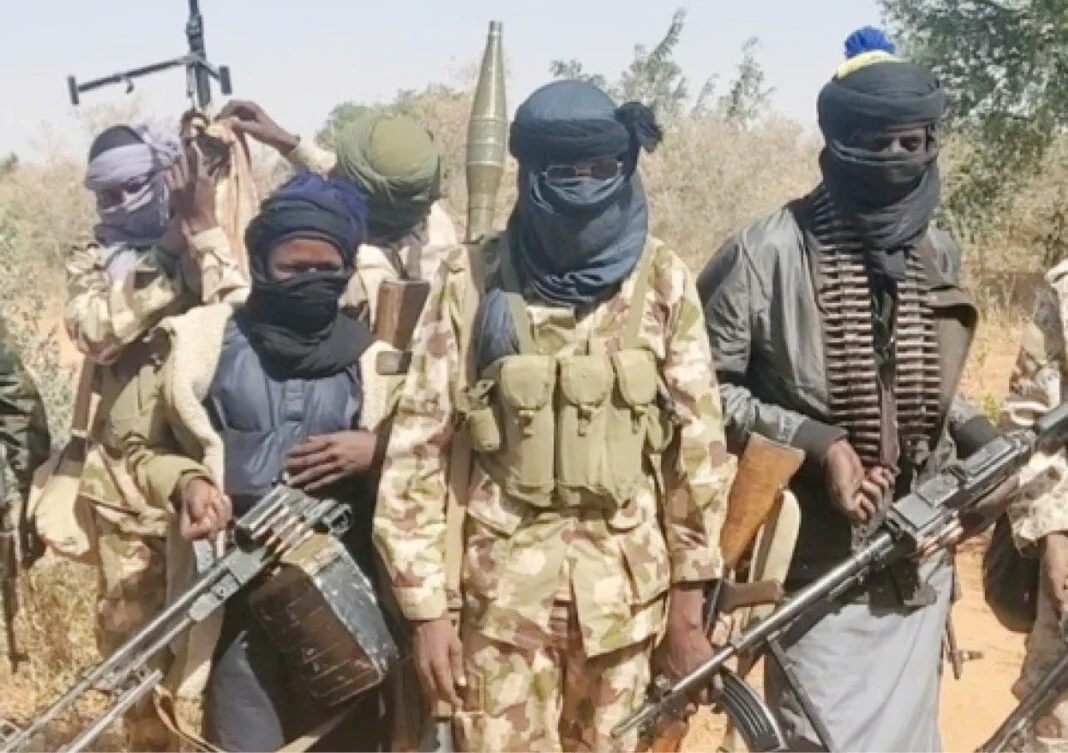
The Catholic Diocese of Kontagora has raised fresh concerns over escalating violence in Kebbi State, disclosing that 24 people were killed in a deadly Easter Sunday attack on Debe village in Shanga Local Government Area.
The incident is the latest in a string of attacks targeting border communities between Kebbi and Niger states.
Just days before the tragedy, suspected bandits carried out coordinated night raids on several villages in Shanga LGA, including Gebe, Kawara and Kalkami, burning homes and forcing residents to flee.
Security sources believe the attackers operated from hideouts in the Wawa Forest located in Borgu Local Government Area of Niger State.
Confirming the development, the Kebbi State Police Command said tactical units, alongside the military, marine police and local vigilantes, have been deployed to restore calm in the affected areas.
In a statement issued on Thursday in Yauri, the Diocese said the attackers stormed Debe village at about 5 p.m. on April 5, unleashing hours of violence that left many dead and properties destroyed.
“We want Nigeria and the international community to know what transpired in Debe,” the Diocese said, adding that the confirmed death toll is 24, contrary to earlier police reports of four.
According to the Church, the victims cut across religious lines — Christians, Muslims and traditional worshippers — describing the incident as “a tragedy against humanity, not a particular faith.”
The attackers reportedly set fire to St. Mary’s Catholic Church, a mosque, homes and shops, while many of those killed were men and youths.
“The terrorists invaded the village and killed 24 people. Properties were destroyed, including a church and a mosque. This is a devastating blow to the entire community,” the statement added.
The violence also spread to nearby communities such as Binuwa and Kalkame, with reports of extensive destruction. Markets and even the emir’s residence were affected.
Following the attacks, hundreds of residents fled their homes in search of safety. The Diocese revealed that 491 internally displaced persons are currently taking refuge at St. Dominic Parish in Yauri.
“These displaced persons are in urgent need of food, clean water, medical care and adequate shelter,” the Diocese said, noting that relief efforts are already overstretched.
While providing emergency support, the Church called on both the Federal Government and Kebbi State authorities to take immediate action.
It specifically urged Bola Tinubu and Mohammed Idris to implement decisive measures to restore security and ensure displaced residents can safely return to their communities.
The Diocese warned that fear has gripped communities across the state, with many residents unable to bury their dead or rebuild their lives.
“People are being killed on a daily basis in Nigeria. Communities in Kebbi State are now living in fear,” the statement said.
It further appealed to humanitarian organisations and the international community to urgently intervene and support affected communities, while calling for long-term solutions to address insecurity in the region



A Senior Advocate of Nigeria and policy analyst, Dr. M. O. Ubani, has questioned the legal basis of a recent Federal High Court judgment directing the Independent National Electoral Commission (INEC) to deregister five political parties, arguing that the decision may have extended beyond the position previously established by the Supreme Court.

The opinion piece by legal practitioner and policy analyst, Dr. Monday.O. Ubani (SAN), has reignited discussions over the proposal for a single six-year tenure for Nigeria’s President and state governors, questioning whether the constitutional amendment would address the country’s governance challenges or merely divert attention from more pressing issues.
In a statement titled “Six-Year Single Tenure for the President and Governors: A Solution or a Distraction?”, Ubani examined the renewed advocacy for a non-renewable six-year term for chief executives at both federal and state levels.
The proposal, recently championed by Senator Opeyemi Bamidele and other supporters, is premised on the argument that elected leaders who are not preoccupied with re-election campaigns would devote greater attention to governance and long-term policy implementation.
According to Ubani, the argument possesses a degree of merit, noting that under Nigeria’s current constitutional framework, presidents and governors serve four-year terms with the possibility of one re-election. He observed that political calculations surrounding second-term bids often begin long before the expiration of a first tenure, potentially influencing policy decisions and governance priorities.
“A single tenure could potentially eliminate this concern and encourage long-term policy implementation,” he noted.
However, the Senior Advocate of Nigeria cautioned that the debate should extend beyond considerations of administrative efficiency. He argued that democracy is fundamentally anchored on accountability and good governance, with the prospect of re-election serving as a critical mechanism through which citizens assess the performance of elected officials.
Ubani warned that removing the incentive of electoral appraisal could weaken democratic responsiveness and accountability.
Drawing from comparative constitutional experiences across different regions of the world, he maintained that there is no direct relationship between the length of tenure and the quality of governance. He pointed out that several countries in the Americas and Northern Europe, despite operating relatively short executive tenures, have produced transformative leaders. Conversely, some African nations that allowed extended periods in office have grappled with poor governance, institutional decline and democratic setbacks.
He further argued that Nigeria’s own political experience demonstrates that leadership quality and institutional effectiveness have a greater impact on governance outcomes than tenure duration.
According to him, strong institutions, adherence to constitutional limits, transparency and respect for the rule of law remain the key determinants of successful governance.
From a constitutional standpoint, Ubani stated that the national conversation should not be limited to choosing between a six-year or an eight-year arrangement. Rather, he said, the focus should be on identifying a framework that best promotes accountability, political stability, effective governance and democratic development.
He acknowledged that introducing a six-year single tenure through constitutional amendment is legally feasible, provided the procedures stipulated in the Nigerian Constitution are strictly followed.
Nonetheless, Ubani questioned whether such a reform would address the underlying challenges confronting governance in the country.
“It is possible that tenure reform may alter political incentives, but it cannot substitute for competent leadership, institutional integrity and citizen participation,” he argued.
The legal practitioner stressed that effective leadership is not necessarily dependent on the length of time spent in office, noting that capable leaders can deliver meaningful results within limited tenures, while ineffective leaders may inflict greater damage even with extended periods in power.
He concluded that Nigeria’s central challenge lies not in determining how long presidents and governors should remain in office, but in ensuring that those entrusted with public office govern responsibly, effectively and in accordance with constitutional principles.
“The true measure of democratic success,” Ubani said, “is the ability to ensure that whoever occupies public office delivers the dividends of democracy while remaining accountable to the people and the Constitution.”

Ondo State Police Command has launched an intensive rescue operation following the suspected abduction of a community leader in Ode Oriya Village, Owo Local Government Area of the state.


SAN reacts to deregistration of ADC, others

Six-yr-single term: SAN speaks on right framework

Monarch’s wife shot as hoodlums abduct husband
-

 News9 years ago
These ’90s fashion trends are making a comeback in 2017
-
Entertainment9 years ago
The final 6 ‘Game of Thrones’ episodes might feel like a full season
-
Business9 years ago
The 9 worst mistakes you can ever make at work
-
News9 years ago
According to Dior Couture, this taboo fashion accessory is back
-
Sports9 years ago
Phillies’ Aaron Altherr makes mind-boggling barehanded play
-
Entertainment9 years ago
The old and New Edition cast comes together to perform
-

 News3 months ago
SERAP to Akpabio: Disclose officials involved in misappropriation of ₦200t from NNPC
-
Entertainment9 years ago
Mod turns ‘Counter-Strike’ into a ‘Tekken’ clone with fighting chickens