
News
Disquiet over whereabouts of ₦2.9 billion in key federal agencies

President Bola Tinubu has been urged to direct the Minister of Communications, Innovation and Digital Economy, Bosun Tijani, as well as the management of the Nigerian Communications Satellite Ltd (NIGCOMSAT) and the Nigerian Nuclear Regulatory Authority (NNRA), to account for and explain the whereabouts of an alleged ₦2.9 billion in missing or diverted public funds.
The Socio-Economic Rights and Accountability Project (SERAP) who made the call also called on the Attorney General of the Federation and Minister of Justice, Lateef Fagbemi (SAN), and relevant anti-corruption agencies to investigate the alleged diversion of funds, including those documented in previous Auditor-General reports.
In a letter dated April 11, 2026, and signed by SERAP deputy director Kolawole Oluwadare, the organisation said: “These allegations, involving critical public institutions, represent a grave violation of the public trust and a fundamental breach of Nigeria’s anti-corruption laws and international obligations.”
The group further urged the Federal Government to direct NIGCOMSAT to disclose the shareholders and beneficial owners of a company that allegedly received ₦465 million in “unauthorised investment” from the agency.
SERAP said, “Anyone suspected to be responsible should face prosecution as appropriate, if there is sufficient admissible evidence, and any missing or diverted public funds should be fully recovered and remitted to the treasury.”
The organisation gave the government seven days to comply, warning that it may initiate legal action if its demands are not met.
It also stated that accountability in both agencies is critical, given their strategic roles, saying: “Accountability in NIGCOMSAT and NNRA is critical given their strategic roles in Nigeria’s digital economy and national safety systems. Mismanagement in these agencies not only wastes scarce public resources but also threatens national development, technological progress, and public safety.”
SERAP added: “Ensuring accountability is therefore essential to protecting both Nigeria’s present and its future.”
It warned that failure to address the allegations would continue to erode public trust, stating: “These allegations, if left unaddressed, will continue to undermine public confidence in government institutions, weaken Nigeria’s anti-corruption framework, and deprive citizens of resources needed for development.”
The allegations were drawn from the Auditor-General’s report published on September 9, 2025, which examined financial activities in NIGCOMSAT and NNRA and raised concerns over possible mismanagement of public funds.
According to the report, NIGCOMSAT failed to account for over ₦465 million used for an “unauthorised investment” in Gicell Wireless Ltd, made without approvals from the Minister of Science and Technology and the Accountant-General of the Federation. It also noted that “there was also no evidence that a competent Investment Analyst performed investment appraisal,” while the investment agreement raised concerns over valuation and exchange rate assumptions.
The Auditor-General further stated that “NIGCOMSAT made ineligible, irregular and wrong payments of over ₦3 million to staff,” and that “the payment was made without due process and any documents on what the payments were meant for.”
It also flagged an irregular rent payment of over ₦4.3 million, noting that although a refund was requested, “there was no evidence that the consultant refunded the money.”
It added that NIGCOMSAT “failed to remit over ₦507 million of its internally generated revenue to the Consolidated Revenue Fund,” while also failing to account for over ₦6 million for undelivered store items.
The report further stated that “there was also no evidence of how the transferred funds were spent or utilised,” referring to an irregular ₦84.78 million transfer from a Remita account to a special project account.
On NNRA, the report alleged that ₦4.35 million was spent on training without evidence that it took place, while ₦16.7 million was paid for ICT equipment without approval.
It also stated that ₦33.4 million was spent on items that were never supplied, and that “there were no documents to support” several payments for operational activities.
The Auditor-General further noted that NNRA “failed to retire over ₦6.5 million of cash advances granted to staff,” and that ₦2.05 million paid for foreign training had no evidence of participation.
It also stated that ₦1.95 million collected through Remita was not recorded in the agency’s cashbook, leading to concerns of revenue understatement.
SERAP said the findings point to “a systemic pattern of financial mismanagement, opacity, and corruption within an agency entrusted with advancing Nigeria’s digital and communications infrastructure,” adding that NNRA’s lapses also raise serious concerns about compliance with safety and financial regulations


By Philippine Duru
philippineobetoduru@gmail.com
08034905774
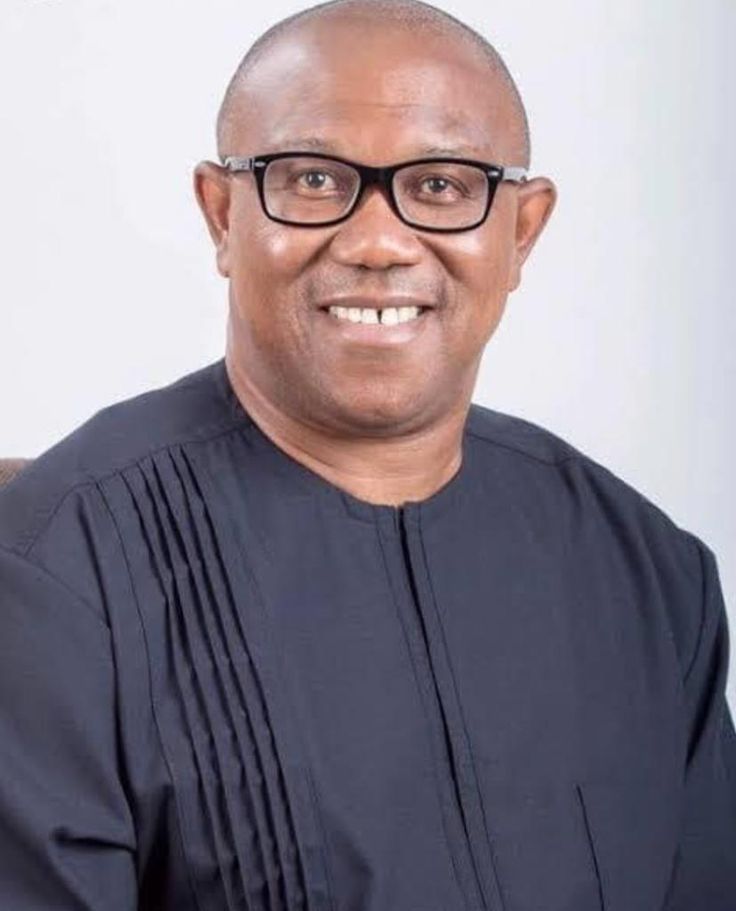
Former Anambra State Governor and Labour Party presidential candidate, Peter Obi, has alleged that suspected hired thugs obstructed his visit to Yelwata community in Benue State, where more than 270 people were reportedly killed in a deadly attack.
Obi made the allegation in a statement following his arrival in Benue on Tuesday, September 8, 2026, saying he had travelled to the state on a humanitarian mission to commiserate with families affected by the killings.
According to him, he arrived in Benue at about 9:00 a.m. but his convoy was prevented from proceeding to the affected community by individuals chanting, “Peter Obi, go back.”
Obi described the incident as distressing, stressing that his visit was not politically motivated but intended to mourn with the bereaved, listen to affected families and offer solidarity following the tragedy.
He said the obstruction was particularly troubling at a time when Nigerians should be united in grief and focused on preventing further loss of lives.
The former governor recalled that he had consistently promoted political civility, citing his attendance the previous day at the opening of the national campaign office of opposition presidential candidate and Oyo State Governor, Seyi Makinde, in Abuja.
He said his presence at the event was meant to demonstrate that political differences should not prevent mutual respect and civility.
Obi also recalled that while serving as governor of Anambra State, he personally welcomed visiting opposition members during election campaigns, provided their activities remained within the law.
He condemned what he described as efforts to deepen political divisions, insisting that Nigerians should be able to live, travel and farm without fear.
“At a time when our nation should be united in grief and resolute in preventing further bloodshed, we must reject any action capable of deepening our divisions,” Obi said.
He maintained that the primary responsibility of government was to protect human life, arguing that political considerations should never take precedence over the safety and security of citizens.
Although he could not reach Yelwata as planned, Obi said his thoughts and prayers remained with the victims, their families and the entire community.
He pledged to continue advocating for the protection of Nigerian lives, concluding with his familiar declaration: “A New Nigeria is POssible.”


NACTAL’s president-elect pledges inclusive leadership, stronger anti-trafficking action

Osita Osememe gets 95.65% votes, emerges NACTAL president

Peter Obi alleges thugs blocked visit to Yelwata massacre victims in Benue
-

 News9 years ago
These ’90s fashion trends are making a comeback in 2017
-
Business9 years ago
The 9 worst mistakes you can ever make at work
-
Entertainment9 years ago
The final 6 ‘Game of Thrones’ episodes might feel like a full season
-
 News6 months ago
SERAP to Akpabio: Disclose officials involved in misappropriation of ₦200t from NNPC
-
News9 years ago
According to Dior Couture, this taboo fashion accessory is back
-
Sports9 years ago
Phillies’ Aaron Altherr makes mind-boggling barehanded play
-
Entertainment9 years ago
The old and New Edition cast comes together to perform
-
Business9 years ago
3 Ways to make your business presentation more relatable