Connect with us

News

Tinubu mourns fallen soldiers,condoles with  families

Published

on

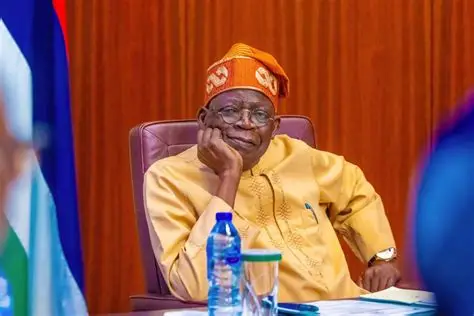
President Bola Tinubu has mourned the loss of the brave soldiers of the 29 Task Force Brigade, Operation HADIN KAI, who were killed in a coordinated terrorist attack on their camp in Benisheikh, Borno State.

Tinubu also sent condolences to the families of our gallant soldiers, urging them to take heart in the face of the unfortunate loss.

The Defence Headquarters confirmed the attack and the tragic loss of lives, which occurred early Thursday, April 9, 2026.

President Tinubu praised the courage and heroism of the soldiers who fought valiantly to repel the terrorists and ensure that Boko Haram could not overrun the communities the soldiers protect.

While mourning the death of the gallant soldiers, the President urged the leadership of the Armed Forces and all soldiers on the frontline not to be discouraged, but to draw strength from the nation’s deep appreciation for their sacrifices.

He said: “From the reports I have received, our armed forces have been conducting sustained, intense land and air offensives against the insurgents, neutralising many of their fighters and commanders. The insurgents’ counterattack is a sign of desperation.

“I extend my condolences to the families of our gallant soldiers, led by Brigadier-General Oseni Omoh Braimah, who made the ultimate sacrifice in the defence of our country today in Borno State.


“The government will never forget their sacrifices. Their sacrifices will not be in vain. Because of the courage and dedication of our troops on the frontline, our resolve to defeat terrorism and all forms of violence across Nigeria is stronger than ever.


“I urge the Military High Command and our troops in all theatres of operation: Do not lose heart, do not be weary, do not be discouraged.


“Our officers and men should continue to serve with honour, courage, and patriotism. The government will always stand by the Armed Forces, provide more of the equipment needed and ensure the welfare of all who risk their lives for our safety.


“I urge Nigerians and the media to continue to support our Military in their relentless battle against insurgency and banditry. We should desist from celebrating or condoning the attacks against our troops. These soldiers are our heroes; unforgettable and irreplaceable.


“My condolences also go to the government and people of Borno State. The Federal Government will continue to work with the state government to achieve total victory and lasting peace.”


News

SAN reacts to deregistration of ADC, others 

Published

on

A Senior Advocate of Nigeria and policy analyst, Dr. M. O. Ubani, has questioned the legal basis of a recent Federal High Court judgment directing the Independent National Electoral Commission (INEC) to deregister five political parties, arguing that the decision may have extended beyond the position previously established by the Supreme Court.

In a legal commentary titled “Deregistration of Political Parties: Has the Court Gone Beyond the Supreme Court’s Position?”, Ubani said the ruling has reignited debate over the interpretation and application of Section 225A of the 1999 Constitution (as amended), which empowers INEC to deregister political parties that fail to meet specified constitutional thresholds.
The judgment ordered INEC to deregister the African Democratic Congress (ADC), Action Alliance (AA), All Progressives Party (APP), Accord Party, and Zenith Labour Party (ZLP).
Ubani noted that the Supreme Court had earlier considered INEC’s powers under Section 225A in National Unity Party (NUP) & Anor v. INEC and related appeals arising from the commission’s 2020 deregistration exercise. According to him, while the apex court affirmed the constitutionality of Section 225A and upheld INEC’s authority to deregister non-performing political parties, it did not conclusively determine whether such powers could be judicially compelled by third parties.
“The critical question before the Supreme Court in those cases was principally whether INEC possessed the constitutional competence to deregister political parties. The Court answered that question in the affirmative,” he stated.
He argued, however, that the Supreme Court did not definitively address whether INEC’s power becomes a mandatory obligation enforceable through court action initiated by private individuals or organisations, or whether the electoral body retains some administrative discretion in assessing compliance with constitutional requirements.
According to Ubani, although Section 225A uses the word “shall” in relation to deregistration, its implementation presupposes that INEC must first determine whether a political party has failed to satisfy the prescribed thresholds relating to representation and electoral performance.
“The constitutional design therefore places INEC not merely as a passive executor of constitutional directives, but as the primary evaluator of compliance,” he said.
The senior lawyer expressed concern that courts could be seen as substituting their judgment for that of a constitutionally empowered institution if they compel INEC to act without the commission first making a formal determination of non-compliance.
He further pointed to reports suggesting that some of the affected political parties may not have violated the constitutional provisions relied upon in the judgment, arguing that such controversies underscore the need for INEC to conduct the initial evaluation.
Ubani also raised questions over the issue of locus standi, noting that the suit was reportedly instituted by the Incorporated Trustees of the National Forum of Former Legislators.
He maintained that Nigerian jurisprudence generally requires claimants to demonstrate that their civil rights or obligations have been adversely affected before approaching the courts, except in limited circumstances involving fundamental rights enforcement or recognised public interest litigation.
“The critical inquiry therefore becomes: what legally cognisable injury did former legislators suffer by INEC’s alleged failure to deregister political parties?” he asked.
According to him, civic concern or a desire to ensure constitutional compliance does not automatically confer legal standing under the traditional doctrine of locus standi.
Ubani argued that this jurisdictional issue should have received careful judicial consideration before the substantive aspects of the case were determined.
He also highlighted concerns regarding the balance between judicial oversight and institutional independence, stressing that while INEC’s actions are subject to judicial review, courts have traditionally exercised restraint in directing how constitutionally assigned powers should be exercised, except in cases involving illegality, bad faith, abuse of power, or refusal to act.
“The present judgment appears to proceed on the assumption that once the constitutional conditions under Section 225A are alleged to have been met, INEC is under an immediate and judicially enforceable obligation to deregister the affected parties at the instance of third-party litigants,” he observed.
Ubani warned that such an approach could blur the distinction between constitutional authority, administrative determination, and judicial intervention.
He suggested that appellate courts, including the Supreme Court if the matter reaches that stage, may need to clarify whether Section 225A imposes a self-executing duty on INEC or one that arises only after the commission has undertaken its own institutional assessment.
He said the courts may also have to determine whether the claimants possessed the requisite standing to institute the action and whether the relief granted amounted to an impermissible substitution of INEC’s administrative discretion.
While acknowledging that the Supreme Court had affirmed the constitutional framework for party deregistration, Ubani maintained that important questions concerning standing, judicial compulsion, and the limits of court intervention in INEC’s functions remain unresolved.
He called for broader legal and intellectual engagement on the issue, warning that increasing judicial interventions in the political sphere could have significant implications for Nigeria’s democratic landscape.
“The appellate courts may once again be called upon to define the proper constitutional boundaries between electoral regulation, administrative discretion, and judicial oversight,” he stated.
Continue Reading

News

Six-yr-single term: SAN speaks on right framework 

Published

on

The opinion piece by legal practitioner and policy analyst, Dr. Monday.O. Ubani (SAN), has reignited discussions over the proposal for a single six-year tenure for Nigeria’s President and state governors, questioning whether the constitutional amendment would address the country’s governance challenges or merely divert attention from more pressing issues.

In a statement titled “Six-Year Single Tenure for the President and Governors: A Solution or a Distraction?”, Ubani examined the renewed advocacy for a non-renewable six-year term for chief executives at both federal and state levels.

The proposal, recently championed by Senator Opeyemi Bamidele and other supporters, is premised on the argument that elected leaders who are not preoccupied with re-election campaigns would devote greater attention to governance and long-term policy implementation.

According to Ubani, the argument possesses a degree of merit, noting that under Nigeria’s current constitutional framework, presidents and governors serve four-year terms with the possibility of one re-election. He observed that political calculations surrounding second-term bids often begin long before the expiration of a first tenure, potentially influencing policy decisions and governance priorities.

“A single tenure could potentially eliminate this concern and encourage long-term policy implementation,” he noted.

However, the Senior Advocate of Nigeria cautioned that the debate should extend beyond considerations of administrative efficiency. He argued that democracy is fundamentally anchored on accountability and good governance, with the prospect of re-election serving as a critical mechanism through which citizens assess the performance of elected officials.

Ubani warned that removing the incentive of electoral appraisal could weaken democratic responsiveness and accountability.

Drawing from comparative constitutional experiences across different regions of the world, he maintained that there is no direct relationship between the length of tenure and the quality of governance. He pointed out that several countries in the Americas and Northern Europe, despite operating relatively short executive tenures, have produced transformative leaders. Conversely, some African nations that allowed extended periods in office have grappled with poor governance, institutional decline and democratic setbacks.

He further argued that Nigeria’s own political experience demonstrates that leadership quality and institutional effectiveness have a greater impact on governance outcomes than tenure duration.

According to him, strong institutions, adherence to constitutional limits, transparency and respect for the rule of law remain the key determinants of successful governance.

From a constitutional standpoint, Ubani stated that the national conversation should not be limited to choosing between a six-year or an eight-year arrangement. Rather, he said, the focus should be on identifying a framework that best promotes accountability, political stability, effective governance and democratic development.

He acknowledged that introducing a six-year single tenure through constitutional amendment is legally feasible, provided the procedures stipulated in the Nigerian Constitution are strictly followed.

Nonetheless, Ubani questioned whether such a reform would address the underlying challenges confronting governance in the country.

“It is possible that tenure reform may alter political incentives, but it cannot substitute for competent leadership, institutional integrity and citizen participation,” he argued.

The legal practitioner stressed that effective leadership is not necessarily dependent on the length of time spent in office, noting that capable leaders can deliver meaningful results within limited tenures, while ineffective leaders may inflict greater damage even with extended periods in power.

He concluded that Nigeria’s central challenge lies not in determining how long presidents and governors should remain in office, but in ensuring that those entrusted with public office govern responsibly, effectively and in accordance with constitutional principles.

“The true measure of democratic success,” Ubani said, “is the ability to ensure that whoever occupies public office delivers the dividends of democracy while remaining accountable to the people and the Constitution.”

Continue Reading

News

Monarch’s wife shot as hoodlums abduct husband 

Published

on

Ondo State Police Command has launched an intensive rescue operation following the suspected abduction of a community leader in Ode Oriya Village, Owo Local Government Area of the state.

Ondo Police Launch Rescue Operation After Community Leader’s Abduction in Owo
The Ondo State Police Command has commenced a coordinated rescue operation following the abduction of the Baale of Ode Oriya Village in Owo Local Government Area by suspected kidnappers.
According to a statement issued by the Police Public Relations Officer, DSP Abayomi Jimoh, the incident occurred at about 8:05 p.m. on June 13, 2026, when approximately six armed men reportedly stormed the residence of the traditional leader, Mr. Adeniyi Adelana, 60, and forcibly took him away through a nearby bush path to an unknown destination.
The police said that upon receiving the distress report, the Divisional Police Officer of B Division, Owo, immediately deployed a combined team of police operatives and other security personnel to the scene. The area was secured while investigators conducted a preliminary assessment as part of efforts to unravel the circumstances surrounding the attack.
During the incident, the victim’s wife sustained a gunshot wound to her right hand. She was rescued and taken to a nearby medical facility, where she is currently receiving treatment and is said to be responding positively.
The Command disclosed that a comprehensive search-and-rescue operation had been activated, with security operatives combing nearby forests, bush paths and other suspected escape routes in a bid to secure the safe release of the abducted community leader and apprehend those responsible for the crime.
It added that tactical deployments had been reinforced across the affected area and adjoining communities to enhance the effectiveness of the operation.
Commissioner of Police, Felix Ohagwu, directed all tactical units, intelligence assets and operational teams within the Command to intensify efforts towards the swift rescue of the victim and the arrest of the suspects.
The police assured residents that every necessary measure was being taken to reunite the victim with his family safely and ensure that the perpetrators face justice.
The Command also urged members of the public to remain calm and continue their lawful activities without fear, while encouraging residents to provide credible and timely information that could assist ongoing security operations.
Reaffirming its commitment to the protection of lives and property, the Ondo State Police Command stated that efforts were being intensified to combat kidnapping and other violent crimes across the state.
The statement was signed by the Police Public Relations Officer, DSP Abayomi Jimoh, on behalf of the Ondo State Command on June 14, 2026.
Continue Reading

Trending

Copyright © 2017 Zox News Theme. Theme by MVP Themes, powered by WordPress.