Connect with us

Politics

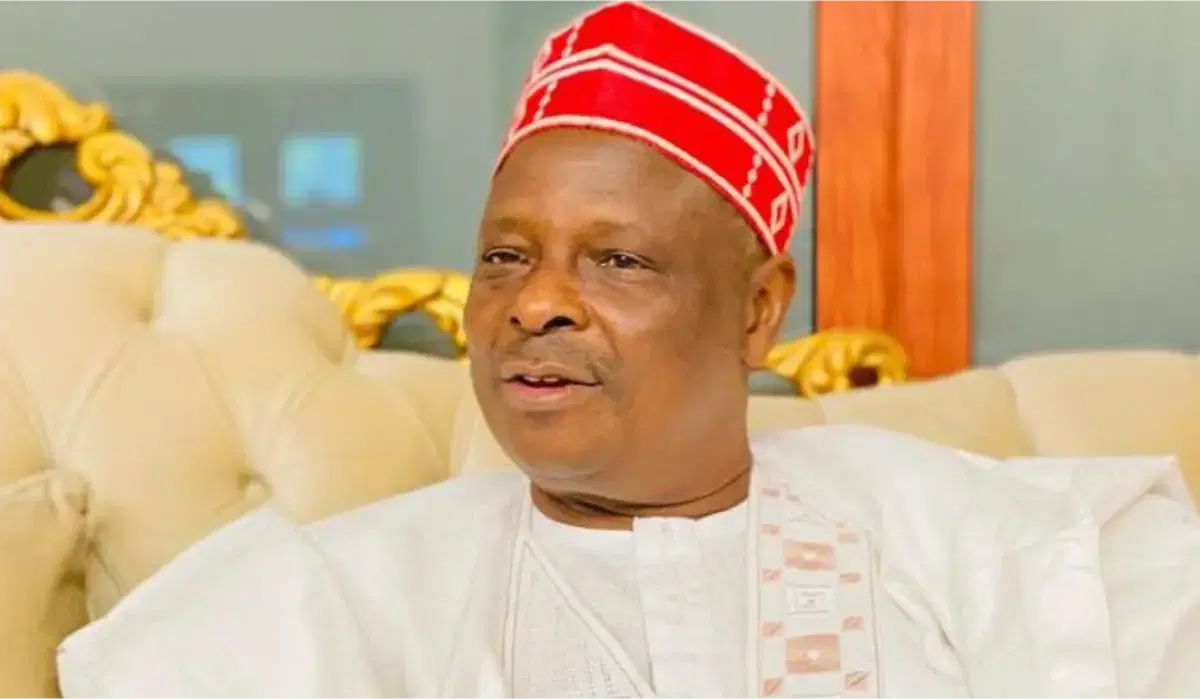
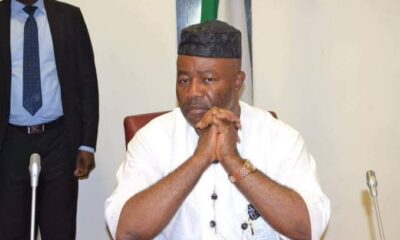
Kwankwaso explains reason for dumping NNPP

Published

on


Rabiu Musa Kwankwaso, the 2023 presidential candidate of the New Nigeria People’s Party (NNPP), has resigned from the party with immediate effect.

Kwankwaso announced his decision in a statement, citing the need for “strategic realignment” in response to the evolving political landscape in the country.

“I wish to formally announce my resignation from the New Nigeria People’s Party (NNPP) with immediate effect,” he said.

The former Kano State Governor described the decision as difficult.

“As a committed and bonafide member of the party, this was not an easy decision to make,” he stated.

Explaining the rationale behind his exit, Kwankwaso said he intends to align with another political platform that he believes offers a better opportunity to drive national change.

“Considering the current trajectory of the nation’s political landscape, which calls for strategic realignment, I have found it necessary to identify with another political platform that offers the best opportunity to effectively change the nation,” he added.

He expressed appreciation to the leadership and members of the party for their support during his time in the NNPP.

“I extend my deepest appreciation to the National Chairman, Ajuji Ahmed and the entire National Working Committee for their steadfast support throughout my time,” Kwankwaso said.

He also thanked other organs of the party, including the Board of Trustees, National Executive Committee, and members at all levels, as well as supporters of the Kwankwasiyya Movement.

“I also thank… all levels of leadership across the party — from the ward to the state level… and all followers of the Kwankwasiyya Movement for their dedication and commitment to our shared mission,” he said.
 

Politics

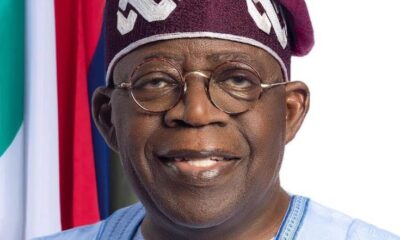
‘Our man putting Aso Rock under pressure’

Published

on

NEFERTITI, a prominent supporter of Nigeria Democratic Congress presidential candidate Peter Obi, has claimed that the sustained criticism directed at Obi by several political figures reflects the growing influence of the former Anambra State governor ahead of the 2027 elections.
In a post shared on X, NEFERTITI alleged that a number of politicians and public commentators had focused their attacks on Obi, suggesting that the attention underscored his political relevance.
According to the post, individuals including Edo State Governor Monday Okpebholo, Minister of Works Dave Umahi, Labour Party factional leader Julius Abure, presidential spokesman Bayo Onanuga, actor-turned-politician Kenneth Okonkwo, and former Edo State governor Adams Oshiomhole had all targeted Obi in their public remarks.
“The entire Establishment is attacking one man,” the post stated.
NEFERTITI also pointed to what she described as a pattern of political leaders making repeated assurances of electoral support for President Bola Tinubu in their respective states. She listed the Minister of the Federal Capital Territory, Nyesom Wike, Governor Ademola Adeleke of Osun State, Governor Monday Okpebholo of Edo State, Governor Chukwuma Soludo of Anambra State, Senate President Godswill Akpabio, Works Minister Dave Umahi, Ogun State Governor Dapo Abiodun, and Delta State Governor Sheriff Oborevwori among those allegedly making such commitments.
The X user argued that the repeated declarations by political office holders highlighted the pressure Obi was exerting on Nigeria’s political establishment.
“Our man is on everyone’s lips,” NEFERTITI wrote, adding that it takes significant political influence for “one man to put Aso Rock and the entire Establishment under constant pressure.”
The comments come amid increasing political activity and early positioning by key actors ahead of the 2027 general elections, with supporters of various political figures intensifying debates over the country’s leadership and future electoral prospects.
Neither the individuals mentioned in the post nor the Presidency had responded to the claims at the time of filing this report.
Continue Reading

Politics

Northern influencer urges ADC to merge  structure with NDC 

Published

on

A northern social media influencer and supporter of Peter Obi, Shehu Gazali Sadiq, has reiterated his position that Atiku may not feature on the ballot in the 2027 general elections, citing recent legal developments involving the African Democratic Congress (ADC).


In a post shared on social media, Sadiq recalled that he had predicted two weeks earlier that Atiku would not contest the 2027 presidential election under the ADC platform, adding that many had dismissed his comments at the time.
According to him, a High Court in Abuja has now directed the Independent National Electoral Commission (INEC) to deregister the African Democratic Congress (ADC), a development he argued could significantly affect the party’s political calculations ahead of the next election cycle.
Sadiq maintained that although the ADC is expected to challenge the ruling on appeal, such efforts would be futile because the party’s leadership dispute remains the subject of ongoing litigation.
He further urged the ADC to merge its structure with the NDC and throw its support behind Peter Obi for the presidency in 2027.
“It is time to advise the ADC to collapse its structure into NDC and support Peter Obi for president,” he wrote, expressing optimism about the country’s future by concluding that “Nigeria will be OK.”
The comments reflect the growing political debates and realignments ahead of the 2027 general elections, as parties and stakeholders continue to position themselves in an evolving political landscape.
Continue Reading

Politics

2027: ADC candidates in panic mode 

Published

on

Winners of primary elections conducted by the African Democratic Congress ahead of the 2027 elections are in panic mode.
This is following an Abuja  Federal High Court order on Monday that  the Independent National Electoral Commission (INEC) should  deregister the party and four others.
The affected parties are the African
 Democratic Congress (ADC), Action Peoples Party (APP), Action Alliance (AA), Accord Party (AP), and Zenith Labour Party (ZLP).
Observers had  said the  development could significantly reshape the political landscape ahead of the 2027 general election.
Already, sources said some candidates of the ADC are seriously jittery as over the uncertainties surrounding the party’s participation in the coming elections.
A top party member told newsdiggers.com that the court decision has unsettled many candidates.
“‘ Obviously, there is anxiety. The candidates  can’t be merrying or partying over such order. It is better to lose at the polls than to be prevented from taking part in this controversial manner.”
He added: ” Any candidate who is not strong willed can develop high blood pressure and slump because they have spent so much financially, psychologically and emotionally to this this far.”
A source close to a  candidate in the Southeast said. “My principal became instantly feverish immediately the news broke yesterday.”
In spite of the party assurance that it would participate in the election, the source said the principal remains pessimistic, saying: “He fears that even if they participate, the court can still turn around and nullify the results especially in places where ADC does well.”
Delivering the  judgment that has put the fate of ADC in the balance, Justice Peter Lifu held that the parties failed to meet the constitutional requirements necessary to retain their registration and directed INEC to take steps to deregister them.
The suit was instituted by a group of former lawmakers, who asked the court to determine whether INEC was constitutionally obligated to deregister political parties that failed to satisfy the performance benchmarks outlined in Section 225A of the 1999 Constitution, as amended.
According to the plaintiffs, the affected parties consistently failed to meet the conditions required for continued registration. These include securing at least 25 per cent of votes cast in a state during a presidential election or winning elective positions at the national, state, or local government levels.
The group argued that the five parties did not attain the prescribed electoral threshold during the 2023 general election and subsequent by-elections conducted by INEC.
They contended that allowing the parties to remain on the register despite their poor electoral performance amounted to a violation of constitutional provisions and undermined the integrity of Nigeria’s electoral process.
The plaintiffs also urged the court to compel INEC to deregister the parties before preparations for the 2027 elections gather momentum.
In addition, they sought an order restraining the affected parties from participating in elections, conducting party primaries, organising rallies, or engaging in other political activities pending compliance with constitutional requirements.
In his ruling, Justice Lifu upheld the arguments of the plaintiffs and ordered INEC to deregister the five political parties.
The judgment could have major political implications, particularly for the ADC, which has recently been linked to opposition coalition talks ahead of the 2027 presidential election. However, it remains unclear whether the affected parties will challenge the decision at the Court of Appeal.
Continue Reading

Trending

Copyright © 2017 Zox News Theme. Theme by MVP Themes, powered by WordPress.