
News
Alhaji Jide Ojuko: An accomplished, humble civil and public servant

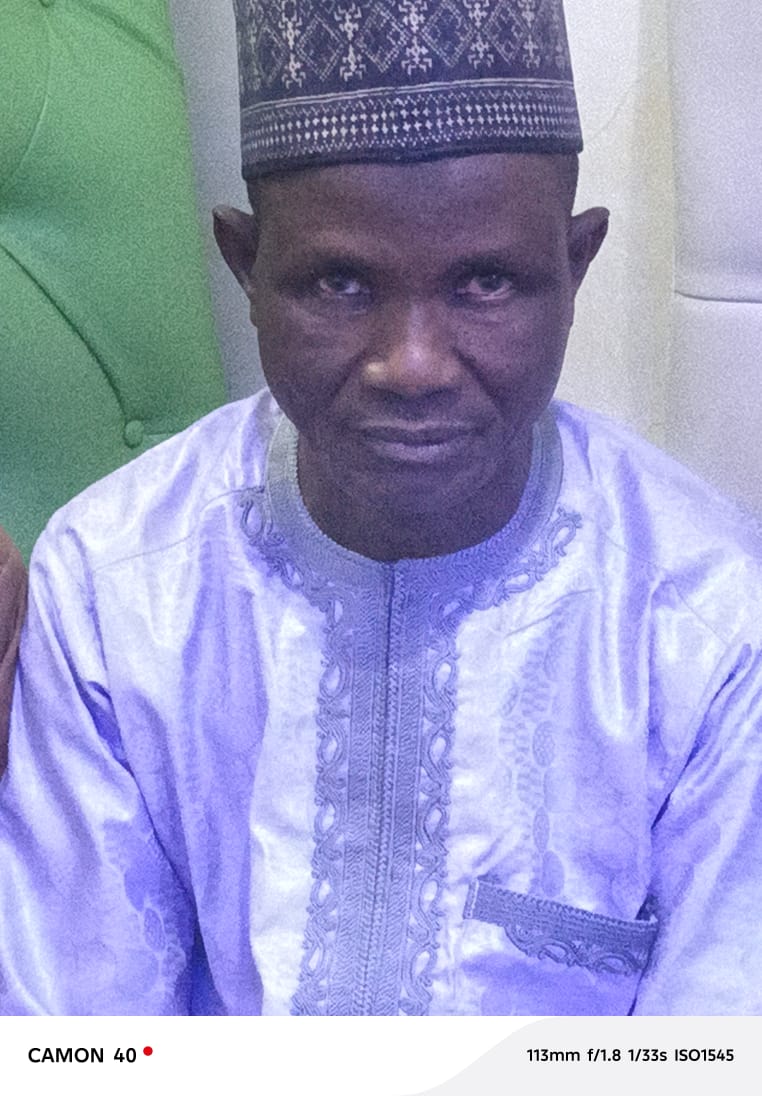
Chief Waliu Olajide Ojuko is the Senior Special Adviser on Political Affairs to Governor Dapo Abiodun. He is an accomplished, humble civil and public servant who has served every governor in Ogun State aside working with mother of President Bola Tinubu and the father of the APC governorship candidate in Lagos. With what he has seen Senator Yayi do in Ogun West and beyond as a lawmaker, Chief Ojuko, who holds the title of Olootu of Ota, is optimistic that his senatorial district and Ogun State in general will experience great development when Yayi emerges the governor. He speaks on many other issues in this interview with newsdiggers.com. Excerpts:
Take us through your background
I had my primary and secondary school education here in Ota. I had my high school in Ijebu Ode and my university in what we call the premier university of Nigeria, that is University of Ibadan I did my NYSC in Cross River State and served in Calabar, initially as assistant postal controller. Later, I decided to go and teach. I had the opportunity of teaching in Nnamdi Azikiwe Secondary School, Hope Waddel Training Institute.
After that I was also employed by the federal ministry of communications, again as assistant postal controller. I subsequently left for Lagos State teaching service commission as a teacher in African Church Grammar School, Ifako. After about nine months I left for Lagos State civil service as an admin officer. In those days I was a Lagos State government scholar. It was as if I went back to serve the state that sent me to the university. My first posting in the civil service took me to the ministry of the Local government and chieftaincy Affairs. In that ministry, I had the opportunity of working with the present Chief of Staff’s uncle, Chief Gbajabiamila was my commissioner. Again, I served as secretary of Lagos State Market Committee. We built the first Tejuosho Market. In that committee I had the privilege of serving with the late Iyaloja General of Lagos, that is the mother of President Bola Tinubu. From there, I was taken to Lagos State Chieftaincy Tribunal as the Secretary. We handled quite a number of very delicate and sensitive chieftaincy cases in Lagos State, like Obanikoro of Lagos and other chieftaincy titles. From there, I was moved to the office of public transportation. I had the privilege of having the late Oba Hamzat, the father of the present gubernatorial candidate of Lagos as my commissioner. I handed the sales of Lagos State boarded vehicles. I had the privilege of meeting so many big men of Lagos politics on that assignment. From there, I was taken to the office of the deputy governor of Lagos State, Alhaji Rafiu Jafojo.
Under him there was this Lagos State lotteries and pools betting commission. I was the maiden secretary of that commission. It was in charge of licensing of pools, casino, gaming machines. That gave me the privilege of having contact with billionaire Kessinghton Adebutu. I was the person who licensed their Face to Face Pools all over Lagos State. I also did for Lebanese who were into promoting pool companies then.
At what point did you leave civil service?
When I was moved from there to the Ministry of Economic Planning in 1982.
I just felt I had had enough of civil service and resigned. I started taking interest in politics and community issues. At that time, when I closed at Alausa at 3:30 pm, I would drive straight to Ota to come and hold community and political meetings . That’s how I got hooked into politics.
My first assignment was to be the elected state secretary of SDP. We were the people who handled the late Abiola’s election. I registered him into SDP. I handled his primary, convention in Jos as an Ogun State indigene. His presidential election was also handled by me and other state secretaries in the country. We won the election but unfortunately, he was not allowed to be the president. Babangida subsequently dissolved and we were made to go into another election. I won again as state secretary of SDP. At that point, I became a director in Odua Group of Companies. I started with Nigeria Wire and Cable as a director, from there, I went to WEMABOD as a director. After that I also served as chairman of Western Hotels as a director. All ODUA group of companies. That dispensation went and Alliance for Democracy came. and then I became the state commissioner for Commerce, Cooperative and Tourism, under Governor Olusegun Osoba.
When APC came, I became the honorable commissioner for local government and chieftaincy affairs. Under Governor Ibikunle Amosun.
When Dapo Abiodun became the governor was appointed as his senior special adviser on political affairs
In all this you didn’t mention Gbenga Daniel…
I worked with him. It was during Governor Gbenga Daniel’s time that I became the chairman of Western Hotels under Oodua.
My position as the state secretary, earned me the position of a director under the first coming of Governor Osoba. It was when the Gbenga Daniel under PDP, became the governor that he appointed me as the chairman-director of Western Hotels.
Chief Onabanjo appointed me as a director in then Ogun State Gateway Hotels at Otta. Unfortunately, we had three months before that coup came.
You have worked with virtually all the governors in Ogun State, which one will you say you enjoyed working with?
They were all nice to me. Chief Osoba was like a brother to my late father. He came from Daily Times then, you remember. We were very young then. And then he was like our elder brother. I think he was the closest to me.
If I see one of the books he wrote, he mentioned my name on page 185 of that book. We were like family friends.
So I was very close to him. Myself and the former deputy governor, who was also my colleague, Segun Adesegun. We were like small brothers to Chief Osoba.
He loved going to social gatherings on weekends. Any time he was going, he would take me or Adesegun along.
We would go everywhere to enjoy ourselves. Despite the fact that we were in Ogun State. I think I should say I was very close to him more than the other people. The other governors too, we were close but not as close as Chief Osoba.
Let’s look at the issue of development in Ogun State, do you think we are progressing?
Well, the Ogun State that we met when we came from Lagos and the Ogun State that we have now, I want to conclude that we are making progress.
For example, in those days, using my own community Otta as an example. We were lacking quite a number of things then. We are not where we are supposed to be.
But I think the state is making steady progress. Don’t forget. There is a difference between Ogun and Lagos
in terms of the internally generated revenue. The money that I know was available in Lagos State then, was not available to Ogun State. Even after that, what the state was generating under Osoba was less than 500 million per month. Today is billion.
Because of the disparity in the available funds available to the two states, I think we can say Ogun State is trying its best to make progress. Our industrial estates are becoming multiple.
There was no interchange- Shagamu in Ogun State before. It was only Otta and Agbara. Today, we have other industrial estates.
Our land today in Ogun State is more and more expensive than what it was in those days. In those days, a plot of land could go cost as low as #3,000. But today it’s a lot of money because of the economic progress we have made. The population of Ogun State now is very rich.
A lot are living, working in Lagos and living in Ogun State and that has helped in shooting our IGR and some other things like that.
The value of our land now is almost as that of Lagos State in some places.
What will you say are the experience you have garnered over the years?
Well, I’ve been a civil servant and a public servant. They are two things.
As a civil servant, one learnt a lot. I was able to be in the midst of those who own Lagos State then. And of course, I was able to learn quite a lot of things and that has helped me in my public service life when I became commissioner and this and that.
What is important is to be humble and ensure that you don’t allow your position to go into your head.
Those who are going to meet today, you don’t know where your path will cross with theirs tomorrow.
One has to be very careful because as a civil servant, or public servant, you are serving Nigerians. You are serving people of those states.
And once you try to be modest, to be humble, and to ensure that you maintain your integrity, most importantly, don’t be corrupt. I had the opportunity of making a lot of money. Probably, I will not be where I am today, if I had made those money illegally then. My schedule of duty has given me the opportunity to look at money but one has to be careful. My father had a name, and I think I should maintain that name.
You have been in the political space for a while, why are you not aspiring for political office?
You see, one thing in politics is that it depends on where you come from, particularly the kind of constitutional politics that we play in Nigeria.
I am from Ogun West of Ogun State. Since the creation of the state, we have not been governor for once. The two other senatorial districts, that is, the central and the east, have been taking that slot.
I have been part of the struggle for quite a long time, even before my father died. I remember we have swerved into different political parties from the main party that we were, all because we were looking to bring the governor to my senatorial district. But unfortunately, those two times we did that, we were not lucky.
During the time of the late General Olurin, he came out from this particular senatorial district but we couldn’t make it. Then, during the time of the Governor Ibikunle Amosun, we left APC for APM to look for the governor’s seat. We won the election, but we were not allowed to take that short because of some political intricacies.
As a person, because I come from Ogun West, is one of the restricting factors that I have, because the best we can gun for is senator.
We have five local governments. We come from the minority of that senatorial district.
The other side is Yewa side. We are Awori which is one local government out of the five.
Anytime we go for primaries, it’s always four against one. These are the things you have to look at before you venture into it.
Unless, maybe this time. Those times we became senators on this part of the senatorial district, it was through consensus, like the one we are having now. Thanks to Senator Olamilekan Yayi, who has now came to bail us out of that logjam.
He’s been here with us for some years. Fortunately, he has come to be our consensus gubernatorial candidate now. Because of that, the senatorial seat was ceded to my own local government, which is the Awori part of the senatorial district.
Unfortunately, there have been people queuing to become senators. But me, I should say I prefer appointment than going to elective positions.
How do you feel having Senator Olamilekan Yayi emerging Ogun State APC governorship candidate?
I was interviewed by OGTV a few days ago and I told them this is my best moment in politics. Because when you are in politics, if your area is not on the number one seat, it will just be working for the owner.
As a senator, he has transformed our senatorial district and by extension, the entire Ogun State, he has given us roads, schools, transformers, a lot of things he has done that we never saw before as a senator. That has opened our eyes.
And we have seen somebody who is going to be our messiah.
By the time he put himself forward for the gubernatorial seat, there was no objection from anywhere. Even across the state, for the first time, you see a senator doing things for his senatorial district and for other senatorial districts.
And that was why the man was accepted all over the state. So we are very happy to see him. Senator Yayi and I have been together since he came to look for position of senator about 14 to 15 years ago,
then he was in the House of Reps. Unfortunately, that was the time Aregbe was in Osun as governor. (Aregbe told us when I went to Osun with him that they cannot leave him because the three of them were the ones winning Alimosho Local Government for Lagos State.
As a result, they cannot leave they cannot leave Yayi for us in Ogun State. But thank God today he came in as a senator and of course, now coming in as a governor. He has done a lot for us in Ogun West and the state. We never knew a senator can do as much as that.
We have had senators before. Before him. But he has opened our eyes.
Anybody who is going to represent us now, as a senator, he is leaving a very big shoe as a senator. So we thank God for bringing him for us.
What agenda are you people setting for him if and when he wins and assumes office?
Like I said, we were very, very much at the back seat in terms of infrastructure.
Particularly in our senatorial district. A lot of things had eluded us. And our expectation is that he will come and fill those gaps; roads, electricity, and empowerment of our people. Then we has to turn our rural communities into modern communities. We have the opportunity of developing quite a number of industrial estates in Ogun West.
I’m sure by now, with his arrival, many of these things will be taken care of. Many of our communities are without electricity, many without good roads, many without hospitals, many without good schools. I think he should be able to assist.
Awolowo was an indigene of this state. If you go Ijebu side, the tap, the roads, Awolowo did for them, they are still using them up till today.
We haven’t got that opportunity in this part of Ogun State.
I think the man will come and turn a lot of things around for us.
What is your take about the administration of President Tinubu?
I will start by going back to his days in Lagos State. He was a very brilliant governor. He’s a person who doesn’t joke with intelligence report. He was running his government from all sides of the state. That helped him when Obasanjo came as President under PDP. He took over all the states in the Southwest except Lagos State because Asiwaju had his ears to the ground.
Asiwaju has carried that to the federal level and he is going to win the 2027 election. He is a good administrator. Things are difficult for Nigerians now but at the end of the day, they will be more comfortable. When you have a sore, and you want it to heal, you have to put the right medication which can make it very painful. The essence is for the sore to heal. That is what President Tinubu is doing to Nigeria now. Nigeria was in a very bad shape when he took over. I am a sorry I am an APC man, the last president didn’t do much and that is why Asiwaju inherited so many problems. The abolition of fuel subsidy came to some people as a shock and they never knew that he would survive it. The man is gradually surviving it and that is why he is getting so many of the governors to his side. The president is not selfish. He thinks about Nigerians. Otherwise, he would have been selective with the kind of money that is coming to the coffers of the government now. He would have said if you are not a Yoruba man, I will not give you money. If you are not an APC man I will not give you money.






By Philippine Duru
philippineobetoduru@gmail.com
08034905774
The Kulen Allah Cattle Rearers Association of Nigeria (KACRAN) has declared that the worsening insecurity in the North West and North Central regions of the country can be brought to an end within 45 days if the Federal Government, state governors and other stakeholders demonstrate sufficient political will and commitment.
The association said the two regions possess the human resources, political influence, traditional institutions and leadership capacity required to resolve the security challenges that have claimed numerous lives, displaced communities and crippled agricultural activities.
KACRAN’s National President, Hon. Khalil Mohd Bello, made the assertion in a statement expressing concern over the persistent killings, banditry, cattle rustling and destruction of property across northern Nigeria.
According to him, the association has developed a peace proposal that could restore stability to the troubled regions within 45 days if implemented with the full cooperation of federal and state authorities.
He explained that the proposed timeline would involve two weeks of consultations and engagement with relevant groups, followed by one month of decisive measures to implement the peace agreement.
Bello lamented that northern Nigeria, once celebrated for its unity, peaceful coexistence, generosity and political advancement, had become a theatre of violence where armed groups terrorise innocent citizens.
He said the activities of bandits and other armed groups had forced thousands of families to abandon their ancestral homes, prevented farmers from accessing their farmlands and resulted in widespread livestock theft.
The KACRAN president argued that the continued deterioration of security was particularly disturbing considering the calibre of political, military, traditional and religious leaders produced by the region.
He said: “KACRAN strongly and respectfully believes that with the support and cooperation of the Federal Government and the concerned state governments, the North has the full capacity and ability to end insecurity in the North West and North Central within 45 days, if truly committed.”
Bello maintained that the regions had produced several Nigerian presidents, military generals, senior security officers, experienced administrators and influential politicians capable of contributing meaningfully to peacebuilding efforts.
He also pointed to the regions’ population and electoral importance, stressing that northern political leaders had a responsibility to protect the lives and livelihoods of their constituents.
According to him, restoring peace before the 2027 general elections would enable displaced residents to return to their communities and participate in civic activities, including voting.
He warned that allowing insecurity to persist would further undermine Nigeria’s food security, given the strategic importance of the North West and North Central to agricultural production.
Bello said the regions’ traditional rulers, religious leaders and political stakeholders should be mobilised to facilitate meaningful dialogue with armed groups and other parties involved in the conflicts.
Citing developments in Kaduna and Katsina states, he argued that dialogue had demonstrated its potential to resolve even deeply entrenched security challenges.
The association particularly commended Kaduna State Governor, Uba Sani, for his peace initiatives in Birnin Gwari, which it described as an example of how engagement with relevant stakeholders could help address longstanding conflicts.
Bello praised the governor’s commitment to peace, unity and economic development, urging his counterparts in the North West and North Central to emulate his approach.
He said: “We wish to most sincerely express our deepest appreciation to His Excellency, Malam Uba Sani, the Executive Governor of Kaduna State, for his genuine love for the peace, unity and economic development of his people.
“We respectfully call on North West and North Central governors to emulate his good example.”
KACRAN also questioned the emphasis on establishing state police as a solution to insecurity, arguing that governments should instead prioritise conflict resolution and sustainable employment opportunities for young people.
The association expressed concern about the long-term sustainability of security-related employment, particularly in the face of changing government revenues.
It advocated massive investment in agriculture, livestock development, fisheries, industries and commercial activities as more sustainable approaches to tackling unemployment and addressing some of the underlying causes of insecurity.
Bello maintained that armed groups operating across the two regions could be reached through coordinated peace initiatives involving traditional institutions, government authorities and local communities.
He argued that relying exclusively on military operations had failed to produce the desired results despite the substantial public resources committed to security interventions.
According to him, dialogue should complement security operations, while firm action should be taken against armed groups that reject genuine peace initiatives.
The association also warned against the proliferation of ethnic-based vigilante organisations, saying such groups could deepen divisions and trigger retaliatory violence.
Bello said the establishment of vigilante groups along ethnic lines might encourage rival communities to form similar armed organisations, thereby complicating an already fragile security situation.
He condemned the recent killings in Plateau, Taraba and Zamfara states, as well as other attacks involving the destruction of property and rustling of livestock.
KACRAN further urged northern leaders not to postpone decisive action on insecurity until the 2027 general elections.
It maintained that resolving the security challenges before the elections would create a more favourable environment for economic recovery and enable future administrations to concentrate on development.
Drawing a comparison with Rwanda’s recovery from the 1994 genocide, Bello said northern leaders could similarly mobilise the political will and collective determination necessary to restore peace.
He argued that the region’s abundant human and natural resources made continued insecurity unacceptable.
The association consequently appealed to the Federal Government and governors of the affected states to adopt its proposed peace framework without further delay.
Bello said: “It is not in the best interest of the North to continue to live with insecurity while waiting for the next election cycle in 2027.
“Our security challenge should be addressed now, so that whoever comes to power in 2027 can continue and expand efforts at building our economy through massive job creation, youth employment, livestock development, fisheries, arable farming and boosting commercial activities.”
He urged the authorities to provide the necessary political, financial and institutional support for the immediate implementation of the association’s proposal.
The KACRAN president reiterated that while dialogue should remain central to the peace process, security agencies must take decisive action against bandits who refuse to embrace peace.
He expressed confidence that a coordinated approach involving federal and state governments, traditional rulers, religious leaders, security agencies and community stakeholders could bring lasting stability to the troubled regions.
By Philippine Duru
philippineobetoduru@gmail.com
08034905774
The Kulen Allah Cattle Rearers Association of Nigeria (KACRAN) has challenged the 18 Northern governors to adopt the commercial development blueprint of Yobe State Governor, Mai Mala Buni, as a strategy to tackle worsening unemployment, insecurity and economic decline across Northern Nigeria.
The association also called on President Bola Ahmed Tinubu to introduce accessible soft loans and special intervention funds to support traders and entrepreneurs, particularly those operating in newly constructed modern markets.
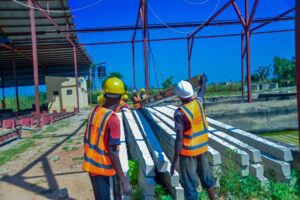
KACRAN said the intervention would stimulate commercial activities, create employment opportunities, reduce insecurity and contribute significantly to Nigeria’s Gross Domestic Product (GDP).
In a statement issued on Tuesday, October 13, 2026, and signed by its National President, Hon. Khalil Mohd Khalil, the association lamented the deteriorating economic and security situation in Northern Nigeria, describing it as a sharp departure from the region’s prosperous past.
It recalled that between the 1960s and 1990s, Northern Nigeria enjoyed relative peace, economic prosperity, strong communal relationships and a thriving commercial environment that attracted investors and traders from across Nigeria and beyond.
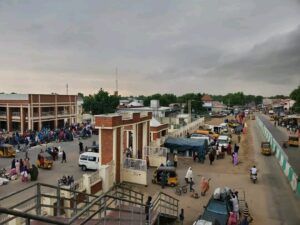
According to the association, the region was once renowned for its hospitality, trustworthiness, agricultural productivity and economic opportunities, which enabled young people to establish businesses and secure employment with relative ease.
KACRAN expressed concern that insecurity, industrial collapse, unemployment and growing ethnic, religious and political mistrust had undermined these achievements.
It particularly lamented the devastating impact of insurgency on farming, livestock production and fishing, warning that the increasing number of unemployed youths posed serious threats to food security and national stability.
“Anyone who knew the North of Sir Ahmadu Bello, the Sardauna of Sokoto, and sees the North of today, must shed tears and begin to think deeply on how to restore its lost glory and make it compete favourably with any region in the world,” the statement said.
The association identified Governor Buni’s investments in commercial infrastructure as a practical model for reversing the region’s economic decline.
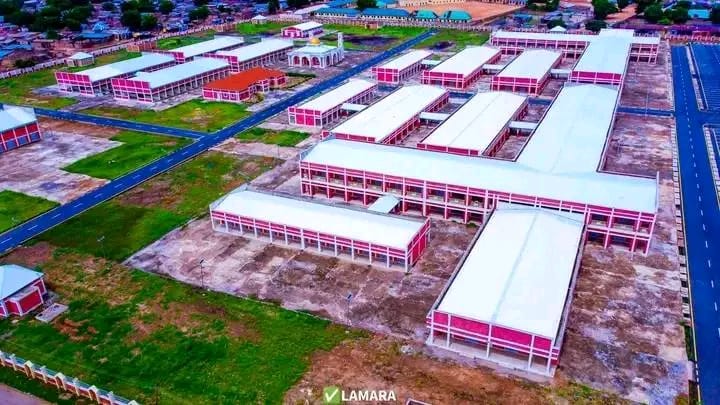
It commended the governor for investing billions of naira in the construction of modern markets, trailer parks and agricultural processing facilities despite the security challenges that have affected Yobe State over the years.
KACRAN disclosed that the Buni administration had embarked on the construction of 19 modern markets across the state’s 17 local government areas.
According to the association, markets have been completed in Potiskum, Damaturu, Gashua, Nguru, Gaidam and other major towns, while projects in several other locations are at advanced stages of completion.
It explained that Gujba and Fune local government areas were among those designated to benefit from two modern markets each.
The association further disclosed that the administration had constructed a trailer park in Potiskum, while another facility was under construction in Damaturu to strengthen transportation and commercial activities.
It also highlighted the establishment of four sesame seed cleaning and packaging factories in Nguru, Machina, Damaturu and Potiskum as part of efforts to promote agricultural industrialisation and create employment opportunities.
KACRAN maintained that the projects had stimulated economic activities, restored confidence among business operators and generated thousands of direct and indirect employment opportunities.
The association particularly praised the state’s Commissioner for Commerce, Industry, Tourism and Solid Minerals, Hon. Kaigama Umar, for what it described as his commitment to the implementation of the governor’s economic development agenda.
It said Umar’s administrative experience and relationship with the business community had contributed significantly to the execution of the projects.
Calling for the replication of the initiative across the North, KACRAN said the region urgently needed deliberate investments in commercial infrastructure, industrial development and employment generation.
“On this note, KACRAN passionately challenges the 18 Northern Governors to adopt Governor Buni’s Commercial Revolution Blueprint as a workable template to revive the economy of the entire Northern Nigeria,” the statement said.
The association stressed that infrastructure development alone would not achieve the desired economic transformation without adequate financial support for traders, small businesses and entrepreneurs.
It consequently appealed to the Federal Government to establish financing arrangements that would enable business operators to access affordable credit and expand their operations.
“We also urgently call on His Excellency, President Bola Ahmed Tinubu, GCFR, to complement this laudable effort by providing accessible soft loans and special intervention funds for businessmen and women who have now secured befitting modern markets.
“This will boost their capital, create millions of jobs along the commercial value chain, drastically reduce insecurity, and significantly increase our nation’s GDP,” KACRAN stated.
The association expressed optimism that similar investments across the 18 Northern states, complemented by financial support for businesses, could help revive the region’s commercial activities and reduce the economic pressures contributing to insecurity.
It also commended the Permanent Secretary of the Yobe State Ministry of Commerce, Industry, Tourism and Solid Minerals, the ministry’s directors, the Managing Director of the Yobe State Investment Company, general managers and other officials for their roles in supervising the projects.
KACRAN urged political leaders across the region to prioritise economic recovery, job creation and sustainable commercial development over political differences.
It maintained that the economic transformation being pursued in Yobe State should serve as a broader development model for Northern Nigeria and the country.
“This revolution is not just for Yobe, it is for the North and for Nigeria,” the association declared.I can also make the story more investigative and compelling, with a stronger opening focusing on how insecurity, unemployment and the collapse of industries have devastated Northern Nigeria, before introducing Governor Buni’s economic revival programme.
By Philippine Duru
philippineobetoduru@gmail.com
08034905774

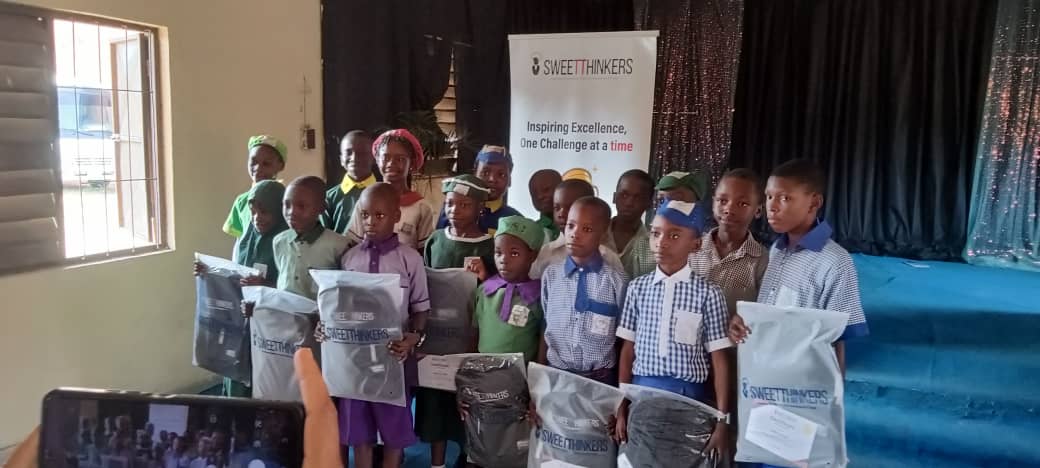
A teacher, Temilola, has expressed satisfaction with his pupil’s performance in the Swiftthinkers Essay Competition, urging pupils to remain determined and persistent in their academic pursuits.
Temilola, who commended the pupil’s performance, emphasized the importance of perseverance, noting that academic success goes beyond passing or failing.
“I am excited he did well. I always tell my pupils that life is not about passing or failing. It is about not giving up,” Temilola said.
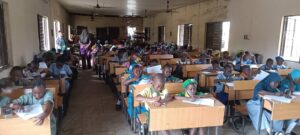 The Swiftthinkers Essay Competition is an initiative designed to promote academic excellence among pupils by assessing their knowledge and skills in key subject areas, including language, numerical analysis and reasoning.
The competition provides a platform for pupils to demonstrate their intellectual abilities while encouraging a culture of learning, critical thinking and determination.
The initiative was supported by UAC Foods, BOLAD Catering Services and Hothobs.


KACRAN: Insecurity in North can end within 45 days if leaders are committed

KACRAN urges northern governors to adopt Buni’s economic blueprint, seeks FG’s soft loans

Swiftthinkers Essay Competition: 40 Lagos pupils qualify for next stage
-
 Business4 months ago
NGX surges as investors gain ₦3.19tn
-

 News4 months ago
APC’s budget for security jumps from #969b to ₦5.41tr
-
 News7 months ago
SERAP to Akpabio: Disclose officials involved in misappropriation of ₦200t from NNPC
-
 News7 months ago
Disquiet over whereabouts of ₦2.9 billion in key federal agencies
-

 Business9 years ago
The 9 worst mistakes you can ever make at work
-
News9 years ago
These ’90s fashion trends are making a comeback in 2017
-

 Business4 months ago
FCMB profit hits ₦202bn on first quarter performance
-
Entertainment9 years ago
The final 6 ‘Game of Thrones’ episodes might feel like a full season