
News
Tragedy as Ebola virus, wreaks havoc, kills 65

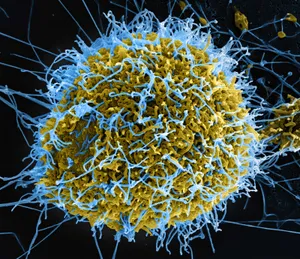
Sixty five lives have been lost to the deadly Ebola virus.
African health authorities said a deadly outbreak of the virus has been confirmed in Eastern Democratic Republic of Congo.
The Africa Centres for Disease Control and Prevention (CDC Africa) said in a statement on social media on Friday said some 246 suspected cases and 65 deaths have been reported and “four deaths have been reported among laboratory-confirmed cases.”
“Ebola Virus Disease outbreak confirmed in Ituri Province,” the pan-African health agency said.
“Africa CDC is closely monitoring the situation and convening an urgent high-level coordination meeting today with the DRC, Uganda, South Sudan and global partners to reinforce cross-border surveillance, preparedness and outbreak response efforts,” it said.
Family members react as they watch a victim of the Ebola virus being buried on May 16, 2019 in Butembo.
First identified in 1976 and thought to have crossed over from bats, Ebola is a deadly viral disease spread through direct contact with bodily fluids, causing severe bleeding and organ failure.
Health workers treat an unconfirmed Ebola patient, inside a MSF (Doctors Without Borders) supported Ebola Treatment Centre (ETC) on November 3, 2018 in Butembo, Democratic Republic of the Congo.
The highly contagious haemorrhagic fever has killed some 15,000 people in Africa over the past 50 years.
The deadliest Ebola outbreak in the DRC, between 2018 and 2020, killed nearly 2,300 people.



By Philippine Duru
philippineobetoduru@gmail.com
08034905774
Amnesty International Nigeria has condemned the alleged use of political thugs to prevent the presidential candidate of the Nigeria Democratic Congress (NDC), Peter Ob, from entering Benue State, describing the incident as a dangerous threat to Nigeria’s democratic process.
In a statement posted on its social media platforms, the organisation said the alleged obstruction of Obi’s entourage on Gboko Road in Makurdi, the state capital, amounted to political repression and raised serious questions for the Benue State Government.
Amnesty stressed that no Nigerian requires permission or prior notification to visit any part of the country, insisting that no state should become a “no-go area” for supporters or candidates of any political party.
According to the organisation, heavily armed youths allegedly barricaded the road in what appeared to be a coordinated action that placed Obi’s entourage at risk.
“Harassment of rival candidates by state-endorsed armed vigilante groups or thugs is unlawful,” Amnesty said.
The organisation warned that growing political intolerance, incitement and other actions capable of undermining democracy must be urgently addressed ahead of the 2027 general elections.
Amnesty said it had, since last year, documented what it described as disturbing levels of political repression, including alleged attempts to prevent hotels from hosting opposition political meetings and attacks on the activities of rival political parties.
It also expressed concern over what it described as inadequate efforts by the Nigerian Government and relevant authorities to prevent political repression and violence.
The rights organisation further alleged that some states were adopting an unannounced policy of using various means to shut out political opposition, while authorities had failed to investigate and prosecute suspected perpetrators of such incidents.
Amnesty called on all political parties and candidates to make opposition to violence and political thuggery an integral part of their election campaigns.
The organisation said urgent steps were needed to ensure a level playing field and protect citizens’ rights to participate freely in Nigeria’s democratic process.
By Philippine Duru
philippineobetoduru@gmail.com
08034905774
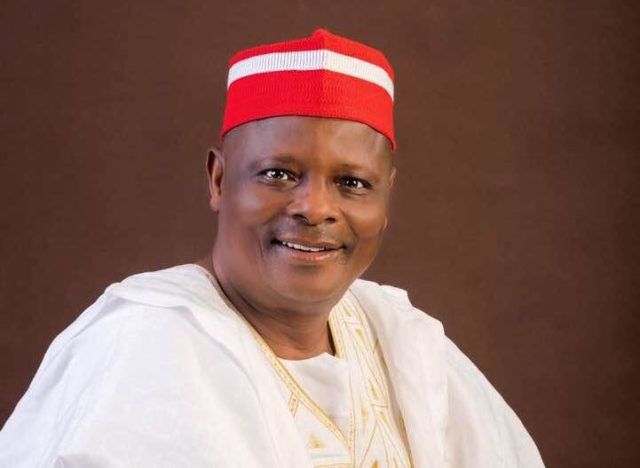
Rabiu Kwankwaso, the vice-presidential candidate of the Nigeria Democratic Congress (NDC), has called for an immediate investigation into the killing of renowned social media political commentator, Ibrahim Khalil Dan Shagamu, in Kano State.
Kwankwaso made the call in a post on X, expressing deep concern over the death of Dan Shagamu, whose body was reportedly found in a pool of blood at his home in Kano.
He described the incident as a “horrific attack” and urged the Kano State Government to immediately constitute an investigative panel to thoroughly probe the circumstances surrounding the killing and ensure that those responsible are brought to justice.
The NDC vice-presidential candidate warned that if the authorities failed to take decisive and transparent action, an incoming NDC administration would launch a full investigation upon assumption of office and take necessary steps to hold those responsible accountable.
Kwankwaso also called on the state and Federal Governments to protect opposition voices from threats, attacks and intimidation.
He said the Nigerian Constitution guarantees freedom of expression to all citizens, stressing that the constitutional right must be protected.
“The Nigerian authorities must ensure a full investigation and that those responsible are held accountable,” he said.
Kwankwaso extended his condolences to Dan Shagamu’s family, friends and followers, praying that Almighty Allah grant the deceased Jannatul Firdaus.
The Unending Plight and Ongoing Killings in Kuyello
Your Excellency,
Mallam Uba Sani,
Executive Governor of Kaduna State,
Sir,
We write to you with heavy hearts, deep anguish, and a profound sense of urgency regarding the persistent and terrifying security breakdown in Kuyello, Birnin Gwari Local Government Area.
For years, the people of Kuyello have lived under the shadow of relentless violence, abductions, and mass killings.
While we acknowledge the government’s efforts and official declarations regarding security measures and negotiated peace initiatives, the reality on the ground paints a vastly different and devastating picture.
To us, the victims on the frontline, any negotiation with these non-state armed actors has proven entirely ineffective. The reality of our daily life remains unchanged:
Daily Attacks:
Villagers are hunted, attacked, and killed in their homes and on their farms day and night.
Economic Paralysis: Our farmers can no longer access their lands without facing death or paying heavy ransoms, destroying the local agricultural economy and pushing families into famine.
Mass Displacement:
Entire families have been forced to flee, turning communities into ghost towns as basic human safety remains unassured.
Peace cannot exist on paper while blood continues to flow in our streets. The ongoing violence demonstrates that these armed bands do not respect agreements or government mandates.
Kuyello requires decisive, sustained, and direct security intervention—not unfulfilled truces that leave innocent citizens exposed to constant danger.
*Our Prayers and Demands:*
1. Permanent Security Presence:
Immediate deployment of forward operating military bases and well-equipped security posts in and around Kuyello.
2. Offensive Military Operations: An immediate shift from passive peace talks to active tactical operations aimed at neutralizing bandit strongholds in the surrounding forests.
3. Protection for Farmers and Highways:
4. Targeted security patrols to secure agricultural lands and vital transport routes to restore local livelihoods and safety.
The primary duty of any government is the protection of lives and property. We appeal to your leadership, Your Excellency, to treat the situation in Kuyello as a critical state emergency before our community is wiped out entirely.
Respectfully yours,
SURAJO ISAH KUYELLO Concerned Residents and Stakeholders of Kuyello Community
Birnin Gwari Local Government Area, Kaduna State

Amnesty Raises Alarm Over Alleged Blocking of Peter Obi’s Entry Into Benue

Kwankwaso Demands Probe into Killing of Political Commentator Dan Shagamu

An Open Letter to Executive Governor Mallam Uba Sani
-

 News9 years ago
These ’90s fashion trends are making a comeback in 2017
-
Business9 years ago
The 9 worst mistakes you can ever make at work
-
Entertainment9 years ago
The final 6 ‘Game of Thrones’ episodes might feel like a full season
-
 News6 months ago
SERAP to Akpabio: Disclose officials involved in misappropriation of ₦200t from NNPC
-
 News5 months ago
Disquiet over whereabouts of ₦2.9 billion in key federal agencies
-
News9 years ago
According to Dior Couture, this taboo fashion accessory is back
-
Sports9 years ago
Phillies’ Aaron Altherr makes mind-boggling barehanded play
-
Entertainment9 years ago
The old and New Edition cast comes together to perform