
News
2027: Why trouble is looming for Makinde

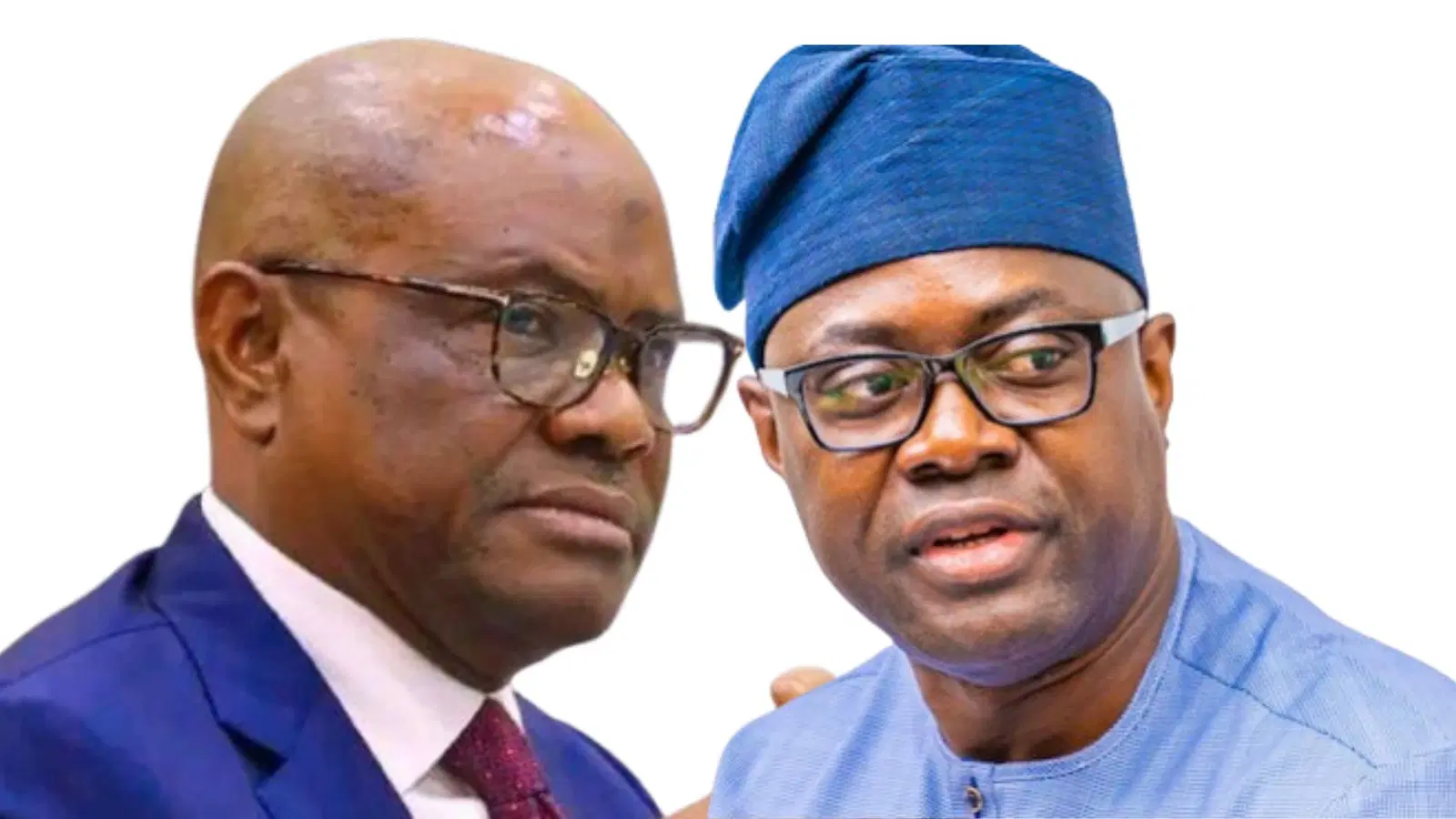
Trouble is looming for Oyo State Governor Seyi Makinde as the 2027 general elections draw nearer.
This is as he might have been left in the cold with yesterday’s decision of the Taminu Turaki group to embrace the Wike-backed National Caretaker Working Committee (NCWC).
Turaki, told reporters that it was time to sheath the sword and reconcile with the Abdulrahman Mohammed-led NCWC for peace to reign in the party.
This position contradicts what Makinde said twice in the last five days.
In Bauchi on Sunday during his visit to Governor Bala Mohammed, Makinde he would not leave the PDP but vowed never to work with the Wike-backed Mohammed NCWC.
He added that working with the NCWC would amount to support the re-election of President Bola Ahmed Tinubu, an ideal he does not believe in.
On Monday in Ibadan, during a meeting of his supporter in the state, Makinde reaffirmed his position not to go into reconciliation with the NCWC.
He told his supporters that while he will remain in PDP, those of them gunning for elective offices will get his support to contest on another platform.
He promised to make the platform known to them on April 18.
However, unity is finally about to return to the troubled PDP.
Turaki announced its readiness to bend backwards for the sake of peace in the party, which once dubbed itself Africa’s biggest political party.
Also in Abuja, Federal Capital Territory(FCT) Minister Nyesom Wike declared that the PDP NCWC, which he backs, remains open to reconciliation with all aggrieved groups in the party and their members.
Briefing reporters after a meeting of his group in Abuja, Turaki said leaders of the party had broken the ice by exploring various pathways to ending their disagreements.
Turaki added that it was resolved at the meeting to direct its supporters to immediately de-escalate high-tempered communications and actions, so as not to jeopardise the troubleshooting efforts.
He said: ‘’I can unequivocally confirm that, as of today, leaders on both sides have broken the ice and are exploring various pathways towards a lasting resolution.
“We urge our supporters across the board to immediately de-escalate high-tempered communications and actions, so as not to jeopardise the ongoing peace efforts.
“We have hope and confidence that we can still work together. We have confidence that in life, there are times to fight and there are also times to make peace. But even when you choose to fight and go to war and win the war, you also need to win the peace.
“So, if you have a pathway to winning the peace without necessarily going to war, why not take peace and forgo the war?
“Let me also add that we understand that in human life, every time something good is coming your way, there are people from unimaginable and unbelievable quarters—sometimes those you think are friends or family—who will be the first to rise and truncate those good things coming your way.
“I am not saying there are no good elements on both sides whose sole intention is to protect peace in this country. I am saying some people are fighting so that this party will go down.
‘’ From last night, these two elements have been identified and fleshed out in the discussions between the two sides.
“We have chosen the path of peace in the overall interest of party members, particularly our teeming supporters who want PDP to remain an effective platform for the forthcoming elections.
“As soon as we reach agreeable terms…. we will willingly withdraw all cases in court to give peace a chance.
‘’On the issue of compromise, we are willing to bend as far as our necks and backs allow. We are ready to make all sorts of sacrifices in the overall interest of the party. PDP will not die.
“Everything possible will be done to make this reconciliation work because nothing is impossible. Issues such as attendance at the convention are among those to be discussed.
‘’Once these matters are deliberated upon, the parties and delegates will decide whether the convention needs to continue. These issues are on the table and will be considered carefully.’’
He assured those interested in seeking elective positions that they would be fielded in compliance with Article 6(2) of the Constitution of the PDP (as amended in 2017).
Turaki also appreciated Nigerians who have continued to show interest in our party and have registered via our e-registration platform, www.iampdp.org.
He said the NWC passed a vote of confidence in Governors Bala Mohammed(Bauchi) and Seyi Makinde(Oyo) for their resilience and steadfast leadership in the face of recent challenges.
Wike: No faction in PDP, no going back on convention
Also yesterday, FCT Minister Wike insisted there was no division in the PDP.
“We have only one PDP, no faction,” he said, but admitted there are disagreements within the party whose convention will hold in Abuja.
The minister spoke with reporters after inspecting ongoing and completed projects in the FCT.
Wike said: “I don’t know which camp you are talking about. There is only one PDP. Some individuals may not be happy, yes, but there is no faction.”
He added that reconciliation efforts would continue alongside preparations for the party’s convention.
“That there is a convention does not mean there will be no reconciliation. Everything has its own time,” he noted.
In Ilorin, the PDP in Kwara State said it would attend the national convention in spite of the internal schism at the national level.
‘’Kwara PDP is non-aligned. We don’t belong to any of the tendencies in the PDP,” the state Chairman, Isa Adamu, said after an emergency meeting.
Adamu added: ‘’We will not leave PDP unless it reaches a point that it is no longer a viable vehicle for contest in Nigeria.’’
A former Deputy Speaker of the House of Representatives and member of the Board of Trustees (BoT) of the People’s Democratic Party (PDP), Chibudom Nwuche, also called for an end to internal disputes and litigations in the party.
Nwuche, in a statement yesterday, called for reconciliation and unity within the party.
He urged all aggrieved party leaders and members to set aside their differences and embrace peace for the overall good of the party ahead of the 2027 general elections.
The statement followed the successful holding of the 107th National Executive Committee (NEC) meeting of the party on Monday in Abuja.
Nwuche, according to the statement, urged stakeholders to return to PDP and take advantage of the ongoing reconciliation and consolidation ahead of the national convention on Sunday.



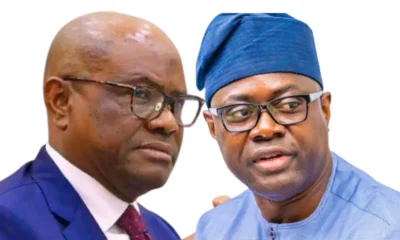



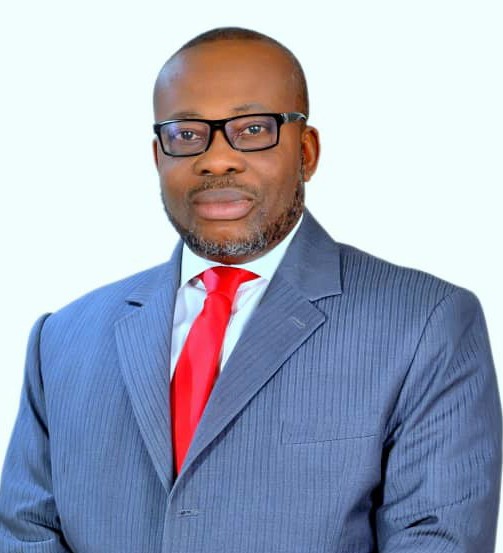
A Senior Advocate of Nigeria and policy analyst, Dr. M. O. Ubani, has questioned the legal basis of a recent Federal High Court judgment directing the Independent National Electoral Commission (INEC) to deregister five political parties, arguing that the decision may have extended beyond the position previously established by the Supreme Court.
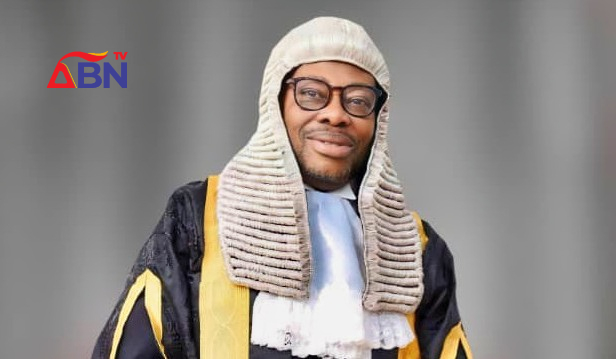
The opinion piece by legal practitioner and policy analyst, Dr. Monday.O. Ubani (SAN), has reignited discussions over the proposal for a single six-year tenure for Nigeria’s President and state governors, questioning whether the constitutional amendment would address the country’s governance challenges or merely divert attention from more pressing issues.
In a statement titled “Six-Year Single Tenure for the President and Governors: A Solution or a Distraction?”, Ubani examined the renewed advocacy for a non-renewable six-year term for chief executives at both federal and state levels.
The proposal, recently championed by Senator Opeyemi Bamidele and other supporters, is premised on the argument that elected leaders who are not preoccupied with re-election campaigns would devote greater attention to governance and long-term policy implementation.
According to Ubani, the argument possesses a degree of merit, noting that under Nigeria’s current constitutional framework, presidents and governors serve four-year terms with the possibility of one re-election. He observed that political calculations surrounding second-term bids often begin long before the expiration of a first tenure, potentially influencing policy decisions and governance priorities.
“A single tenure could potentially eliminate this concern and encourage long-term policy implementation,” he noted.
However, the Senior Advocate of Nigeria cautioned that the debate should extend beyond considerations of administrative efficiency. He argued that democracy is fundamentally anchored on accountability and good governance, with the prospect of re-election serving as a critical mechanism through which citizens assess the performance of elected officials.
Ubani warned that removing the incentive of electoral appraisal could weaken democratic responsiveness and accountability.
Drawing from comparative constitutional experiences across different regions of the world, he maintained that there is no direct relationship between the length of tenure and the quality of governance. He pointed out that several countries in the Americas and Northern Europe, despite operating relatively short executive tenures, have produced transformative leaders. Conversely, some African nations that allowed extended periods in office have grappled with poor governance, institutional decline and democratic setbacks.
He further argued that Nigeria’s own political experience demonstrates that leadership quality and institutional effectiveness have a greater impact on governance outcomes than tenure duration.
According to him, strong institutions, adherence to constitutional limits, transparency and respect for the rule of law remain the key determinants of successful governance.
From a constitutional standpoint, Ubani stated that the national conversation should not be limited to choosing between a six-year or an eight-year arrangement. Rather, he said, the focus should be on identifying a framework that best promotes accountability, political stability, effective governance and democratic development.
He acknowledged that introducing a six-year single tenure through constitutional amendment is legally feasible, provided the procedures stipulated in the Nigerian Constitution are strictly followed.
Nonetheless, Ubani questioned whether such a reform would address the underlying challenges confronting governance in the country.
“It is possible that tenure reform may alter political incentives, but it cannot substitute for competent leadership, institutional integrity and citizen participation,” he argued.
The legal practitioner stressed that effective leadership is not necessarily dependent on the length of time spent in office, noting that capable leaders can deliver meaningful results within limited tenures, while ineffective leaders may inflict greater damage even with extended periods in power.
He concluded that Nigeria’s central challenge lies not in determining how long presidents and governors should remain in office, but in ensuring that those entrusted with public office govern responsibly, effectively and in accordance with constitutional principles.
“The true measure of democratic success,” Ubani said, “is the ability to ensure that whoever occupies public office delivers the dividends of democracy while remaining accountable to the people and the Constitution.”
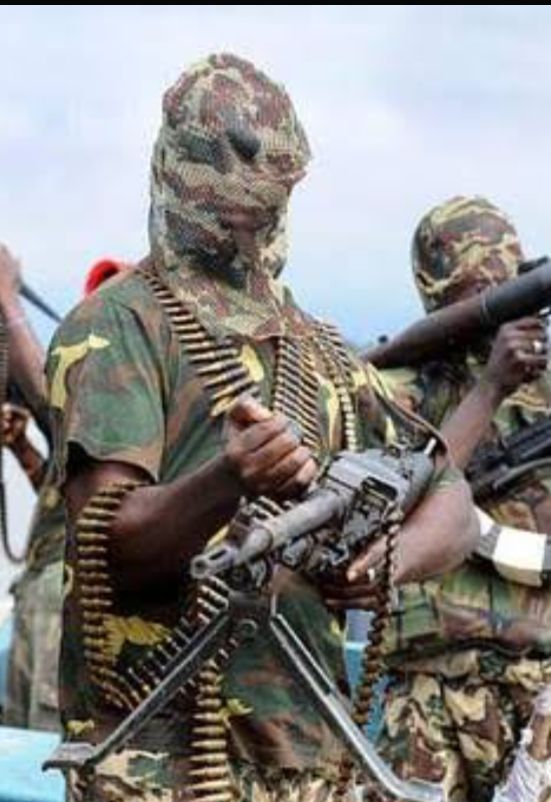
Ondo State Police Command has launched an intensive rescue operation following the suspected abduction of a community leader in Ode Oriya Village, Owo Local Government Area of the state.


SAN reacts to deregistration of ADC, others

Six-yr-single term: SAN speaks on right framework

Monarch’s wife shot as hoodlums abduct husband
-

 News9 years ago
These ’90s fashion trends are making a comeback in 2017
-
Entertainment9 years ago
The final 6 ‘Game of Thrones’ episodes might feel like a full season
-
Business9 years ago
The 9 worst mistakes you can ever make at work
-
News9 years ago
According to Dior Couture, this taboo fashion accessory is back
-
Sports9 years ago
Phillies’ Aaron Altherr makes mind-boggling barehanded play
-
Entertainment9 years ago
The old and New Edition cast comes together to perform
-
 News3 months ago
SERAP to Akpabio: Disclose officials involved in misappropriation of ₦200t from NNPC
-
Entertainment9 years ago
Mod turns ‘Counter-Strike’ into a ‘Tekken’ clone with fighting chickens