
Business
Top 10 Nigerian states for ease of business revealed

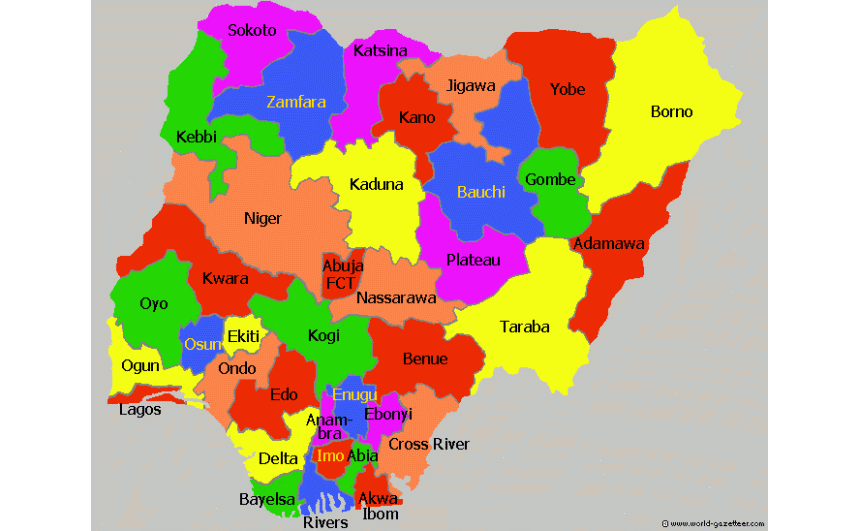
The Federal Government of Nigeria has unveiled the top 10 performing states in Nigeria’s ease of doing business ranking.
Lagos, Kaduna, Oyo, the Federal Capital Territory (FCT), Ogun, Enugu, Plateau, Ekiti, Kano and Nasarawa top the list.
The ranking is contained in the 2025 Subnational Ease of Doing Business Report, which shows that states implementing reforms have recorded up to 40 per cent reduction in business registration timelines, over 30 per cent improvement in land administration efficiency, and notable progress in digital service delivery and dispute resolution.
Speaking on Friday at a roundtable with members of the diplomatic community and strategic partners in Abuja, the Director-General of the Presidential Enabling Business Environment Council (PEBEC), Princess Zahrah Mustapha Audu, said the results demonstrate that sustained reforms are producing measurable outcomes across the states.
“These achievements are not abstract metrics, they are signals to investors that Nigeria is becoming more predictable, more transparent, and more competitive,” she said.
The event, held in collaboration with the British High Commission, UKAID and other partners, focused on connecting investment capital to the country’s top-performing states.
Audu noted that while progress has been made, the key challenge is ensuring that reforms translate into practical results for investors and businesses.
“As important as progress is, progress alone is not enough. The real question before us is this: can reforms translate into results? Can they deliver faster permitting processes, clearer regulatory pathways, and efficient capital deployment? Because ultimately, capital flows where certainty grows,” she said.
She explained that PEBEC is concentrating on three major areas, including improving the quality and coordination of regulations to ensure policies are practical and transparent, enhancing service delivery through platforms such as ReportGov which allows real-time feedback on business challenges, and deepening reforms at the state level where most business activities take place.
Also speaking, the Minister of Budget and Economic Planning, Senator Abubakar Bagudu, said Nigeria’s ambition to build a $1 trillion economy will depend largely on the role of states and the private sector.
“We feel confident that with that mindset, led by the private sector, we can create a $1 trillion economy, supported by the response that our economy has experienced to doing what is right,” he said.
Bagudu explained that Nigeria’s federal structure gives states and local governments significant authority, including the ability to enter contracts and operate their own court systems, making their actions critical to attracting investment and driving economic growth.
According to him, competition among states, supported by reforms and development programmes backed by institutions such as the World Bank, has encouraged improved economic performance across the country.
He added that Nigeria’s entrepreneurial population remains a strong advantage, noting that citizens across all states possess similar drive and capacity for innovation and hard work.
In a goodwill message, the Lagos State Commissioner in charge of the Ministry of Commerce, Cooperatives, Trade, and Investment Mrs Folashade Bada, representing Lagos State Governor Babajide Sanwo-Olu, said Lagos’ position among the top performers is the result of deliberate and sustained reforms.
“Our position is not accidental. It is the outcome of sustained institutional reforms, policy discipline, and a clear recognition that capital flows where there is clarity, confidence, and continuity,” she said.
She disclosed that Lagos contributes more than 30 per cent of Nigeria’s Gross Domestic Product and accounts for over 60 per cent of the country’s commercial and industrial activities.
Bada said the state’s long-term development strategy, anchored on the Lagos State Development Plan 2052, is designed to ensure continuity in economic transformation across different administrations.
She added that the Lagos State Industrial Policy 2025–2030, which will soon be launched, is aimed at promoting a production-driven and export-oriented economy.
According to her, reforms in land administration, construction permits and tax systems have improved transparency and reduced delays for businesses. She noted that digital platforms introduced by government agencies have made processes more efficient, with low-risk construction permits now processed within 15 working days.
She said Lagos has also invested heavily in infrastructure, including fibre-optic networks, transport systems and logistics, to support economic activities and attract investors.
Bada further explained that the state has developed a strong public-private partnership framework that ensures projects are structured to international standards, with clear risk-sharing arrangements and predictable processes for investors.
She stressed that Nigeria’s overall investment potential goes beyond any single state, noting that collaboration among reform-driven states is helping to create a more consistent and attractive business environment nationwide.
According to her, efforts by PEBEC and the Nigerian Governors Forum to harmonise regulations across states are expected to reduce fragmentation and improve investor confidence in the country.
By Philippine Duru
philippineobetoduru@gmail.com
08034905773
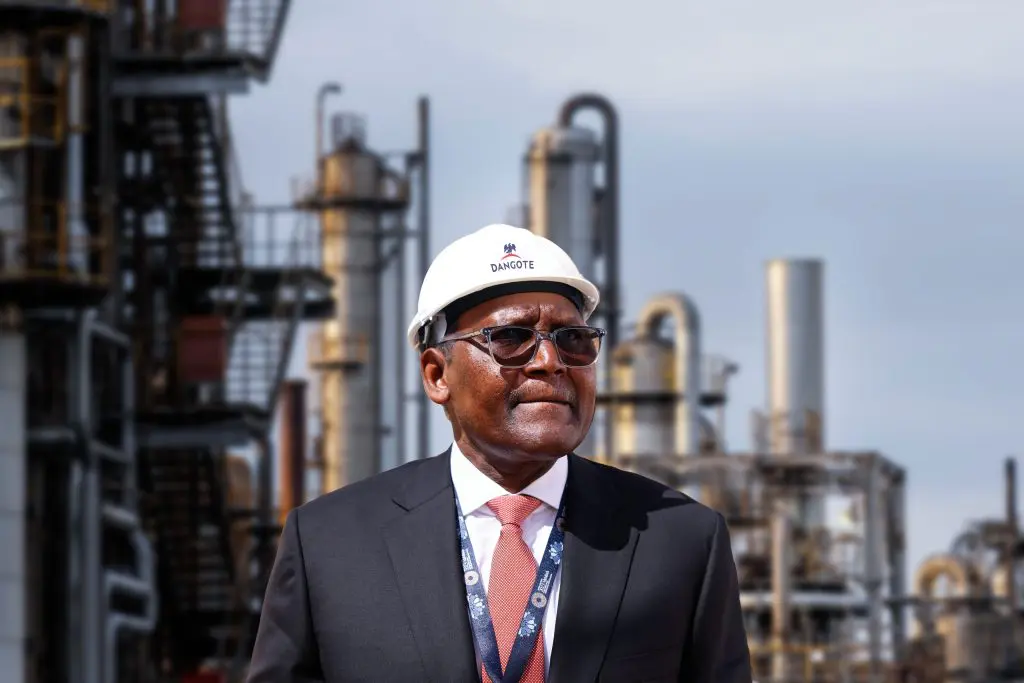
Nigeria’s drive toward energy self-sufficiency has received a major boost as the Dangote Petroleum Refinery reportedly ramps up production to about 700,000 barrels per day (bpd), significantly increasing the supply of refined petroleum products to the domestic market and strengthening the country’s position in the global refining industry.
The development marks a significant milestone for the $20 billion refinery project, which has steadily increased its operational capacity since commencing production. Industry stakeholders say the higher output level is helping to ease fuel supply concerns, reduce dependence on imported petroleum products, and improve energy security in Africa’s largest economy.
Located in the Lekki Free Trade Zone in Lagos, the refinery was designed with a nameplate capacity of 650,000 barrels per day, making it the largest single-train refinery in the world. Recent reports indicating production levels approaching 700,000 barrels daily have fueled optimism about the facility’s ability to meet growing domestic demand while serving export markets across Africa and beyond.
The refinery’s rising output comes at a critical time when Nigeria is seeking to reduce the billions of dollars spent annually on fuel imports and conserve foreign exchange reserves. For decades, despite being one of Africa’s largest crude oil producers, Nigeria relied heavily on imported refined products due to inadequate domestic refining capacity.
Analysts say the increased production is already transforming the country’s downstream petroleum sector by ensuring a more stable supply of Premium Motor Spirit (PMS), commonly known as petrol, as well as diesel, aviation fuel, and other refined products.
“The refinery is gradually changing the dynamics of Nigeria’s fuel market,” said an energy analyst based in Lagos. “Higher production levels mean greater local availability of petroleum products, lower import dependence, and improved supply chain efficiency.”
The impact has been particularly evident in the petrol market, where increased local production has helped reduce pressure on fuel imports and improved product availability across the country. Industry operators note that the refinery’s growing output is also contributing to increased competition within the downstream sector.
Beyond the domestic market, the refinery has emerged as a significant exporter of refined products. Recent shipments of aviation fuel, diesel, and other petroleum products to Europe, Asia, and other international destinations have strengthened Nigeria’s position as a major refining hub.
The refinery’s export activities are generating valuable foreign exchange earnings and helping to improve the country’s trade balance. Energy experts believe the facility could eventually transform Nigeria from a net importer of refined petroleum products into a major exporter.
The increase in production has also created fresh opportunities for local crude oil producers. With a large domestic refining facility requiring substantial feedstock, upstream operators now have an additional market for their crude production, potentially reducing exposure to international market volatility.
Economic analysts argue that the refinery’s operations could have far-reaching implications for Nigeria’s economy. Increased local refining capacity is expected to support industrial growth, create jobs, stimulate related industries, and reduce logistics costs associated with importing refined products.
The development is also viewed as a positive signal for investors, demonstrating Nigeria’s capacity to execute large-scale industrial projects capable of attracting global attention and investment.
However, experts note that sustaining high production levels will depend on consistent crude oil supply, efficient logistics infrastructure, regulatory stability, and continued collaboration between industry stakeholders and government agencies.
The refinery’s growing role in the domestic market has coincided with efforts by authorities to deepen reforms in the oil and gas sector, improve transparency, and encourage greater private-sector participation across the petroleum value chain.
Market observers believe that as production continues to increase, consumers could benefit from improved fuel availability and potentially more stable pricing, although global crude oil prices and foreign exchange movements will continue to influence market dynamics.
For Nigeria’s broader economy, the refinery represents a strategic asset capable of strengthening energy security, reducing import dependence, supporting foreign exchange earnings, and accelerating industrial development.
With production reportedly reaching 700,000 barrels per day, the Dangote Refinery is increasingly positioning itself as a cornerstone of Nigeria’s energy transformation agenda and a major player in the global refining landscape.


2027: NDC in disarray
NDC’s primaries had flaws- Dickson admits

Furious Peter Obi sues brother
-

 News9 years ago
These ’90s fashion trends are making a comeback in 2017
-
Entertainment9 years ago
The final 6 ‘Game of Thrones’ episodes might feel like a full season
-
Business9 years ago
The 9 worst mistakes you can ever make at work
-
News9 years ago
According to Dior Couture, this taboo fashion accessory is back
-
Sports9 years ago
Phillies’ Aaron Altherr makes mind-boggling barehanded play
-
Entertainment9 years ago
The old and New Edition cast comes together to perform
-
 News3 months ago
SERAP to Akpabio: Disclose officials involved in misappropriation of ₦200t from NNPC
-
Entertainment9 years ago
Mod turns ‘Counter-Strike’ into a ‘Tekken’ clone with fighting chickens