
News
Environmental experts urge African journalists to investigate nuclear energy projects

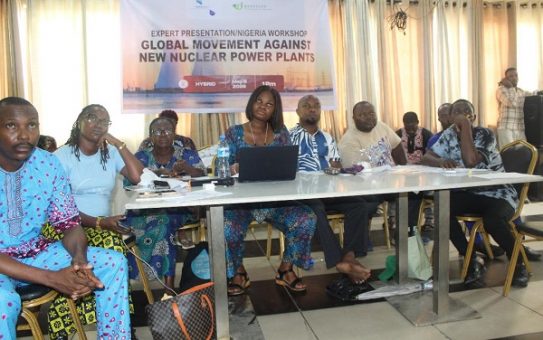
Environmental and energy specialists are calling on journalists across Africa to ramp up investigative reporting on nuclear energy initiatives, highlighting concerns over costly and controversial deals pursued by governments with minimal public oversight.
This urgent appeal emerged during a workshop on proposed nuclear power plants, organized by the Renevlyn Development Initiative and Tipping Point North South, which convened environmental activists, economists, lawyers, and civil society representatives from Nigeria, Kenya, Zambia, South Africa, Russia, the UK, and the US.
Participants voiced apprehension regarding what they termed Africa’s escalating “nuclear misadventure,” warning that the continent risks increasing foreign dependency while overlooking its abundant renewable energy resources.
Environmental activist Philip Jakpor emphasized the necessity for journalists to demand transparency from governments, especially in Nigeria, where discussions about nuclear power have spanned nearly two decades. He pointed out that Nigeria entered an agreement with Russia’s state-owned Rosatom in 2007 to develop nuclear facilities projected to produce around 4,800 megawatts by 2035. Jakpor alleged that the communities set to host these projects were not adequately consulted prior to public announcements.
“Nigeria cannot properly secure existing oil infrastructure, yet we are discussing nuclear facilities in a country facing major security challenges,” Jakpor remarked. He noted that journalists and civil society groups have struggled to access crucial information regarding the financing, safety measures, and implementation status of Nigeria’s nuclear plans.
Deborah Burton, author of “Africa’s Nuclear Energy Misadventure,” urged journalists to critically evaluate assertions that nuclear energy offers a clean and affordable solution to the continent’s energy needs. She raised alarms about unresolved issues surrounding radioactive waste, environmental degradation, corruption, and community displacement.
“Africa has 60 percent of the world’s best solar resources, yet attention is shifting toward one of the most expensive and risky energy systems,” Burton stated, emphasizing the need for media scrutiny on long construction timelines, high costs, radiation risks, and geopolitical competition.
Economist Fadhel Kaboub highlighted the importance of contextualizing nuclear agreements within the broader framework of economic sovereignty and international influence. He warned that nations like Russia, China, France, and the US are vying for control over Africa’s future energy landscape.
“Africa is being positioned as the last frontier for a declining nuclear industry,” Kaboub cautioned, asserting that nuclear projects create long-term dependencies on foreign suppliers for essential services.
Activists from Kenya shared their experiences of local campaigns that successfully resisted a proposed nuclear power project. Lance Mbani and Anthony Kingi criticized Kenyan authorities for inadequate public participation and access to information during the planning stages, arguing that the focus should remain on renewable energy expansion.
Zambian campaigner Chansa Kaluba warned that nuclear ambitions could overshadow Zambia’s significant solar and wind resources. Meanwhile, Russian activist Vladimir Slivyak raised concerns about the geopolitical ramifications of nuclear partnerships, describing Rosatom as both an energy entity and a tool for Russian state influence.
“Nuclear is too slow and too expensive for the urgency of Africa’s electricity crisis,” South African activist Makoma Lekalakala added, challenging the notion that nuclear energy can swiftly address energy shortages.
In closing, environmental lawyer Chima Williams urged journalists to utilize investigative reporting tools, including freedom of information laws, to delve deeper into nuclear agreements and procurement processes. “Journalists must rely on facts and legal protections while asking difficult questions,” Williams stated.
With countries like Nigeria, Ghana, Kenya, Uganda, Rwanda, Egypt, Ethiopia, Tanzania, Namibia, and Morocco expressing interest in nuclear development, and South Africa being the only nation currently operating a commercial nuclear power plant, the call for enhanced journalistic vigilance on these projects has never been more pressing.

By Philippine Duru
philippineobetoduru@gmail.com
08034905774
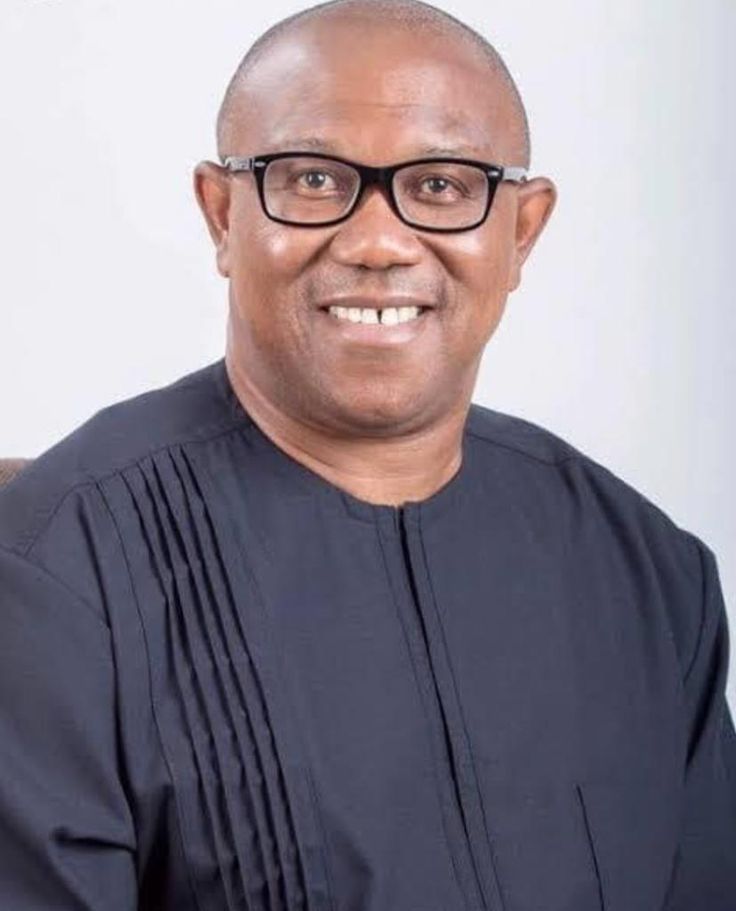
Former Anambra State Governor and Labour Party presidential candidate, Peter Obi, has alleged that suspected hired thugs obstructed his visit to Yelwata community in Benue State, where more than 270 people were reportedly killed in a deadly attack.
Obi made the allegation in a statement following his arrival in Benue on Tuesday, September 8, 2026, saying he had travelled to the state on a humanitarian mission to commiserate with families affected by the killings.
According to him, he arrived in Benue at about 9:00 a.m. but his convoy was prevented from proceeding to the affected community by individuals chanting, “Peter Obi, go back.”
Obi described the incident as distressing, stressing that his visit was not politically motivated but intended to mourn with the bereaved, listen to affected families and offer solidarity following the tragedy.
He said the obstruction was particularly troubling at a time when Nigerians should be united in grief and focused on preventing further loss of lives.
The former governor recalled that he had consistently promoted political civility, citing his attendance the previous day at the opening of the national campaign office of opposition presidential candidate and Oyo State Governor, Seyi Makinde, in Abuja.
He said his presence at the event was meant to demonstrate that political differences should not prevent mutual respect and civility.
Obi also recalled that while serving as governor of Anambra State, he personally welcomed visiting opposition members during election campaigns, provided their activities remained within the law.
He condemned what he described as efforts to deepen political divisions, insisting that Nigerians should be able to live, travel and farm without fear.
“At a time when our nation should be united in grief and resolute in preventing further bloodshed, we must reject any action capable of deepening our divisions,” Obi said.
He maintained that the primary responsibility of government was to protect human life, arguing that political considerations should never take precedence over the safety and security of citizens.
Although he could not reach Yelwata as planned, Obi said his thoughts and prayers remained with the victims, their families and the entire community.
He pledged to continue advocating for the protection of Nigerian lives, concluding with his familiar declaration: “A New Nigeria is POssible.”


NACTAL’s president-elect pledges inclusive leadership, stronger anti-trafficking action

Osita Osememe gets 95.65% votes, emerges NACTAL president

Peter Obi alleges thugs blocked visit to Yelwata massacre victims in Benue
-

 News9 years ago
These ’90s fashion trends are making a comeback in 2017
-
Business9 years ago
The 9 worst mistakes you can ever make at work
-
Entertainment9 years ago
The final 6 ‘Game of Thrones’ episodes might feel like a full season
-
 News6 months ago
SERAP to Akpabio: Disclose officials involved in misappropriation of ₦200t from NNPC
-
 News5 months ago
Disquiet over whereabouts of ₦2.9 billion in key federal agencies
-
News9 years ago
According to Dior Couture, this taboo fashion accessory is back
-
Sports9 years ago
Phillies’ Aaron Altherr makes mind-boggling barehanded play
-
Entertainment9 years ago
The old and New Edition cast comes together to perform