
Business
CBN tightens oversight on banks

By Philippine Duru
08034905774
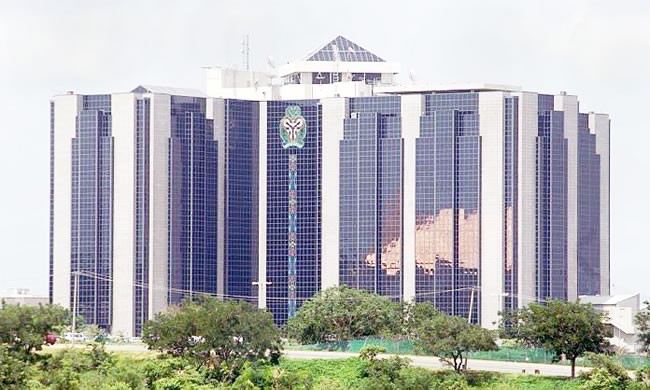
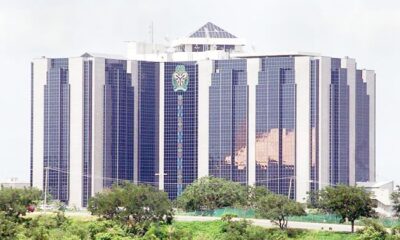
Nigeria’s apex bank has signalled a tougher regulatory stance on lenders following the completion of a sweeping recapitalisation exercise, as it moves to strengthen corporate governance, rebuild investor confidence, and safeguard financial system stability.
Speaking at the Chartered Institute of Directors Nigeria’s induction ceremony in Lagos, Governor of the Central Bank of Nigeria, Olayemi Cardoso—represented by the Director of Banking Supervision, Olubukola Akinwunmi—said the regulatory focus has shifted from capital raising to enforcing discipline across bank boards and executive management.
Cardoso described the recapitalisation programme as a “strategic imperative,” aimed at strengthening the resilience of financial institutions and positioning them to support sustainable economic growth. He emphasised, however, that stronger balance sheets must now be matched with stricter governance standards.
“The role of directors becomes even more critical in this new phase,” he said, noting that stewardship must prioritise consolidation, confidence, and stability.
The move reflects a broader pivot by the apex bank toward tighter oversight following a period marked by governance lapses and regulatory interventions. In January 2024, the Central Bank dissolved the boards and management of three banks over serious breaches, underscoring its readiness to act decisively where financial stability is at risk.
Since then, regulators have introduced a series of measures targeting accountability and transparency in bank leadership. These include a directive requiring systemically important banks to obtain regulatory approval for incoming chief executives at least six months before transitions, as well as mandatory public announcements of successors three months in advance—steps aimed at preventing leadership gaps.
The apex bank has also tightened restrictions on related-party lending to curb insider abuses, while reinforcing expectations around board independence, transparency, and disclosure of financial and governance information.
“These measures are not punitive,” Cardoso said. “They are enabling, providing directors with the framework to exercise stewardship with discipline, foresight and confidence.”
A key feature of the post-recapitalisation framework is the introduction of risk-based capital requirements, which align banks’ capital levels more closely with their risk exposures. This marks a shift from earlier regulatory forbearance toward a more rules-based supervisory approach.
Under the new regime, bank directors are expected to take greater responsibility for aligning capital planning with risk exposure, strengthening oversight of credit, market, and operational risks, and ensuring compliance without relying on regulatory leniency.
The Central Bank said the reforms are designed to embed risk awareness into strategic decision-making, ensuring that recapitalisation translates into genuine financial stability rather than simply expanding balance sheets.
Beyond capital requirements, regulators are placing increased emphasis on governance structures, including annual board evaluations, structured succession planning, and stricter “fit and proper” criteria to ensure only individuals with the required integrity and competence oversee financial institutions.
The renewed focus comes as Nigeria’s banking sector faces a more complex environment shaped by economic reforms, technological disruption, and evolving customer expectations. Regulators say this demands more proactive and accountable boards capable of balancing profitability with long-term sustainability.
Cardoso urged directors to move beyond passive oversight and become “active stewards,” guiding institutions through economic cycles while maintaining ethical standards and protecting stakeholder interests.
“As directors, your responsibilities extend beyond boardrooms,” he said. “The choices you make will shape the future of Nigeria’s economy.”
The Central Bank’s post-recapitalisation push is expected to extend beyond the banking sector, raising governance standards across corporate Nigeria as stricter rules on disclosure, accountability, and risk management take hold.





Philippine Duru
philippineobetoduru@gmail.com
08034905774
Akwa Ibom State Governor, Umo Eno, has recounted his early experience in entrepreneurship, revealing that he once made not less than ₦10 million in a month from selling akara and bread.
Eno, who spoke while reflecting on his journey before entering public service, said the business experience played an important role in shaping his understanding of enterprise, hard work and wealth creation.
According to the governor, he started from a modest venture involving the sale of akara and bread before gradually expanding his business activities.
“I started selling akara and bread. I made not less than ₦10m in a month,” Eno said.
The governor’s account highlights the entrepreneurial path he pursued before rising through the ranks in business and eventually becoming governor of Akwa Ibom State.
Eno has frequently emphasised the importance of entrepreneurship and economic empowerment, particularly as a means of creating opportunities for young people and reducing dependence on government employment.
His recollection of the akara and bread business also underscored his view that small businesses, when properly managed and supported, can grow into significant sources of income and employment.
The governor’s comments come amid growing conversations around entrepreneurship, youth empowerment and the need to create sustainable livelihoods in Nigeria, where many young people are turning to small and medium-scale enterprises to earn a living.
Eno has continued to advocate policies and initiatives aimed at expanding economic opportunities and encouraging residents to become self-reliant through productive ventures.
His story of moving from selling akara and bread to occupying the highest political office in Akwa Ibom has also been presented as an example of how entrepreneurship, persistence and business experience can shape an individual’s journey to leadership.
The Nigerian Exchange Limited (NGX) rebounded last week, with the All-Share Index (ASI) gaining about 0.81 per cent to close at 241,298.47 points, as renewed investor interest in oil and gas and banking stocks lifted market sentiment.
The week’s gain translated into an estimated ₦1.29 trillion increase in market capitalisation, pushing the value of listed equities to about ₦155.83 trillion.
With the latest appreciation, the NGX’s year-to-date return remained strong at approximately 55 per cent, underscoring the market’s substantial gains despite intermittent periods of profit-taking and volatility.
The recovery was largely driven by buying interest in oil and gas and banking stocks, with Seplat Energy among the notable gainers during the week.
Market sentiment also received a boost from developments in Nigeria’s international financial-market standing. FTSE Russell confirmed the country’s reclassification to Frontier Market status, effective September 21, 2026, a move expected to influence international investor positioning toward Nigerian equities.
Further support came from Moody’s decision to revise Nigeria’s outlook to positive, reinforcing expectations that ongoing economic and fiscal reforms could improve the country’s credit profile.
Despite the positive performance, trading activity was relatively subdued, partly reflecting the shortened trading week. Market volume declined as investors adopted a more cautious approach amid prevailing economic uncertainties and profit-taking pressures.
Analysts said the latest rebound highlights continued investor appetite for fundamentally strong sectors, although the sustainability of the market’s upward trajectory will depend on macroeconomic conditions, corporate earnings, foreign investor participation and policy developments.
As investors enter a new trading week, attention is expected to remain on the performance of banking and energy stocks, while the implications of Nigeria’s forthcoming Frontier Market reclassification could further shape sentiment and capital flows into the equities market.

By Philippine Duru
philippineobetoduru@gmail.com
08034905774
Nigerian motorists and other petrol consumers are facing renewed uncertainty over the direction of pump prices as crude oil costs, logistics expenses and growing competition between locally refined and imported petrol continue to shape the downstream petroleum market.
The latest concern follows another increase in the ex-depot price of Premium Motor Spirit (PMS) by the Dangote Petroleum Refinery, which has raised its petrol gantry price to ₦1,265 per litre.
The latest adjustment is the refinery’s third price increase in about eight to nine days, coming after earlier prices of between ₦1,165 and ₦1,200 per litre.
The repeated adjustments have triggered fresh increases in pump prices across different parts of the country. Petrol is reportedly selling at prices approaching ₦1,400 per litre in some locations, while prices around ₦1,310 per litre have been reported in Lagos and Ogun states.
NNPC retail stations have also adjusted their prices, with petrol reportedly selling for about ₦1,299 per litre in Abuja.
The latest developments have intensified concerns among motorists, transport operators, businesses and households over whether petrol prices could rise further in the coming days.
Dangote Refinery has attributed the recent increases to factors including the cost of crude oil purchased earlier and logistics expenses involved in moving petroleum products to different markets.
However, the refinery has also raised concerns over the growing volume of imported petrol entering the Nigerian market. Available industry data indicate that imported products accounted for about 43 per cent of petrol supply in recent data.
The development has created a fresh competitive challenge for domestic refining, particularly as local refiners seek to establish themselves as major suppliers to the Nigerian market.
Dangote Refinery is reportedly considering restricting sales to marketers that also import petrol, a move that could further reshape competition within the downstream sector.
The possibility has generated debate among industry stakeholders, with the Centre for the Promotion of Private Enterprise (CPPE) calling for a review of policies affecting domestic refining and petroleum imports.
Stakeholders argue that while competition remains important for the market, government policies must also encourage investments in local refining and ensure that consumers are not exposed to excessive price volatility.
For motorists, however, the immediate concern remains the uncertainty surrounding pump prices.
With crude oil prices, transportation and logistics costs, refinery pricing decisions and imported petrol all influencing the market, consumers may have to brace for further adjustments as marketers respond to changing supply and cost conditions.
The coming days are therefore expected to provide a clearer indication of whether the latest price increases represent a temporary market adjustment or the beginning of another sustained rise in petrol prices.


An Open Letter to Executive Governor Mallam Uba Sani

NACTAL’s president-elect pledges inclusive leadership, stronger anti-trafficking action

Osita Osememe gets 95.65% votes, emerges NACTAL president
-

 News9 years ago
These ’90s fashion trends are making a comeback in 2017
-
Business9 years ago
The 9 worst mistakes you can ever make at work
-
Entertainment9 years ago
The final 6 ‘Game of Thrones’ episodes might feel like a full season
-

 News6 months ago
SERAP to Akpabio: Disclose officials involved in misappropriation of ₦200t from NNPC
-

 News5 months ago
Disquiet over whereabouts of ₦2.9 billion in key federal agencies
-
News9 years ago
According to Dior Couture, this taboo fashion accessory is back
-
Sports9 years ago
Phillies’ Aaron Altherr makes mind-boggling barehanded play
-
Entertainment9 years ago
The old and New Edition cast comes together to perform