
News
Electricity: How Tinubu is planning to redeem image

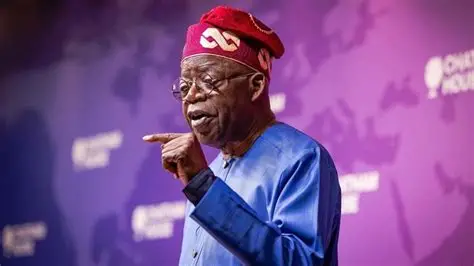
After about three years of not fulfilling his promise to provide stable power supply for the citizens, President Bola Tinubu appears set to redeem his image.
The president on Sunday approved a N3.3 trillion payment plan to settle outstanding debts under the Presidential Power Sector Financial Reforms Programme.
The repayment plan followed a final review of legacy debts that have plagued Nigeria’s power sector for more than a decade.
This was contained in a statement issued by Presidential Spokesperson, Mr Bayo Onanuga, on Sunday.
The debts accumulated between February 2015 and March 2025 across the power value chain.
Following verification, N3.3 trillion was agreed as full and final settlement to ensure a fair, transparent and credible resolution of the liabilities.
The Presidency said implementation of the plan has commenced, with 15 power generation companies signing settlement agreements totalling N2.3 trillion so far.
The Federal Government has already raised N501 billion to support the initial phase of the payments under the programme.
Out of the amount raised, N223 billion has been disbursed to beneficiaries, while further payments are currently underway
The Presidency said the intervention would improve liquidity across the power value chain and support more stable electricity generation nationwide.
It added that with improved funding, power plants would sustain operations, leading to enhanced reliability of electricity supply to homes and businesses.
Onanuga noted that the reforms would also boost investor confidence, attract new investments, and create jobs across the sector.
Special Adviser to the President on Energy, Olu Arowolo-Verheijen, said the programme was critical to restoring confidence in the power sector.
“This programme is not just about settling legacy debts; it is about restoring confidence across the power sector and ensuring the system works more reliably.”
She explained that the initiative would ensure gas suppliers are paid and enable power plants to operate efficiently and sustainably.
Arowolo-Verheijen said the reforms form part of broader efforts, including improved metering and service-based tariffs linked to electricity supply quality.
“It is part of wider reforms, including better metering and tariffs tied to service delivery, to improve efficiency and accountability.”
She added that the government was prioritising power supply to industries, businesses, and small enterprises to drive economic growth and job creation.
According to her, the overall objective is to deliver more reliable power to households and strengthen support for businesses nationwide
“The goal is simple: more reliable power for homes, stronger support for businesses, and a system that works better for all Nigerians,” she said.
Tinubu commended stakeholders for their support in resolving longstanding issues in the sector and advancing ongoing reforms.
He also confirmed that the next phase of the programme, known as Series II, will commence within the current quarter.









The Unending Plight and Ongoing Killings in Kuyello
Your Excellency,
Mallam Uba Sani,
Executive Governor of Kaduna State,
Sir,
We write to you with heavy hearts, deep anguish, and a profound sense of urgency regarding the persistent and terrifying security breakdown in Kuyello, Birnin Gwari Local Government Area.
For years, the people of Kuyello have lived under the shadow of relentless violence, abductions, and mass killings.
While we acknowledge the government’s efforts and official declarations regarding security measures and negotiated peace initiatives, the reality on the ground paints a vastly different and devastating picture.
To us, the victims on the frontline, any negotiation with these non-state armed actors has proven entirely ineffective. The reality of our daily life remains unchanged:
Daily Attacks:
Villagers are hunted, attacked, and killed in their homes and on their farms day and night.
Economic Paralysis: Our farmers can no longer access their lands without facing death or paying heavy ransoms, destroying the local agricultural economy and pushing families into famine.
Mass Displacement:
Entire families have been forced to flee, turning communities into ghost towns as basic human safety remains unassured.
Peace cannot exist on paper while blood continues to flow in our streets. The ongoing violence demonstrates that these armed bands do not respect agreements or government mandates.
Kuyello requires decisive, sustained, and direct security intervention—not unfulfilled truces that leave innocent citizens exposed to constant danger.
*Our Prayers and Demands:*
1. Permanent Security Presence:
Immediate deployment of forward operating military bases and well-equipped security posts in and around Kuyello.
2. Offensive Military Operations: An immediate shift from passive peace talks to active tactical operations aimed at neutralizing bandit strongholds in the surrounding forests.
3. Protection for Farmers and Highways:
4. Targeted security patrols to secure agricultural lands and vital transport routes to restore local livelihoods and safety.
The primary duty of any government is the protection of lives and property. We appeal to your leadership, Your Excellency, to treat the situation in Kuyello as a critical state emergency before our community is wiped out entirely.
Respectfully yours,
SURAJO ISAH KUYELLO Concerned Residents and Stakeholders of Kuyello Community
Birnin Gwari Local Government Area, Kaduna State




An Open Letter to Executive Governor Mallam Uba Sani

NACTAL’s president-elect pledges inclusive leadership, stronger anti-trafficking action

Osita Osememe gets 95.65% votes, emerges NACTAL president
-

 News9 years ago
These ’90s fashion trends are making a comeback in 2017
-
Business9 years ago
The 9 worst mistakes you can ever make at work
-
Entertainment9 years ago
The final 6 ‘Game of Thrones’ episodes might feel like a full season
-
 News6 months ago
SERAP to Akpabio: Disclose officials involved in misappropriation of ₦200t from NNPC
-
 News5 months ago
Disquiet over whereabouts of ₦2.9 billion in key federal agencies
-
News9 years ago
According to Dior Couture, this taboo fashion accessory is back
-
Sports9 years ago
Phillies’ Aaron Altherr makes mind-boggling barehanded play
-
Entertainment9 years ago
The old and New Edition cast comes together to perform