
Business
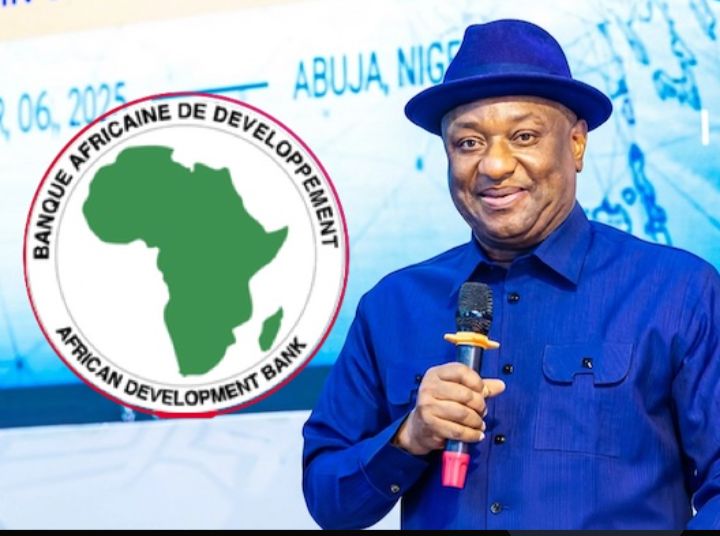
AFDB appoints keyamo to drive $7bn aviation transformation initiative

Philippine Duru
philippineobetoduru@gmail.com
08034905774
The African Development Bank (AfDB) has officially appointed Nigeria’s Minister of Aviation and Aerospace Development, Festus Keyamo, to champion a major $7 billion aviation transformation initiative designed to strengthen regional airline operations and establish sustainable aircraft leasing systems across Africa.
The ambitious continental programme is expected to accelerate aviation growth, improve connectivity among African countries and reduce the long-standing dependence of African airlines on foreign leasing companies for aircraft acquisition and financing.
The appointment of Keyamo was announced during high-level engagements involving aviation stakeholders, development finance experts and policymakers working to reposition Africa’s aviation industry as a critical driver of economic integration, trade and tourism under the African Continental Free Trade Area (AfCFTA).
According to officials familiar with the initiative, the multi-billion-dollar programme will focus on boosting the operational capacity of regional airlines, supporting indigenous carriers with access to aircraft financing, enhancing aviation infrastructure and developing stronger partnerships among African nations to improve intra-African air travel.
Industry stakeholders have long argued that Africa’s aviation sector remains underdeveloped despite the continent’s growing population and expanding business opportunities. Limited access to affordable aircraft leasing arrangements, weak financing structures and fragmented regional connectivity have continued to hinder the growth of many African airlines.
Speaking on the development, Keyamo described the appointment as a significant opportunity for Nigeria and the African continent to play a leading role in reshaping the future of aviation in Africa.
He said the initiative would help create a more competitive aviation ecosystem capable of supporting economic growth, regional integration and job creation across the continent.
The minister stressed that one of the central pillars of the programme would be the establishment of viable aircraft leasing frameworks within Africa, a move expected to reduce the huge capital burden faced by many local airlines.
Experts say African carriers currently spend billions of dollars annually leasing aircraft from foreign companies, a situation that often exposes operators to high financing costs, foreign exchange pressures and operational constraints.
Under the proposed programme, the AfDB and participating stakeholders are expected to support the development of African-based leasing platforms that would provide more flexible financing options for airlines operating on the continent.
The initiative is also expected to strengthen regional airline partnerships and encourage the expansion of route networks connecting African cities directly, rather than relying heavily on non-African transit hubs.
Analysts believe improved connectivity could significantly boost trade, tourism, investment and people-to-people movement across Africa, especially as governments intensify efforts to implement the Single African Air Transport Market (SAATM) agenda.
Keyamo’s appointment has already attracted positive reactions from aviation stakeholders, many of whom see Nigeria as strategically positioned to drive aviation reforms due to its large market size, growing passenger traffic and central role in West African air transportation.
Several industry experts noted that the success of the initiative would depend on strong political commitment, regulatory reforms, infrastructure development and collaboration among African governments and financial institutions.
The programme is also expected to create new opportunities for aviation training, maintenance services, aerospace investments and technology transfer within the continent.
Observers say the AfDB’s decision to back such a large-scale aviation transformation plan reflects growing recognition that air transport remains essential to Africa’s broader economic development agenda.
With Africa projected to witness significant increases in air passenger traffic over the coming decades, stakeholders believe the continent must urgently build stronger aviation financing structures and modern transport systems capable of supporting future demand.
The AfDB initiative is expected to commence in phases, with consultations ongoing among governments, regulators, financial institutions and aviation industry operators across the continent.
Industry players say the programme could mark a turning point for African aviation if effectively implemented, potentially reducing operational costs for airlines, improving regional connectivity and positioning African carriers to compete more effectively in the global aviation market.



By Philippine Duru
philippineobetoduru@gmail.com
08034905773
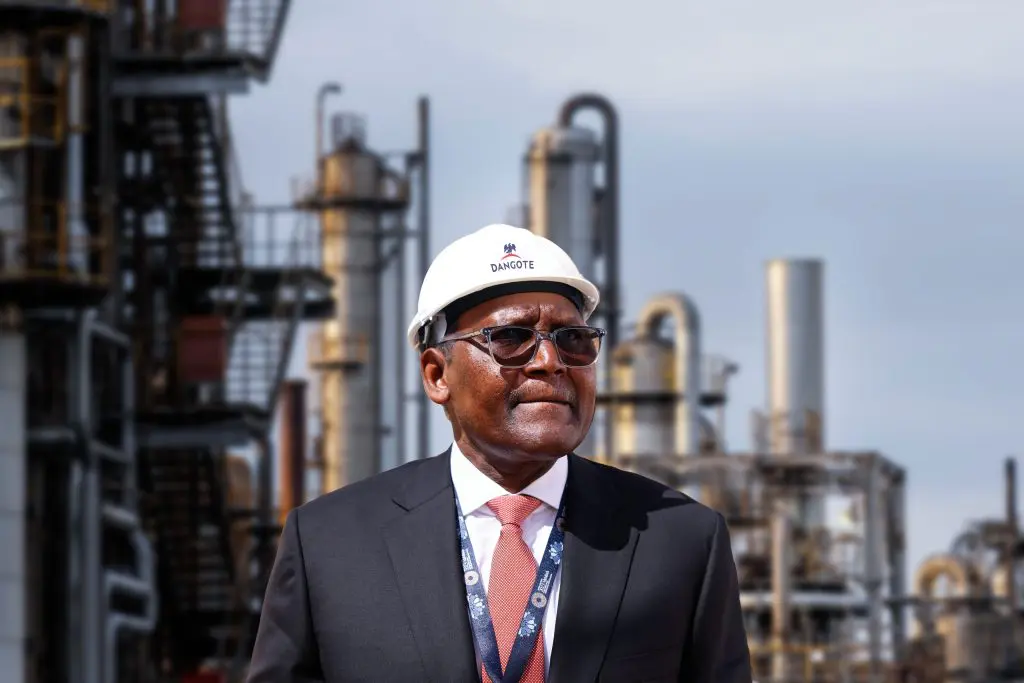
Nigeria’s drive toward energy self-sufficiency has received a major boost as the Dangote Petroleum Refinery reportedly ramps up production to about 700,000 barrels per day (bpd), significantly increasing the supply of refined petroleum products to the domestic market and strengthening the country’s position in the global refining industry.
The development marks a significant milestone for the $20 billion refinery project, which has steadily increased its operational capacity since commencing production. Industry stakeholders say the higher output level is helping to ease fuel supply concerns, reduce dependence on imported petroleum products, and improve energy security in Africa’s largest economy.
Located in the Lekki Free Trade Zone in Lagos, the refinery was designed with a nameplate capacity of 650,000 barrels per day, making it the largest single-train refinery in the world. Recent reports indicating production levels approaching 700,000 barrels daily have fueled optimism about the facility’s ability to meet growing domestic demand while serving export markets across Africa and beyond.
The refinery’s rising output comes at a critical time when Nigeria is seeking to reduce the billions of dollars spent annually on fuel imports and conserve foreign exchange reserves. For decades, despite being one of Africa’s largest crude oil producers, Nigeria relied heavily on imported refined products due to inadequate domestic refining capacity.
Analysts say the increased production is already transforming the country’s downstream petroleum sector by ensuring a more stable supply of Premium Motor Spirit (PMS), commonly known as petrol, as well as diesel, aviation fuel, and other refined products.
“The refinery is gradually changing the dynamics of Nigeria’s fuel market,” said an energy analyst based in Lagos. “Higher production levels mean greater local availability of petroleum products, lower import dependence, and improved supply chain efficiency.”
The impact has been particularly evident in the petrol market, where increased local production has helped reduce pressure on fuel imports and improved product availability across the country. Industry operators note that the refinery’s growing output is also contributing to increased competition within the downstream sector.
Beyond the domestic market, the refinery has emerged as a significant exporter of refined products. Recent shipments of aviation fuel, diesel, and other petroleum products to Europe, Asia, and other international destinations have strengthened Nigeria’s position as a major refining hub.
The refinery’s export activities are generating valuable foreign exchange earnings and helping to improve the country’s trade balance. Energy experts believe the facility could eventually transform Nigeria from a net importer of refined petroleum products into a major exporter.
The increase in production has also created fresh opportunities for local crude oil producers. With a large domestic refining facility requiring substantial feedstock, upstream operators now have an additional market for their crude production, potentially reducing exposure to international market volatility.
Economic analysts argue that the refinery’s operations could have far-reaching implications for Nigeria’s economy. Increased local refining capacity is expected to support industrial growth, create jobs, stimulate related industries, and reduce logistics costs associated with importing refined products.
The development is also viewed as a positive signal for investors, demonstrating Nigeria’s capacity to execute large-scale industrial projects capable of attracting global attention and investment.
However, experts note that sustaining high production levels will depend on consistent crude oil supply, efficient logistics infrastructure, regulatory stability, and continued collaboration between industry stakeholders and government agencies.
The refinery’s growing role in the domestic market has coincided with efforts by authorities to deepen reforms in the oil and gas sector, improve transparency, and encourage greater private-sector participation across the petroleum value chain.
Market observers believe that as production continues to increase, consumers could benefit from improved fuel availability and potentially more stable pricing, although global crude oil prices and foreign exchange movements will continue to influence market dynamics.
For Nigeria’s broader economy, the refinery represents a strategic asset capable of strengthening energy security, reducing import dependence, supporting foreign exchange earnings, and accelerating industrial development.
With production reportedly reaching 700,000 barrels per day, the Dangote Refinery is increasingly positioning itself as a cornerstone of Nigeria’s energy transformation agenda and a major player in the global refining landscape.


2027: NDC in disarray
NDC’s primaries had flaws- Dickson admits

Furious Peter Obi sues brother
-

 News9 years ago
These ’90s fashion trends are making a comeback in 2017
-
Entertainment9 years ago
The final 6 ‘Game of Thrones’ episodes might feel like a full season
-
Business9 years ago
The 9 worst mistakes you can ever make at work
-
News9 years ago
According to Dior Couture, this taboo fashion accessory is back
-
Sports9 years ago
Phillies’ Aaron Altherr makes mind-boggling barehanded play
-
Entertainment9 years ago
The old and New Edition cast comes together to perform
-

 News3 months ago
SERAP to Akpabio: Disclose officials involved in misappropriation of ₦200t from NNPC
-
Entertainment9 years ago
Mod turns ‘Counter-Strike’ into a ‘Tekken’ clone with fighting chickens