
Business
Housing crisis set to worsen as Dangote Cement, others raise price


The number of homeless Nigerians may skyrocket soon, as Dangote Cement and BUA Cement, have reportedly adjusted cement prices nationwide.
A bag, according to a reports Legit now sells for as high as N12,000 in many parts of the country.
Industry operators say the latest increase marks another sharp jump from previous prices of between N11,000 and N11,500, deepening concerns about affordability and slowing construction activities.
Experts point to rising energy costs as the primary trigger behind the new pricing regime. Manufacturers are grappling with higher fuel prices, which directly impact production processes that rely heavily on energy.
Chairman of the Lagos Chamber of Commerce and Industry Construction and Engineering Group, Soji Adeniji, explained to Legit.ng that the surge in fuel prices has significantly raised factory operating costs.
According to him, the increase in petrol prices from around N1,000 to nearly N1,900 per litre has placed additional pressure on cement producers, forcing them to pass on the cost to consumers.
Logistics and distribution add pressure
Beyond production, logistics has emerged as another major factor behind the price hike.
The cost of transporting cement from factories to distributors and end users has climbed sharply, a report by Punch said. Industry players note that there is now a clear price gap between factory pickup and delivered cement.
While some buyers may access cement at lower rates directly from factories, delivery costs push retail prices significantly higher. This growing disparity highlights how transportation expenses continue to shape final market prices.
Global factors are also at play
Stakeholders also link the rising prices to global developments, particularly tensions in the Middle East, which have disrupted energy markets worldwide.
These disruptions have cascading effects on input costs, further compounding the challenges faced by manufacturers already dealing with local economic pressures.
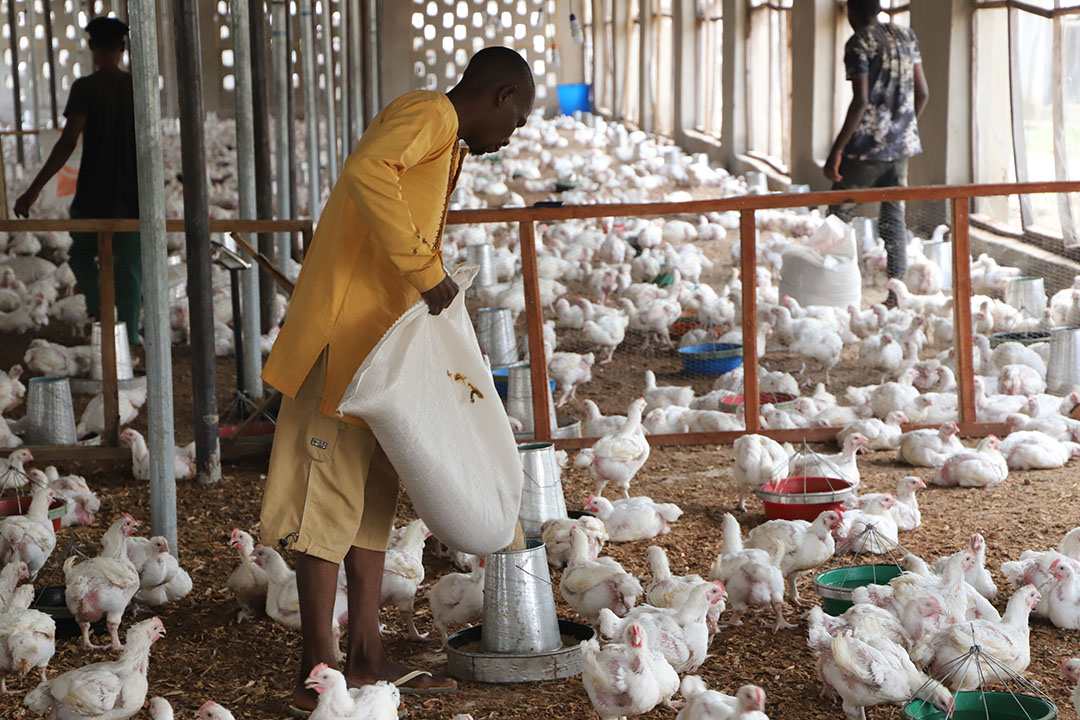
Nigerians may have to pay more for chickens as the Federal Government has banned importation of poultry foods from countries outside the Economic Community of West African States (ECOWAS).
Many Nigerian homes rely on frozen poultry food which comes cheaper than live ones. A kilo of frozen chicken presently cost between N5,500 and N6000. Those who can’t afford a kilo are allowed to buy half of it. Live chicken on the other hand costs between N20,000 and N40, 000 without any opportunity to buy half portion.
Aside from poultry food, the federal government also banned the importation of cement, pharmaceutical and agricultural products.
According to a circular by the federal ministry of finance, signed by Wale Edun, the minister of finance, dated April 1, 2026, the products are part of 17 items on a revised import prohibition list.
“Import Prohibition list (Trade), applicable only to certain goods originating from non-ECOWAS Member States. It consists of 17 items,” the circular reads.
The revised import prohibition list is part of the 2026 fiscal policy measures (FPM) and tariff amendments.
“In addition, a grace period of ninety (90) days, commencing from the effective date of implementation of this circular, i.e., 1st April 2026, shall be granted to all importers who had opened Form ‘M’ and must have entered into irrevocable Trade Agreement before the coming into effect of this circular, to process and clear their goods at the prevailing duty rates,” the circular reads.
“However, any new import transaction entered from the 1st of April 2026, shall be subjected to the new import duty regime.
“These Fiscal Policy Measures which supersede the 2023 Fiscal Policy Measures shall be published in the Official Federal Government Gazette.”
Below are list of the items on the revised import prohibition list.
(1). Live or dead birds, including frozen poultry
(2). Pork/beef, including tongues, livers, and shoulders of bovine animals
(3). Bird eggs, excluding hatching eggs of grand parent stock for breeding and research purposes
(4). Refined vegetable oil, excluding refined linseed, castor oil, olive oil, and hydrogenated vegetable fats, and crude vegetable oil
(5). Cane or beet sugar and chemically pure sucrose, in solid form containing added flavouring or colouring matters
(6). Cocoa butter, powder and cakes, including fat and oil of cocoa and natural cocoa butter
(7). Tomatoes, whole or in pieces, tomato paste or concentrates
(8). Waters, including mineral waters and aerated waters, containing added sugar or sweetening matter or flavoured, once snow, as well as other non-alcoholic beverages
(9). Bagged cement
(10). Medicament (medicine) under several headings
(11). Waste pharmaceuticals
(12). Mineral or chemical fertilisers containing the three fertilising elements nitrogen, phosphorus and potassium (NPK)
(13). Soaps and detergents
(14). Corrugated paper and paper boards, cartons, boxes and cases made from corrugated paper and paper boards
(15). Hollow glass bottles of a capacity exceeding 150 mis (0.15 litres), such as carboys, bottles and flasks
(16). Flat-rolled products of iron or non-alloy steel, of a width of 600mm or more, clad, plated or coated – corrugated
(17). Ball point pen and parts, including refills (excluding tip) for Ball point pens, comprising the Ball point and ink-reservoir
Also, the federal government introduced 2 percent green tax surcharge or excise duty on motor vehicles with engine size of 2009 cc – 3999 cc and 4000 cc – above.

This is weird and discomforting. United Nigeria Airlines Thursday, recorded its third bird strike in less than 48 hours, grounding another Embraer 190 and setting what industry watchers call an unprecedented safety disruption for the carrier.
The latest incident occurred during take-off of Flight UN0561 from Benin City Airport to Abuja’s Nnamdi Azikiwe International Airport at 16:20 on Thursday, April 16, 2026, damaging the Nose Landing Gear door linkage, the airline said in a statement on Friday.
The aircraft has been immediately withdrawn from service for detailed technical inspections and maintenance, consistent with the airline’s safety standards.
This brings to seven the number of bird strikes United Nigeria has suffered in 2026 alone. However, the airline noted it only reports strikes that result in aircraft being grounded due to damage.
Calling the pattern “extremely concerning and unacceptable,” Public Relations Officer Chibuike Uloka,, said the rapid succession of three groundings within 48 hours has impacted safety and operational reliability.
United Nigeria urged the Federal Airports Authority of Nigeria to strengthen wildlife hazard management measures across major airports to minimize the risk of such occurrences.
The airline apologized to passengers for service disruptions and said its team is working to minimize impact and support affected travelers, stressing that safety remains its highest priority.
There emerged a fresh twist on the crisis rocking the aviation sector on Thursday.
The Airline Operators of Nigeria (AON) and the Major Energies Marketers Association of Nigeria (MEMAN) had been at each others’ throat over the drastic increase in the price of aviation fuel in recent time.
The AON had warned that airlines across the country may suspend operations from April 20, 2026, over what it described as an “astronomical and unsustainable” rise in the price of Jet A1 fuel.
In a letter dated April 14, 2026, and addressed to the Executive Secretary of the Major Energies Marketers Association of Nigeria, MEMAN, Mr. Clement Isong, AON said the cost of aviation fuel had surged from N900 per litre as of February 28 to N3,300 per litre, an increase of over 300 percent within weeks.
But fuel marketers offered different accounts on the regime of pricing and market realities.
Executive Secretary of MEMAN, Clement Isong pushed back against the N3,300 figure, describing it as significantly higher than the average market price.
In response to AON’s letter, the marketers claim the N3,300 quote is over N1,000 above what they are actually charging.
MEMAN advised any airline quoting N3,300 to “seek alternative suppliers,” asserting that more affordable options are available in the market.
They attributed the recent volatility to tensions in the Middle East and a 50 percent rise in domestic transport costs, rather than to extortion.
He said, “In light of the above, we must express our surprise at the price of N3,300 per litre stated in your letter as the price being charged to some airline operators. MEMAN members do not discuss pricing as this will be against competition law; however, the price of N3,300 is over N1,000 higher than our average market survey price of Jet Al carried out for this exercise, after receipt of your letter.”
“We would therefore strongly encourage any operators currently being charged at those levels to exercise their commercial right to seek alternative suppliers.”
“Our market survey confirms that more competitively priced options are available, and MEMAN members remain committed to providing ATK at fair, market-reflective prices. We have also received an indication of falling costs, which should begin to reflect in market prices in the coming weeks.”
“Finally, we strongly encourage AON members to adopt a more sustainable pricing approach by moving away from spot pricing and entering into longer-term contractual arrangements with their suppliers. This would provide greater price predictability, help stabilise cash flow, and reduce exposure to daily market swings.
Please be assured that MEMAN has been actively engaged with the relevant regulatory authorities on this matter”, Isong said.
The association also explained the rigorous process involved in distributing the commodity, adding that it is more costly than other products.
“That said, we wish to assure you that reducing the cost burden of petroleum product distribution is a matter of active and ongoing attention within our association. steps to improve safety while simultaneously reducing logistics, delivery, and operational costs across the downstream value chain are continually being discussed, shared, and implemented by MEMAN members and the MEMAN Secretariat through regular webinars, training programmes, and industry engagements.
“ It is a core part of our mandate to share these best practices broadly with the downstream industry so that distribution costs are minimised to the greatest extent possible, without compromising on safety or quality standards,” he added.
Following consultations, MEMAN said it has formally communicated several practical suggestions and recommendations to mitigate the impact on the aviation sector and the wider economy.


Kidnappers abduct newly installed monarch

Atiku fires Tinubu govt, says administration more interested in controlling media narrative than ensuring free, fair elections

Chicken prices set to soar as FG bans importation of poultry foods
-

 News9 years ago
These ’90s fashion trends are making a comeback in 2017
-
Entertainment9 years ago
The final 6 ‘Game of Thrones’ episodes might feel like a full season
-
News9 years ago
According to Dior Couture, this taboo fashion accessory is back
-
Sports9 years ago
Phillies’ Aaron Altherr makes mind-boggling barehanded play
-
Entertainment9 years ago
The old and New Edition cast comes together to perform
-
Business9 years ago
Uber and Lyft are finally available in all of New York State
-
Entertainment9 years ago
Mod turns ‘Counter-Strike’ into a ‘Tekken’ clone with fighting chickens
-
Sports9 years ago
Steph Curry finally got the contract he deserves from the Warriors